Picturesque inclusive renovation in Margherita di Savoia.
Energy efficient innovative renovation of a social housing building in south Italy, supported by the REHOUSE project.
Credit: R.I. Group
Credit: R.I. Group
Case Study
Context
A social housing building from the 80’s, in an area with a high proportion of vulnerable households facing energy poverty.
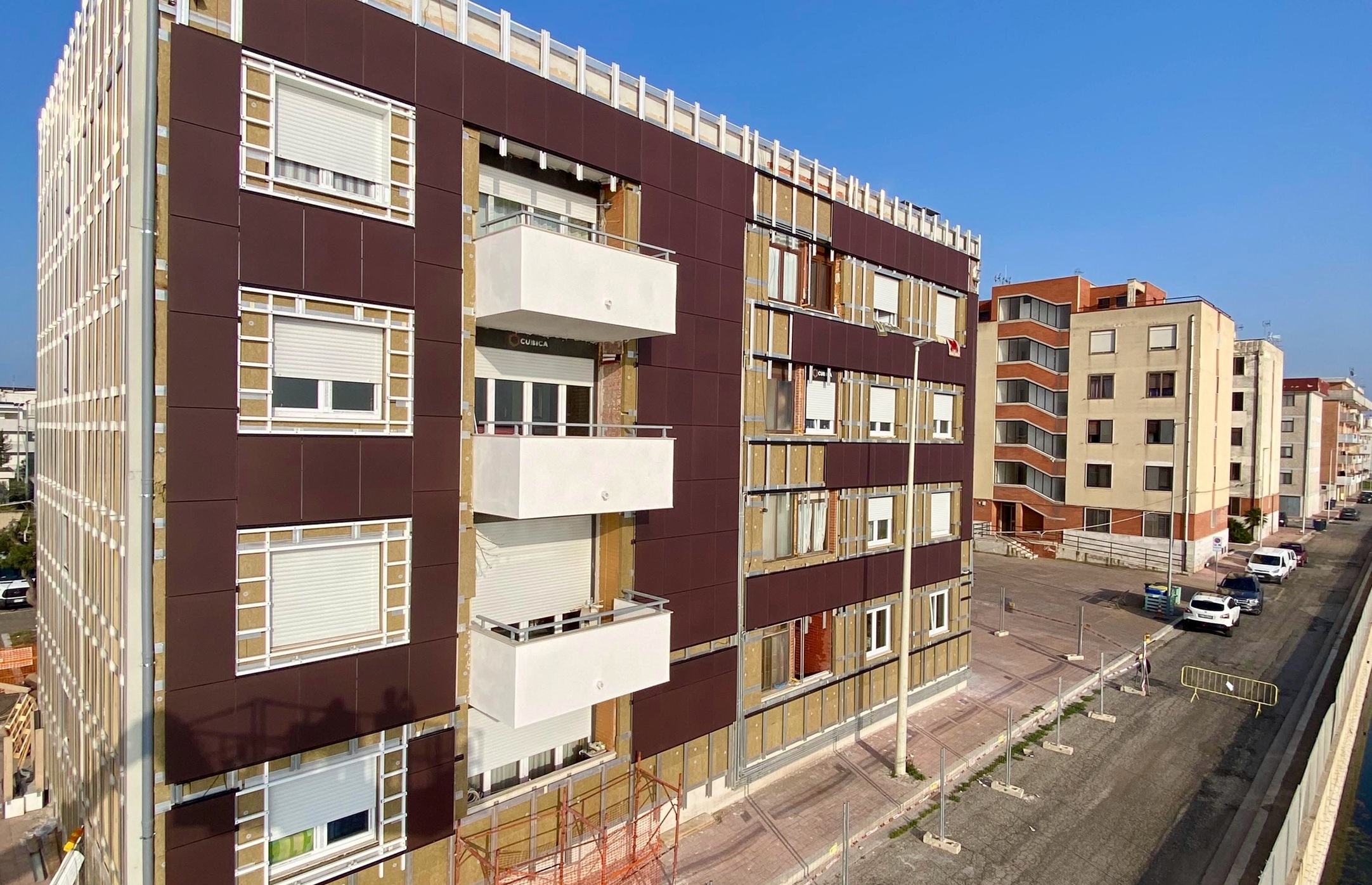
Margherita di Savoia is the Italian Demo site of EU REHOUSE project, aiming to increase efficiency of the renovation process thanks to integrated solutions, while improving comfort and satisfaction of the building inhabitants and users. The demo site is in a marginal area of Southern Italy, Apulia region, surrounded by a biodiversity-rich ecosystem and Salt Pans (20 km long), existing since the 3rd century B.C. The town has a high proportion of low-income households facing severe problems of marginalisation and energy poverty. The public housing building was built in 1986, part of a cluster of similar buildings, characterized by problems of physical degradation and social vulnerability, where tenants are mostly elderly, affected by socio-economic difficulties, health problems, high school drop-out levels, with psycho-motor, intellectual and relational disabilities. Built in reinforced concrete, the building had poor insulation, inadequate natural ventilation, was affected by extreme heat events due to inadequate housing conditions and limited access to cooling infrastructures, in an area classified as medium-high seismic risk according to the Italian legislation.
Story
Engaging stakeholders and tenants from the start to co-design an inclusive and innovative renovation project
The energy efficient renovation of the social housing building in Margherita di Savoia was the main demonstration objective of REHOUSE, combining conventional renovation works, seismic improvement, and integrating two innovative technologies, a multipurpose façade system and a centralized holistic heating & cooling renovation kit.
The aim of the renovation was to improve energy efficiency, reduce fuel poverty, and enhance comfort and quality of life.
Beyond energy efficiency, the renovation process coordinated by ENEA team, considered the aesthetics and historical value of the building, restored living dignity, enhanced indoor environment quality, and reduced inequalities. These challenges were successfully addressed by the local team by engaging with tenants and stakeholders since the early stages of the project, and a “Social Task Force” was set up to support this engagement process. The Social task Force involved all identified relevant stakeholders (social housing association, owner of the building, representatives of residents, public authorities, local government, Apulia region, municipality, and ENEA experts, NGOs, including the local church).
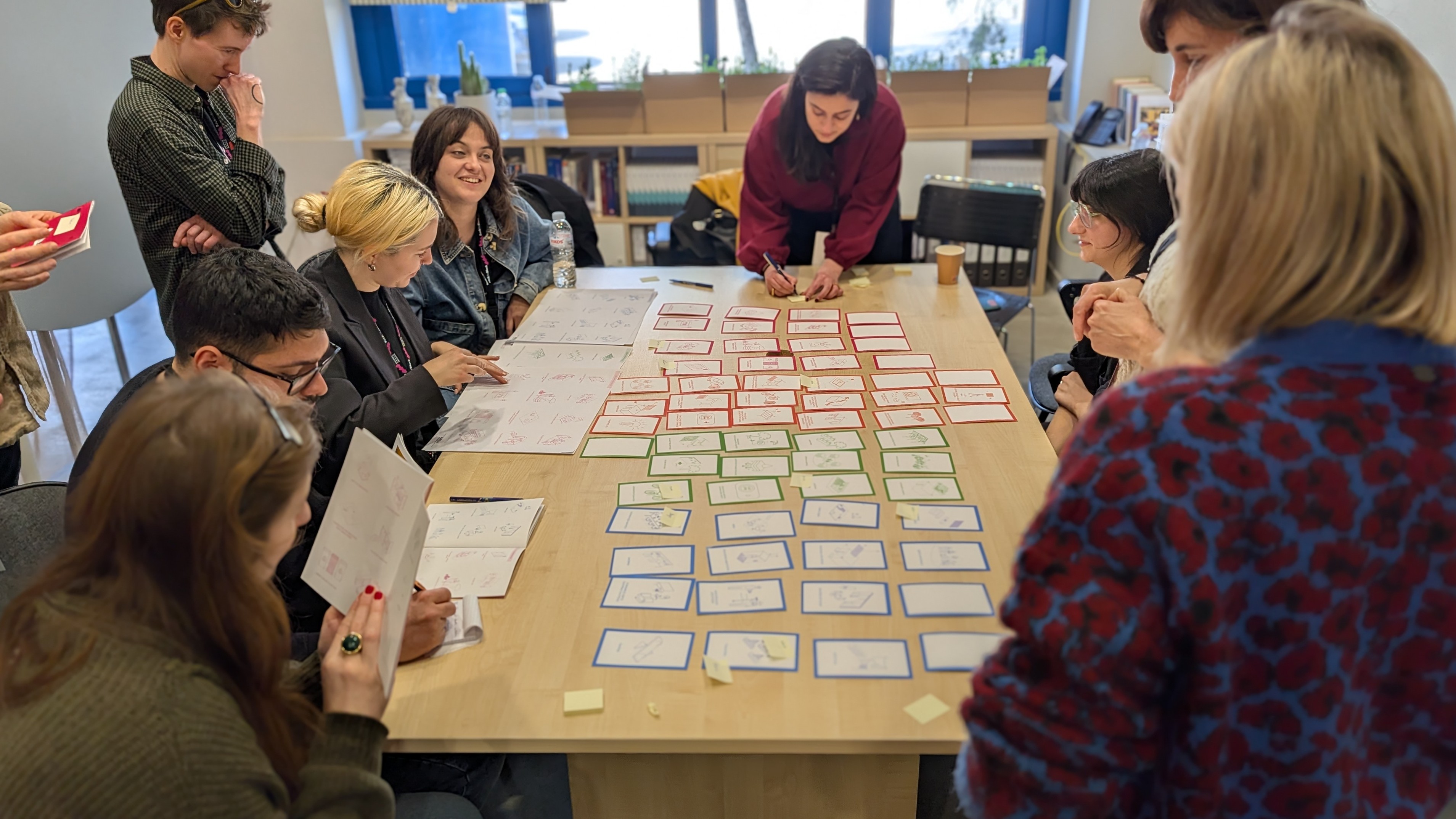
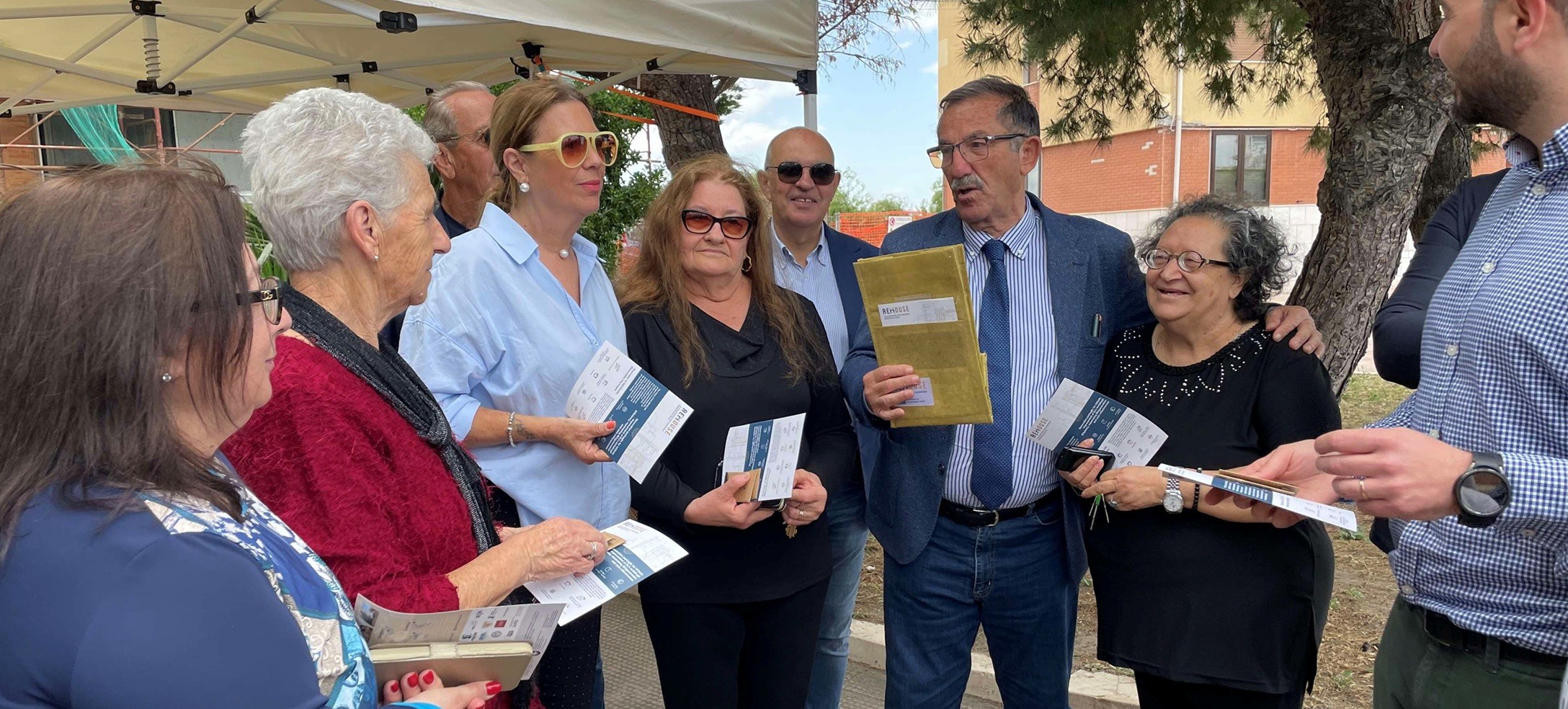
Renovation interventions were launched with a social event in which participated all tenants (8 families). Subsequently, additional workshops and a co-design meeting were organized in which interviews and surveys were conducted to collect needs and requirements from all tenants.
Also, Gamification (with ENZEB serious game), was used with the support of a social facilitator, to stimulate a participatory approach, accompanying the participants in learning and decision-making processes during the co-creation phase.
Lesson learnt
The importance of setting up a “Social Task Force” and deploying participatory actions from the start
The Social Task Force played a crucial role in Margherita di Savoia (and generally across all REHOUSE demo-sites), engaging with local occupants to ensure a smooth transition during the retrofitting processes. Through various participatory activities, the task force facilitated communication, gathered feedback, and fostered collaboration to enhance tenants’ understanding and acceptance of the technological innovations and interventions being implemented.
Participatory actions proved to be fundamental to strengthen the social group: a simple "collective" thus becomes a "community”.
Finally, social cooperation contributed to spread more productive and sustainable behaviours in the field of energy consumption and, more generally, pro-environmental issues.
The main challenges were to overcome the resistance linked to established tenant behaviours, mainly conservative and not ready for accepting new technologies. Tenants instead had to become active agents of change through co-design actions. Good practices therefore included participatory approach using games, questionnaires, interviews, and workshops
Recommendations include:
- building a climate of trust that accompanies technological change, fostering knowledge and awareness in energy efficiency,
- considering the additional costs that tenants will bear to implement new ways of living (e.g. induction cooking).
Impact
The project generated the following impacts in Margherita di Savoia:
- Increased energy efficiency, indoor comfort and quality of living
- Improved accessibility
- Improved building aesthetics
- Reduced costs for the tenants
- Behavioural changes (in relation to energy consumption)
- Increased sense of belonging to a community
- Contribution to aesthetic and urban regeneration
The REHOUSE project was funded by European Union’s Horizon Europe Research and Innovation Program under grant agreement no. 101079951.