Turning urban waste into circular soap
A deviant and regenerative approach to urban waste through soap-making
Credit: Jeph Francissen
Credit: Jeph Francissen
Credit: Jeph Francissen
Case Study
Context
Amsterdam’s urban waste becomes a regenerative soap that challenges our notions of clean and dirty.
The city of Amsterdam produces thousands of tonnes of waste every year. A lot of it could be reused.
Take used cooking oil, for example. Snack bars and restaurants throw it away without a second thought. Human urine, something we produce in litres every day, goes straight down the toilet, using potable water. Wood ashes from fireplaces and gardens are bagged up and tossed out. Nobody really thinks about what happens to these materials, or what they might become.
Amsterdam is not alone in this. Most cities still operate on a take-make-waste basis. Resources get extracted, turned into stuff, used for a short time, and then thrown away. Ordinary people have little to do with the process. There are systems for collecting and reusing some materials, but they only go so far.
There is also a mental block. What we call clean and what we call dirty is not written in stone. It comes from habit, social norms, what we grew up with, our education. Waste is something we get rid of and forget about. We do not engage with it. If that changed, a lot of things would become possible. It would be much easier to build a circular system if people did not turn their nose up at used oil or urine.
Story
One person, three waste streams, and a bar of soap.
Arthur Guilleminot was living in Amsterdam when he started looking differently at what goes down the drain. He is a designer, and designers tend to ask questions. His was simple: why do we treat some things as waste when they could be something else?
Used cooking oil. Wood ashes. Urine. He found them everywhere. In snack bars, in fireplaces, in toilets. Nobody wanted them. But Guilleminot saw a connection. He read about ancient Rome, where people collected urine for tanning leather and washing clothes. Somewhere along the way, we lost it.
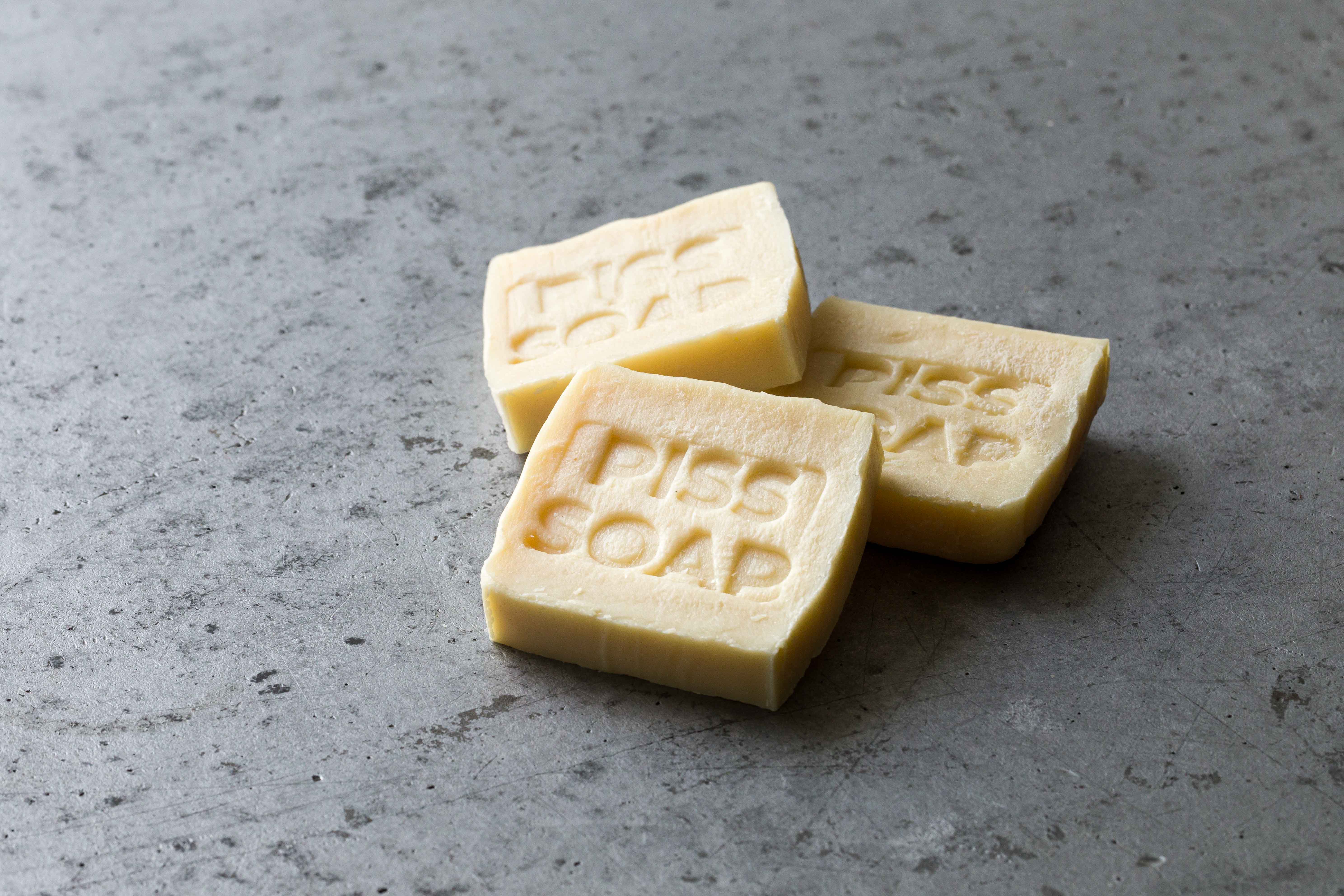
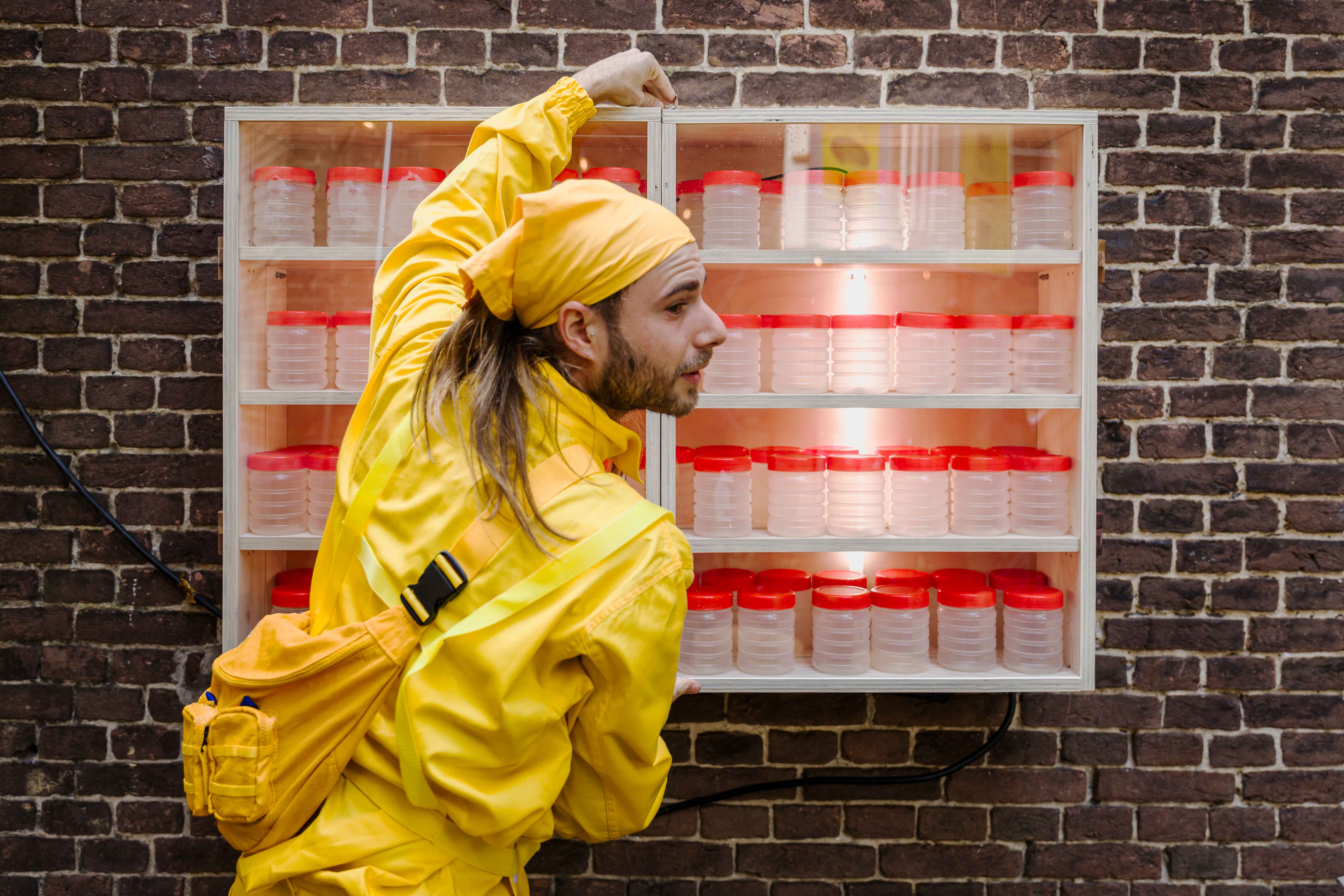
So he tried himself. He gathered used oil from a snack bar, ashes from a fireplace, human urine from public urinals. He mixed them in a kitchen following a cold soap-making process. A greyish bar came out. It lathered. It cleaned. He called it Piss Soap.
He gave it that name on purpose. Disgust is interesting. It says a lot about what we accept and what we reject. His hope was that a few people would stop and ask: why do we throw these materials away?
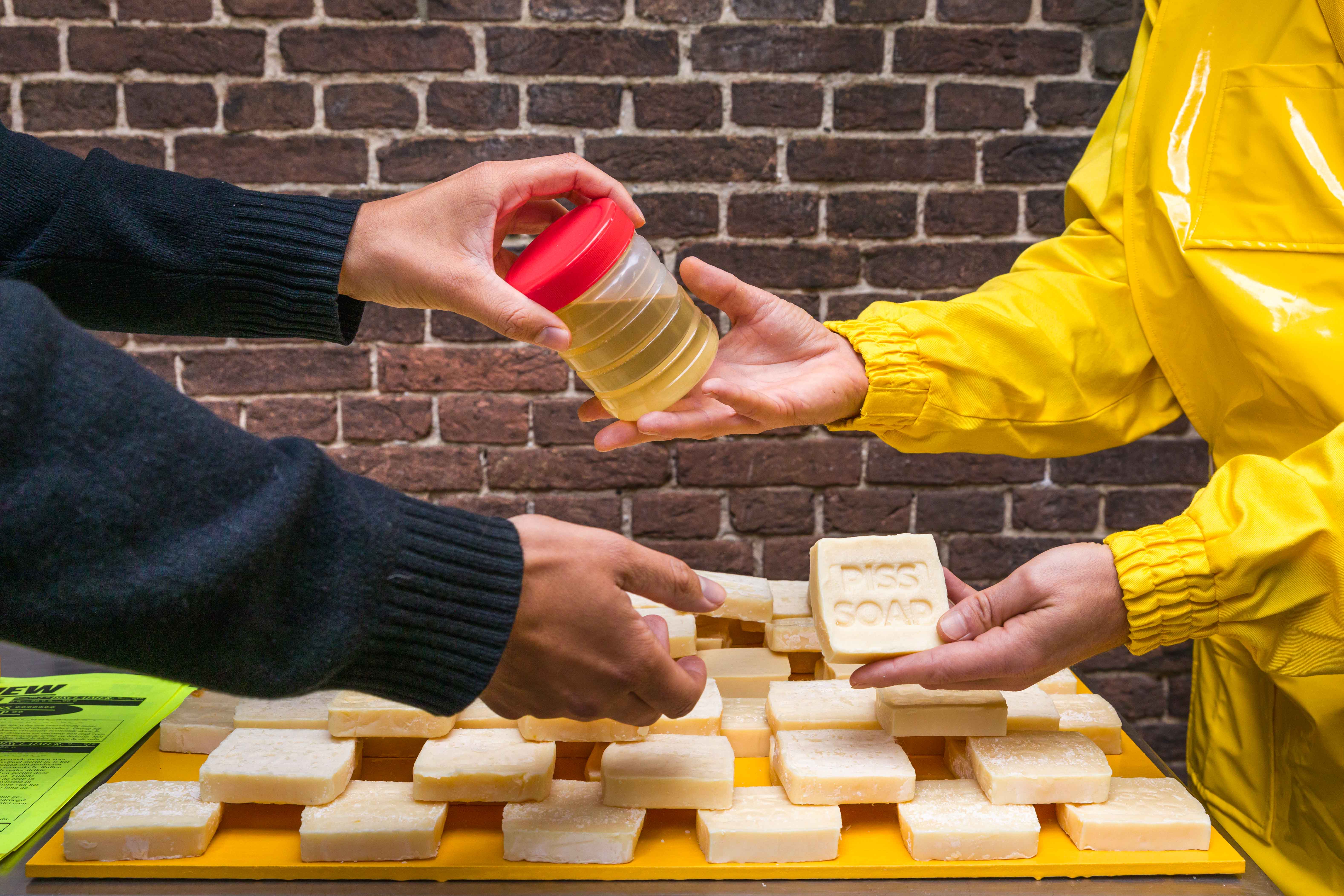
The project spread from there. Guilleminot ran workshops where participants made their own soap. He set up collection points where locals could donate urine and get a bar in return. He exhibited in museums and design festivals across Europe and even further: Amsterdam, Eindhoven, Vienna, Hamburg, Zurich and Tokyo. But there is a catch. EU regulations do not allow selling a product made with urine. So Guilleminot exchanges it instead. You bring used oil, ashes, pee. You leave with a bar of soap.
The project still travels. Museums, conferences, festivals. But the heart of it never changed. A small studio in Amsterdam. One person turning waste into soap. And people stopping to ask themselves what else they might be getting wrong.
Lesson learnt
Make it open. Make it provocative. Make it together.
Guilleminot did not patent the recipe. He released it openly on YouTube. People in Utrecht and Rotterdam started making their own soap after watching his videos. The project grew through openness, not secrecy. The lesson is that an opensource approach can work for physical products too.
Facing the constant question about scaling up or making capital from Piss Soap, he chooses to not make money from waste. The exchange model is deliberate: you bring urine or used oil, you get soap. It is not a transaction but a conversation, an invitation to question our value system. A noncommercial model can create something that a commercial one cannot: genuine human exchange around a shared activity.
Making the soap is simple, but not fast. Four hours of work, then three months of curing. That long wait is a real obstacle. Most people do not have the patience to make soap that takes months to finish. The project shows that circular production at home is possible, but it asks for more time than most people are willing to give.
The name Piss Soap is deliberate. People react to it. They smell the soap first. They are surprised it does not smell like urine. The reaction is not just about the soap; it is about what we assume is dirty and what we assume is clean. Guilleminot calls this "ecodeviance": changing people's relationship with disgust by engaging them directly with what they normally avoid. Provocation can be a useful tool. A name that shocks gets people to stop and ask questions and it creates an opening for a conversation that would not happen otherwise.
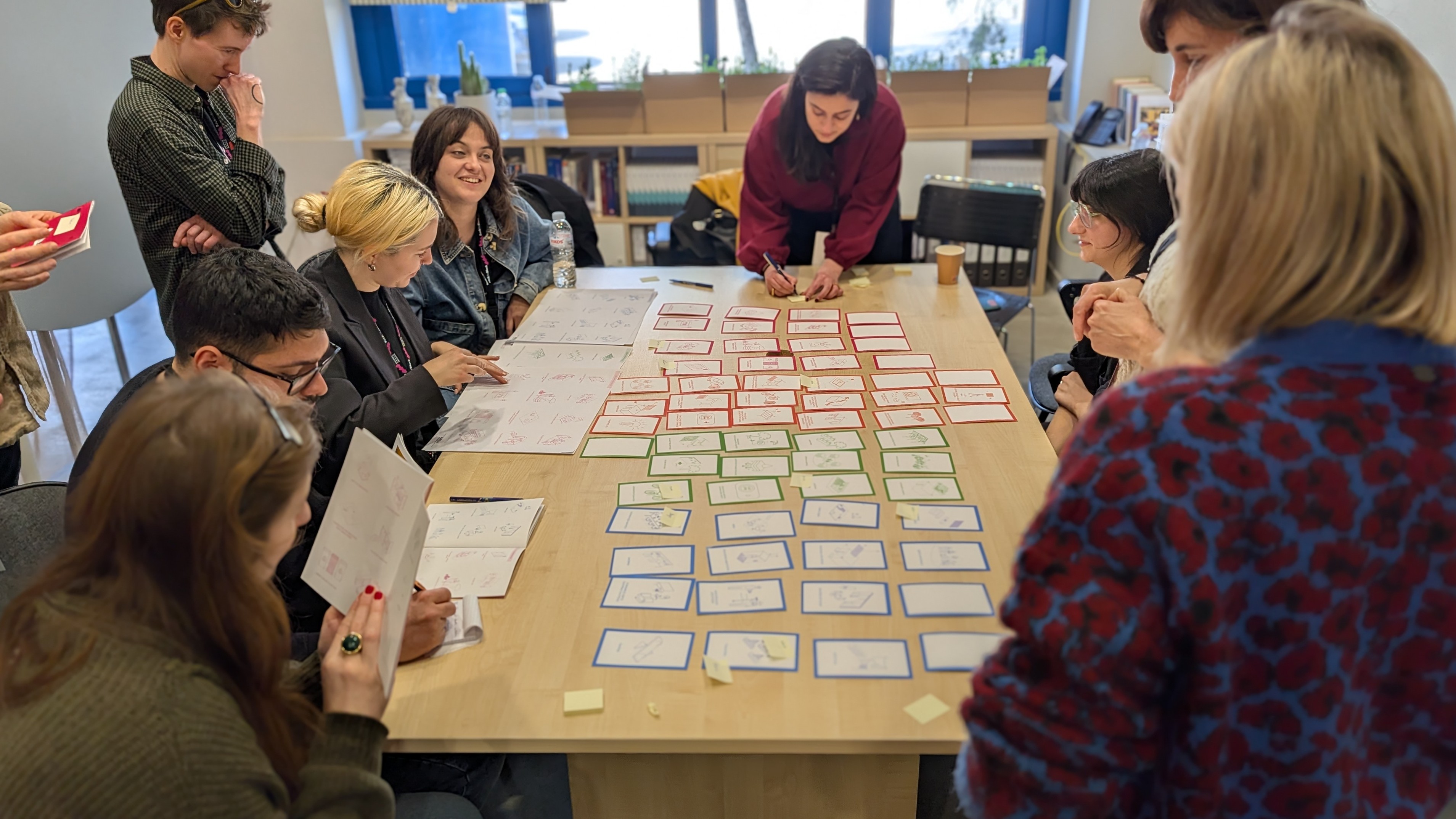
The project has shown that workshops and collection events create a different kind of participation than retail. People who attend are not just buying something: they are involved in making it. The model relies on direct interaction, not passive consumption. Engagement works better when people are part of the process, not just the end user.
Impact
The project received 7000€ from the Dutch Stimuleringsfonds (a creative fund) and has even been presented in collaboration with the Nieuwe Instituut during Dutch Design Week, where visitors could donate their urine in exchange for a bar of soap. Its success in Amsterdam attracted interest from other regions, leading to its adoption in various cities accross Europe. Its barter and open-source approach successfully reached local citizens. It is the result of a deliberate process: everything is based on exchange rather than transaction, and this is also social. As the recipe is freely available on Youtube, people seeing it can immediately reproduce the model and get involved. Workshops in Amsterdam filled up with 12 participants per session. These numbers may seem low, but these people then have all the skills needed to reproduce the process themselves and then converting others.
The project has indeed a real ecological impact, as it uses otherwise left apart resources. But its main impact is more to raise awareness on our disposing and wasting habits in western society. The project managed to create something rather unusual: a network of people who directly engage with what they would normally flush away. It allowed a deeper shift on the disgusting aspect wastes such as piss could have. People changed their mentality on the topic and became more open-minded. This is what Guilleminot calls “ecodeviance”: changing people’s relationship with what they find repulsive by critically engaging them directly with it. Participants manipulate urine, ashes, oil and start to see them as useful resources rather than disgusting wastes.
The project was supported by the Stimuleringsfonds and was among the NEB Prize 2022 finalists under the category “Shaping a circular industrial ecosystem and supporting life-cycle thinking”.