21 NEB Housing projects: lessons learned and replicable actions
Knowledge gained in housing projects turned into practical blueprints
Credit: PDR, Cardiff

Credit: PDR, Cardiff
Credit: PDR, Cardiff
Resource
Context
What can be replicated from successful housing projects?
Addressing Europe’s housing crisis implies to tackle several challenges at once, such as affordability, social inclusion, energy performance, and resilience.
Some successful projects have managed to combine climate action, affordability and quality of life in their approach to housing development. We could learn a lot from them if their methods and insights were turned into practical guidance applicable to similar contexts.
That is precisely what the Joint Research Centre of the European Commission and PDR Cardiff did: they analysed twenty-one housing projects responding to very diverse situations and challenges, and synthetised the transferable actions identified in each of them. The result is a catalogue of blueprints for affordable and resilient housing, providing inspiration and practical guidance towards more desirable living spaces.
The resource in a nutshell
Transferable actions for housing development in different contexts
The catalogue synthetises a set of projects that address housing development through the combined perspective of affordability and (climate, social) resilience. Most projects are EU-funded through dedicated NEB calls, and a few are of a more local scale. They cover a diversity of contexts, ranging from ageing post-war building stock to energy poverty or vacant private spaces. They explore an even larger set of solutions, from structural reuse or retrofit in situ, to energy performance contracts, co-governance and co-ownership models.
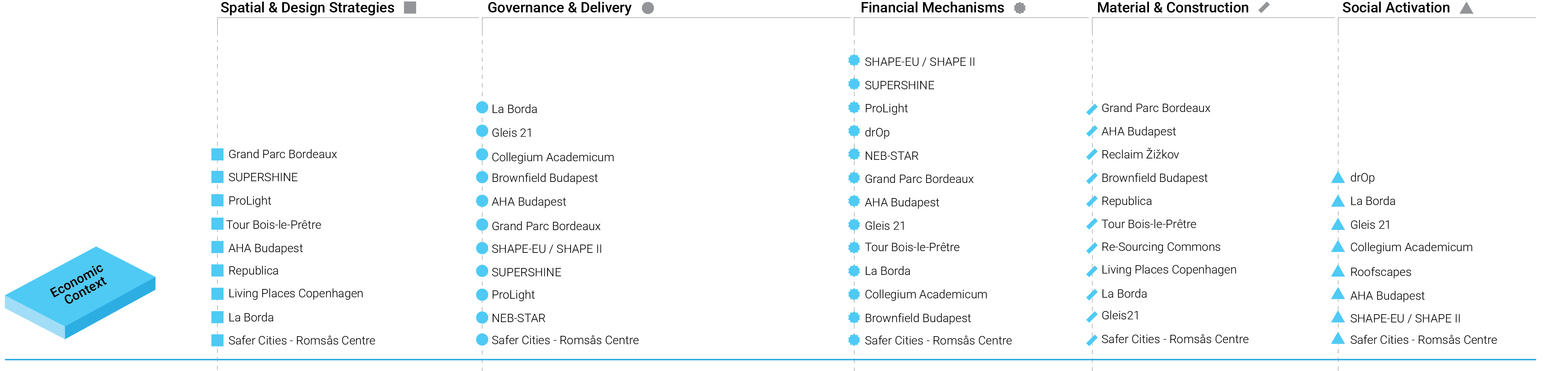
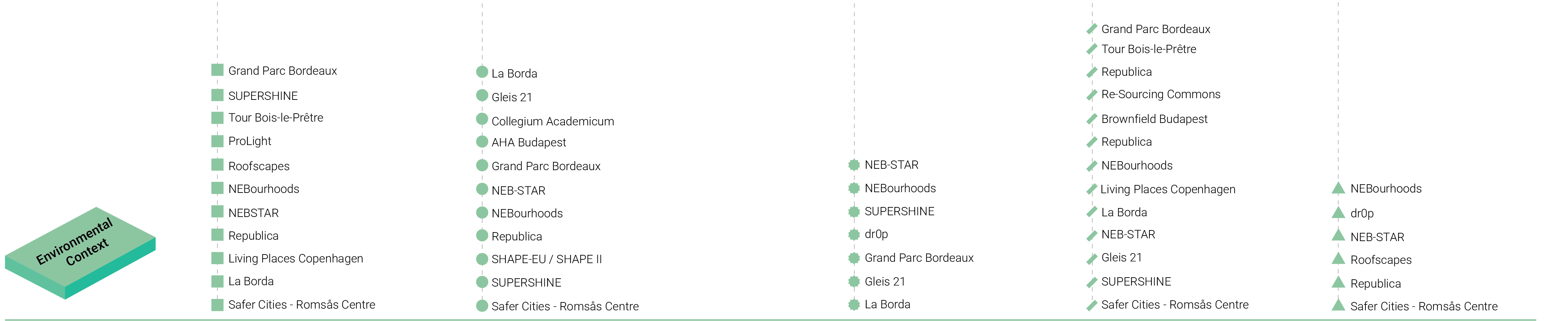
The analysis is based on a matrix framework, whose two dimensions are:
- the contexts: economic, social, and environmental, strongly interdependent
- the levers that enabled to achieve positive outcomes.
These levers emerged as recurring strategies that systematically led to successful results. They are grouped in five domains: social activation, construction material & techniques, financial mechanisms, governance & delivery, spatial & design strategies.
The analysis shows how the different projects combine these levers to respond to different contexts in view of housing affordability and resilience.
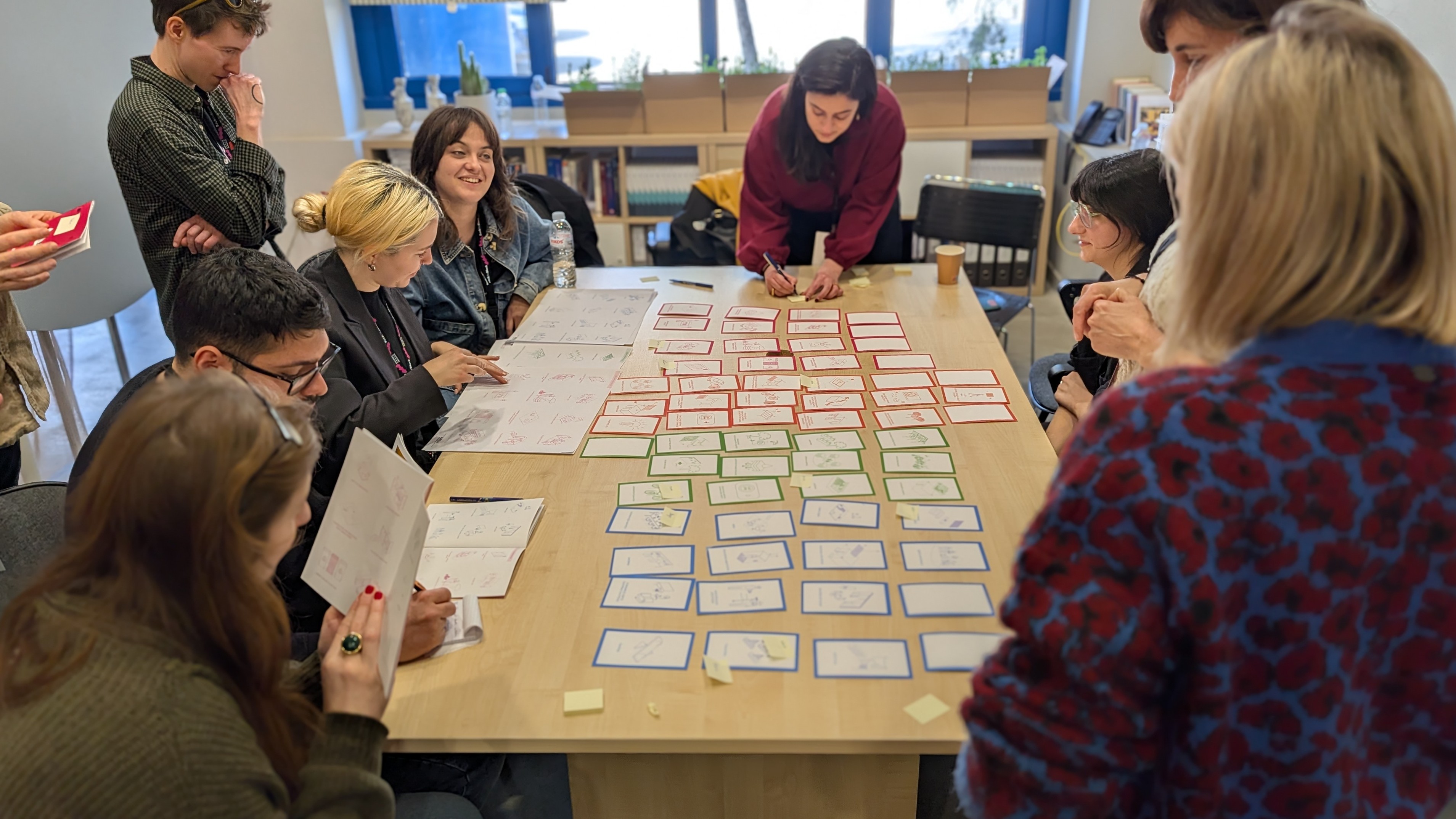
Each individual project is presented in two pages: the first page introduces the context and challenges, while the second fully focuses on the transferable actions, that could be replicated in other projects featuring similar context and/or challenges.
This project was funded by the European Union’s Erasmus+ program.