SHARE: Community revitalisation to improve life in central Fuenlabrada
Integrating housing, care and community to support healthier ageing
Credit: Municipality of Fuenlabrada
Credit: Municipality of Fuenlabrada
Credit: Municipality of Fuenlabrada
Case Study
Context
Growing isolation and care needs in ageing European communities
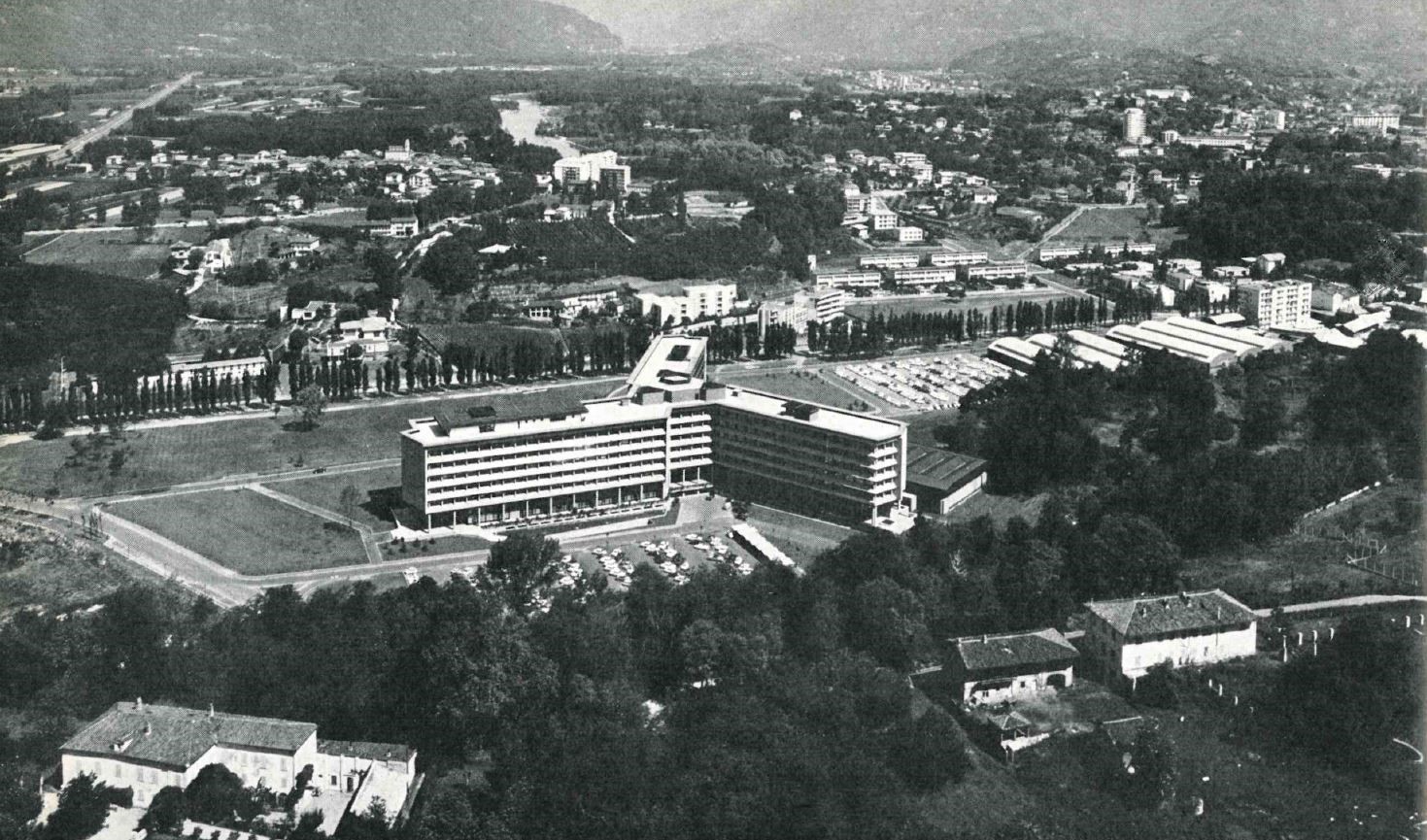
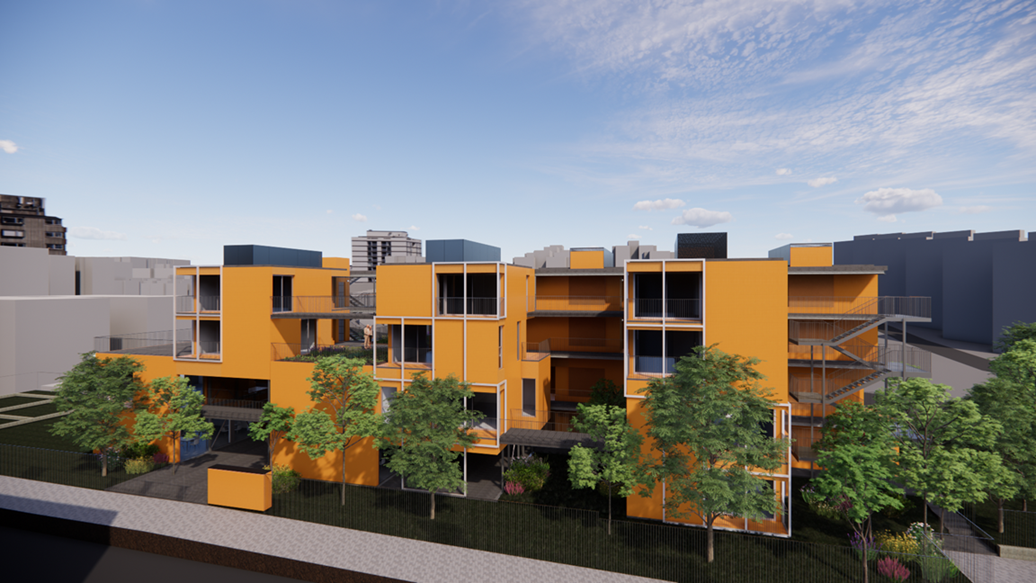
SHARE is a comprehensive community revitalisation solution to improve life in central Fuenlabrada, Spain. The area has been grappling with a range of challenges in recent decades, from deteriorated and vacant housing, to disused facilities, closed businesses and an ageing rate well above the city average.
While people are living longer, many older adults increasingly experience loneliness, declining mobility and fragmented access to care. Housing systems frequently separate accommodation, healthcare and community services, forcing vulnerable residents to navigate multiple organisations while remaining socially isolated.
At the same time, younger generations face rising housing costs and fewer opportunities to participate in supportive neighbourhoods. These parallel challenges suggest that housing should be understood not simply as shelter but as part of a wider care ecosystem.
SHARE explores how housing can become the physical foundation for stronger relationships between generations, integrating homes, support services and community life into a single neighbourhood model.
Story
Designing neighbourhoods where care becomes part of everyday life
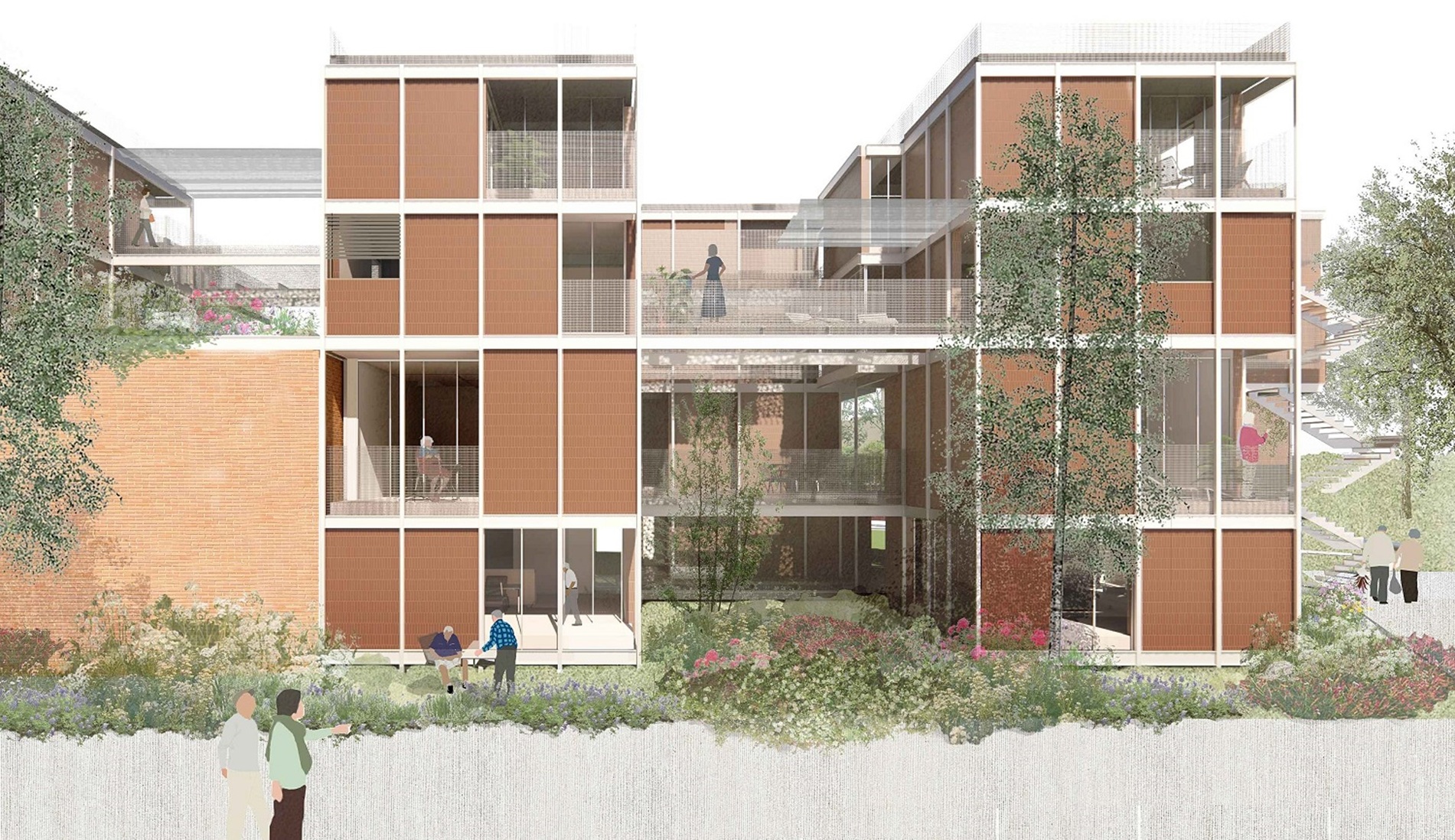
SHARE develops an intergenerational approach to housing in which accommodation, community facilities and care services are planned as one integrated system. Rather than concentrating support within specialised institutions, the project creates opportunities for informal daily interaction alongside professional care.
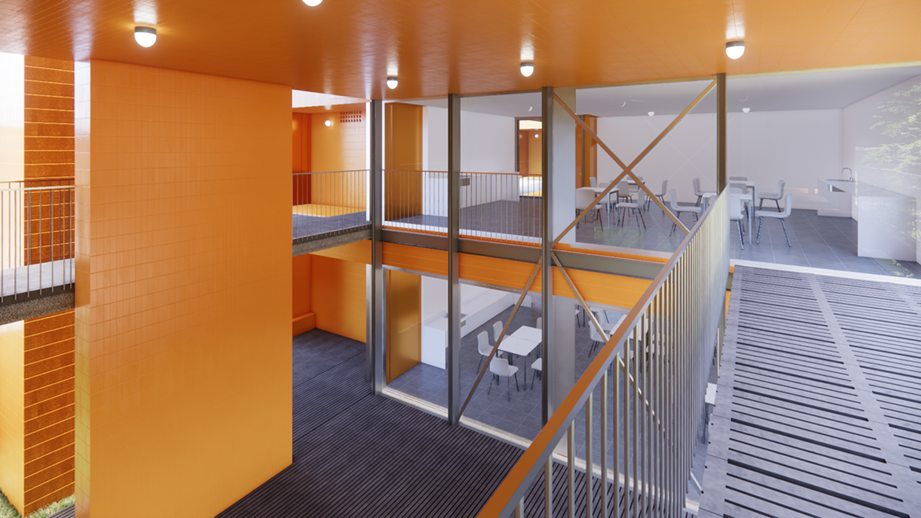
Residents of different ages share common spaces, activities and neighbourhood facilities that encourage regular contact and mutual support. Housing is therefore complemented by social infrastructure that strengthens resilience, wellbeing and inclusion.
The project demonstrates that everyday encounters—sharing meals, using common spaces or participating in local activities—can become important forms of preventative care. These relationships reduce isolation while allowing formal care services to operate more effectively.
Importantly, SHARE does not replace professional support. Instead, it creates environments where formal and informal care reinforce one another. The result is housing that supports independence while strengthening neighbourhood solidarity.
Lesson learnt
Housing and care should never be planned separately
SHARE demonstrates that healthy communities emerge when housing supports relationships rather than simply accommodating individuals.
Key lessons include:
- Integrate housing, healthcare and community services from the earliest planning stages.
- Design generous common spaces that encourage spontaneous interaction.
- Plan for different life stages within the same neighbourhood.
- Treat loneliness as a design challenge as well as a social issue.
- Support informal community networks alongside professional care systems.
The project also reminds us that resilience is built through everyday relationships. Buildings can create opportunities for connection, but it is people who transform these opportunities into lasting communities.
Impact
SHARE strengthens neighbourhood wellbeing by connecting housing with care, inclusion and everyday social interaction.
Residents benefit from stronger support networks, improved access to services and greater opportunities for intergenerational exchange. The project demonstrates how housing can reduce isolation while improving long-term health outcomes and community resilience.
Its wider significance lies in reframing housing as preventative social infrastructure. Rather than responding to crises after they occur, neighbourhoods become places where wellbeing is actively cultivated through design and participation.
The SHARE project is funded by the European Urban Initiative.