Erden PURE Walls: 100% earth, 0% concrete
Cement-free earth walls slashing costs, time and emissions, fully recyclable
Credit: ERDEN/ Hanno Mackowitz: https://www.themayor.eu/en/a/view/back-to-roots-revolution-in-construction-straight-from-austria-9893
Credit: Erden.at, Martin Rauch: https://eartharchitecture.org/?p=1400
Credit: Erden.at, Martin Rauch: https://eartharchitecture.org/?p=1400
Resource
Context
Here is how a small Austrian company turned ancient earth building into industrial reality
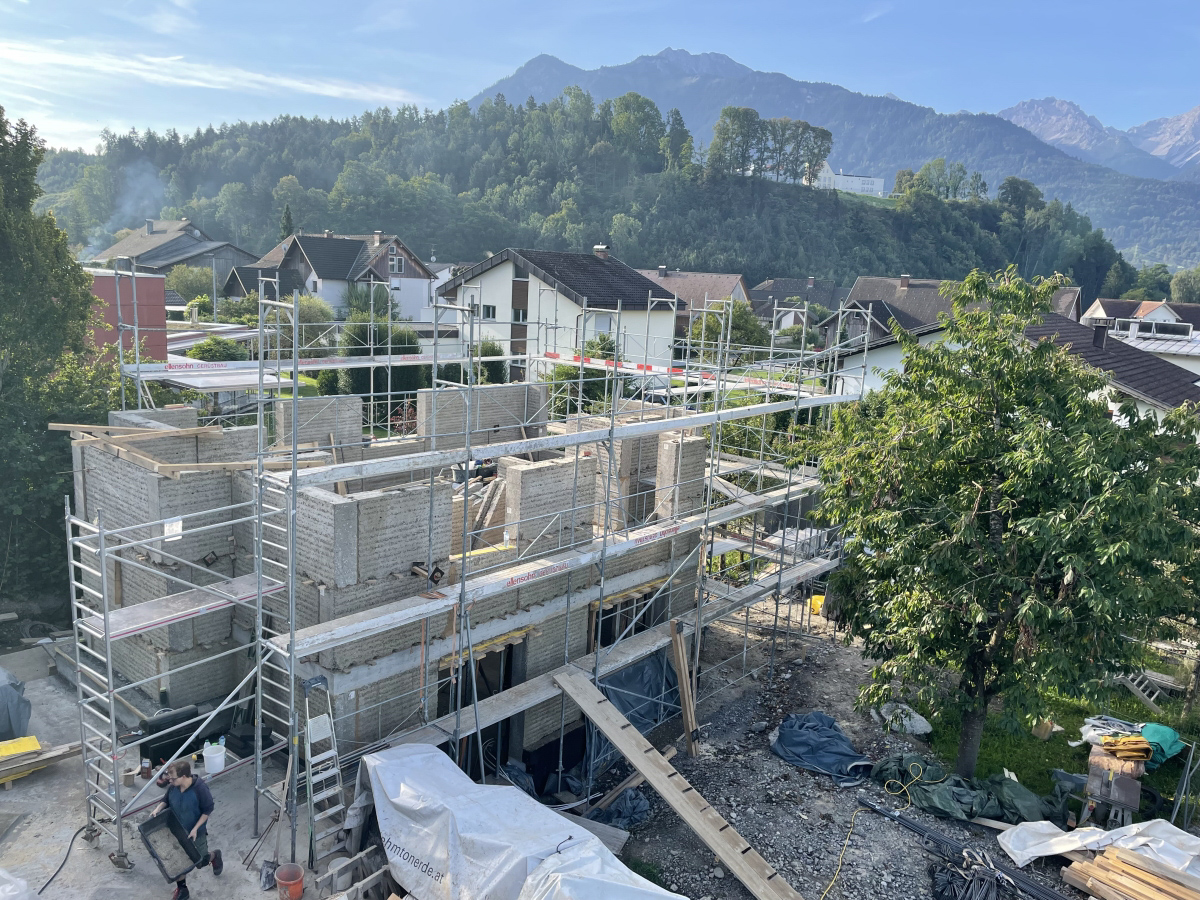
For over 35 years, Martin Rauch has advocated for rammed earth construction in Vorarlberg, Austria. His company, ERDEN, operates from the same region, in the city of Schlins, powered by hydroelectric power and solar thermal system. In 2021, ERDEN won a New European Bauhaus Prize for PURE Walls: prefabricated, cement-free rammed earth elements.
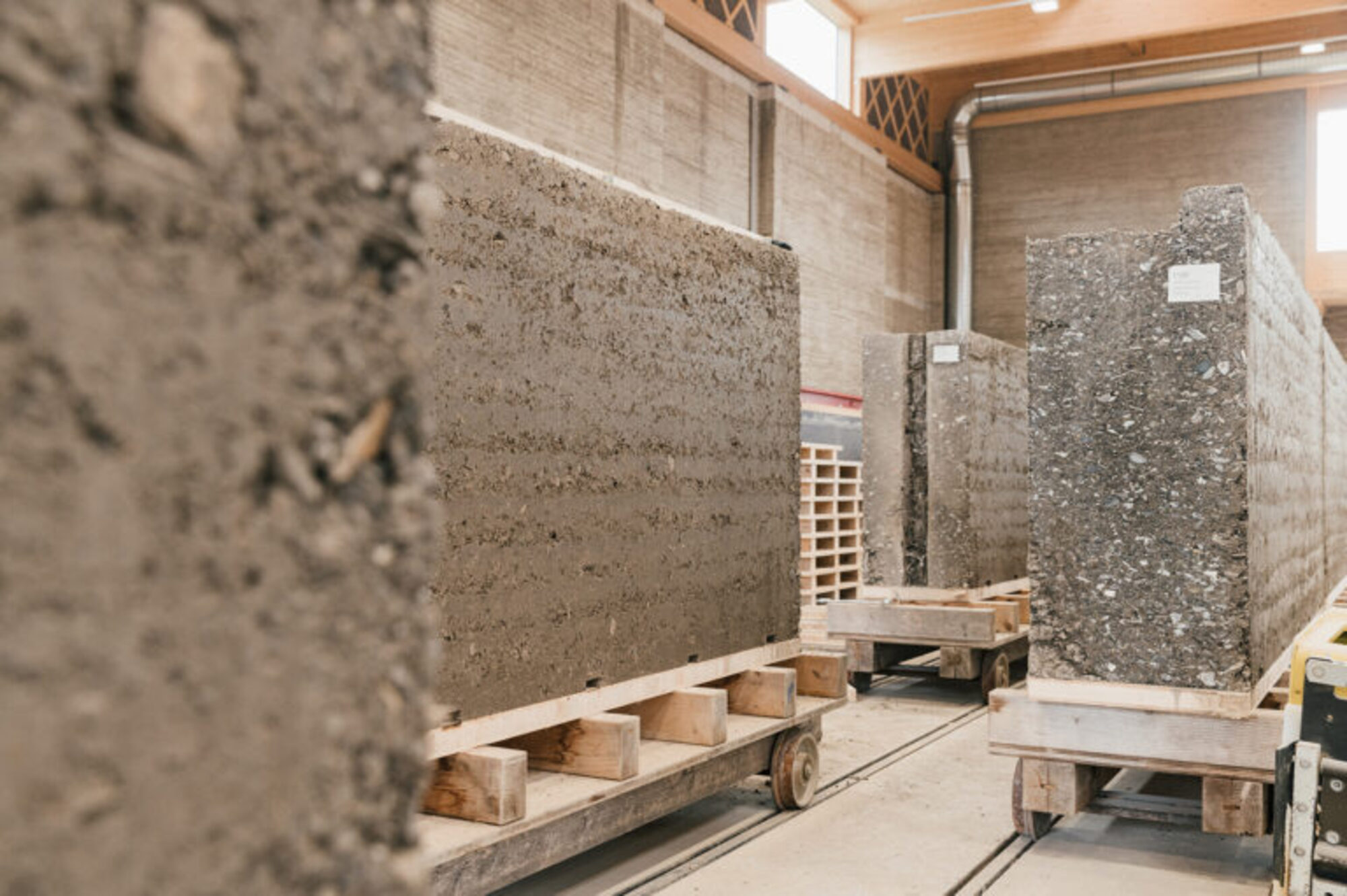
Traditional rammed earth is labour-intensive and hard to scale, while concrete is everywhere despite its carbon footprint. In Europe, high labour costs nearly extinguished rammed earth. Prefabrication became the solution. PURE Walls are produced in formwork up to 50 metres long, using a robotic ramming machine. The process cuts production time by 65% compared to conventional rammed earth.
Validation then came through built projects. For example, the Ricola Herb Centre near Basel (2012), designed by Herzog & de Meuron, used ERDEN's technique on a 100-metre facade. PURE Walls have since been adopted across Austria, Switzerland and Germany.
ERDEN also developed an alternative financing model: a cooperative called Vermögenspool, which raised one million euros from investors to support local communities and their own operations. They’re also running the ERDEN Schule, offering training and workshops.
The resource in a nutshell
A sustainable building system for construction: earth blocks, no cement, fully circular
PURE stands for Prefabricated Unstabilised Rammed Earth. It is a building system: prefabricated, cement-free rammed earth elements. It includes the production method, the robotic ramming machine (Roberta), the formwork system, and ERDEN's know-how.
Elements are produced in formwork 40-50 metres long and 1.4 metres high. Roberta distributes excavated earth in 12-15 cm layers, then compacts each layer to 8-10 cm. Once rammed, the wall is cut into blocks and transported to sites. The process cuts production time by 65% compared to conventional rammed earth.
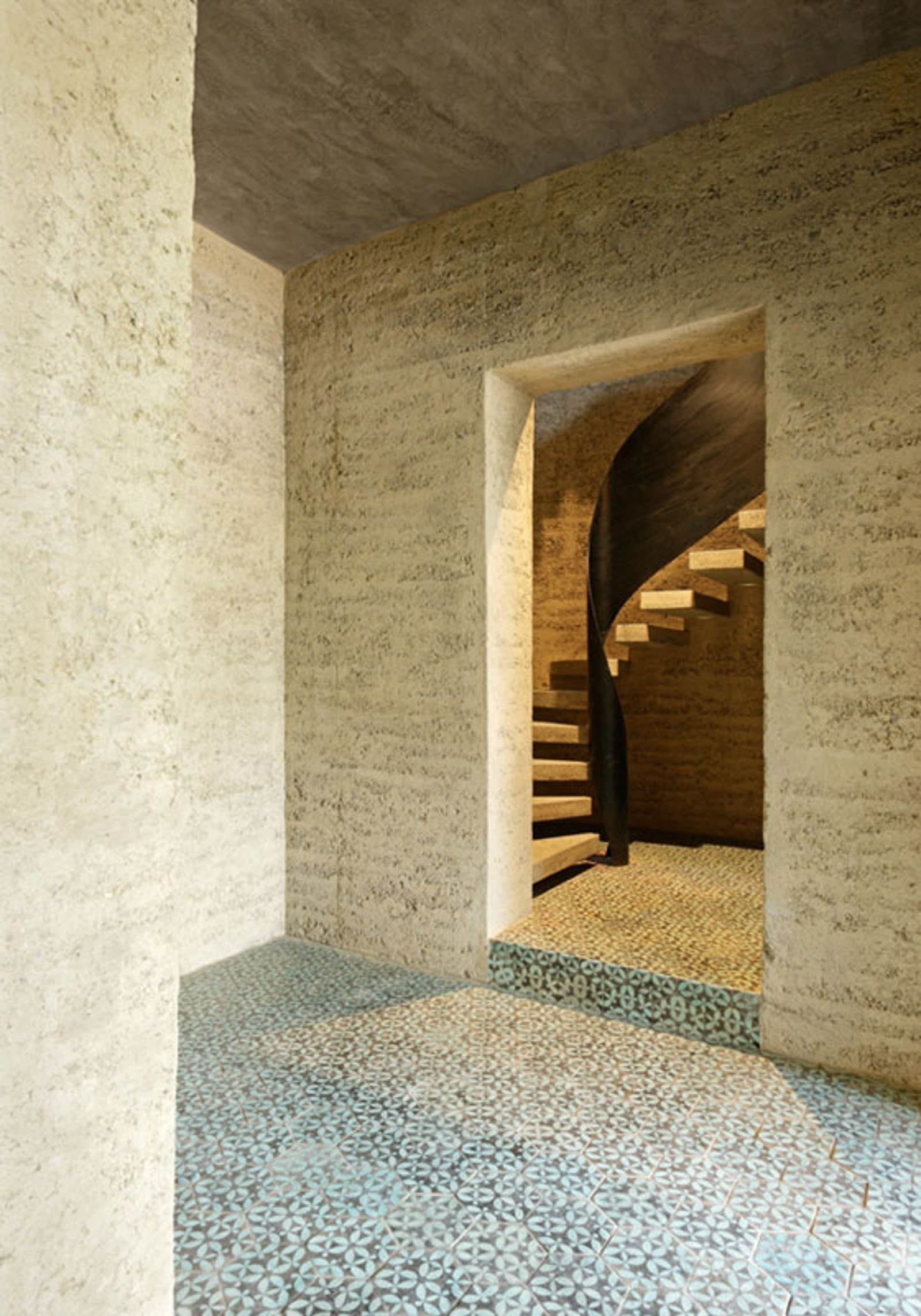
What can it be used for? PURE Walls serve as load-bearing walls or interior lining (as thin as 7 cm). The material regulates indoor temperature and humidity, reducing heating and cooling needs. It contains no cement and is 100% recyclable.
Examples include the Ricola Herb Centre near Basel (2012) by Herzog & de Meuron, with a 100-metre facade and no movement joints. PURE Walls have been adopted in residential and commercial buildings across Austria, Switzerland and Germany.
The company hopes to see prefab rammed earth factories appear across Europe and beyond, so that this circular material becomes a global standard. How to do so? Build with it, even as an individual. Local authorities can also take up this cause by specifying rammed earth in public buildings. Simply talking about it helps it spread. ERDEN produces the elements in Schlins, Austria. As it is not ecologically viable to deliver walls outside central Europe, ERDEN wants industrial players to do the same: they have no vocation being the sole custodians of their expertise. This can take root in the know-how transfer available through ERDEN Schule training.
The ERDEN PURE Walls project has won the NEB Prizes 2021 under the category “Techniques, materials and processes for construction and design”.