Gotland Garbage Glows: Turning Plastic Waste into Jewellery
A Swedish studio turning broken sleds, toys and packaging into unique, wearable art
Credit: Linda Runarsdottir
Credit: Linda Runarsdottir
Credit: Linda Runarsdottir
Case Study
Context
Gotland's plastic waste problem meets fashion's need for sustainable alternatives
Gotland is Sweden's largest island, located in the Baltic Sea. It is known for its nature, tourism, and a growing population during summer months. But plastic waste is a real issue on and around the island.
At the same time, the fashion industry remains one of the world's most polluting sectors. Many luxury and fast fashion brands rely on virgin plastics and synthetic fibres. Sustainable alternatives exist, but they are often expensive, hard to scale, or lack aesthetic appeal.
Gotland also has a small but active creative community. However, few links exist between local waste streams and high-end design. Discarded toys, broken sleds, ice cream tubs, and other plastic packaging often end up in recycling bins or in nature. Most people see them as trash.
In 2019, Linda Runarsdottir decided to considerate them differently. She founded Gotland Garbage, a studio that turns plastic waste into one-of-a-kind jewellery pieces. Her goal was not just to recycle, but to create something beautiful, wearable, and meaningful, as a response to her climate anxiety.
Story
From climate anxiety to climate action, one piece of jewellery at a time
Founded in 2019 by Linda Runarsdottir, Gotland Garbage turns climate anxiety into action. The goal is twofold: reduce plastic waste on and around the island of Gotland, and create beautiful, unique jewellery that starts conversations about recycling and consumption.
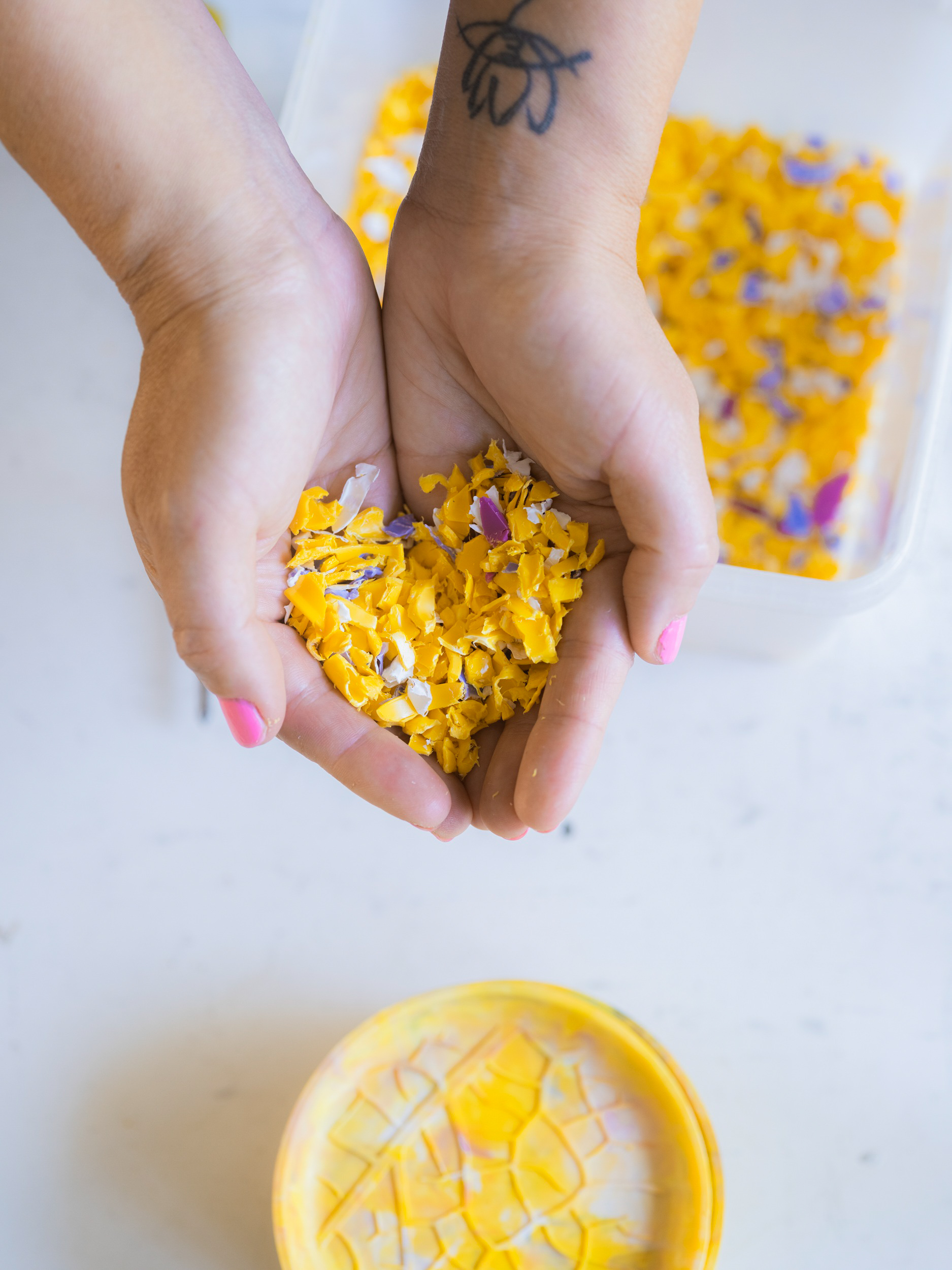
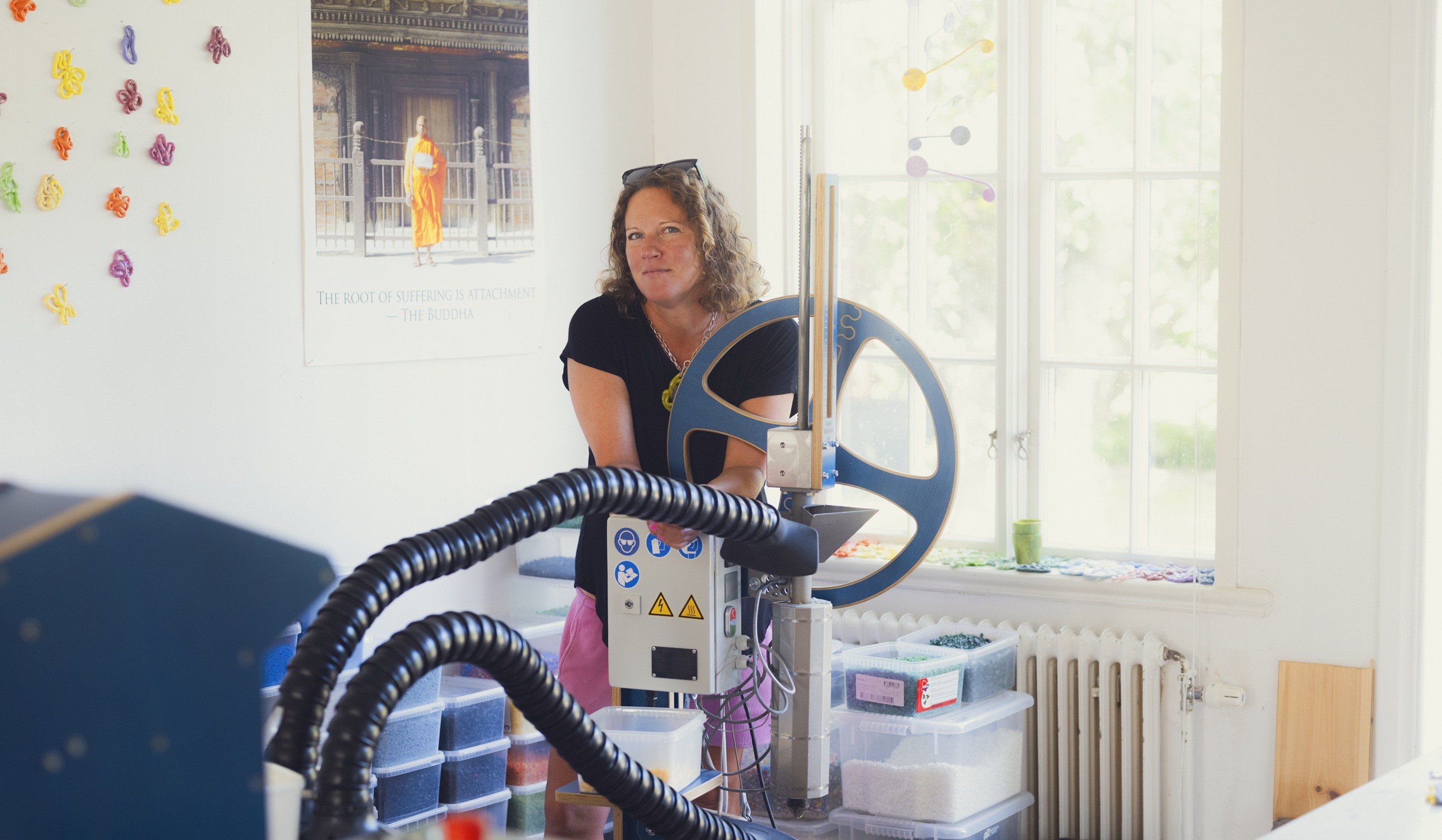
The process begins with collection. Local residents bring broken sleds, ice cream tubs, toys, and packaging to the studio. The plastic waste is then sorted and cleaned by hand.
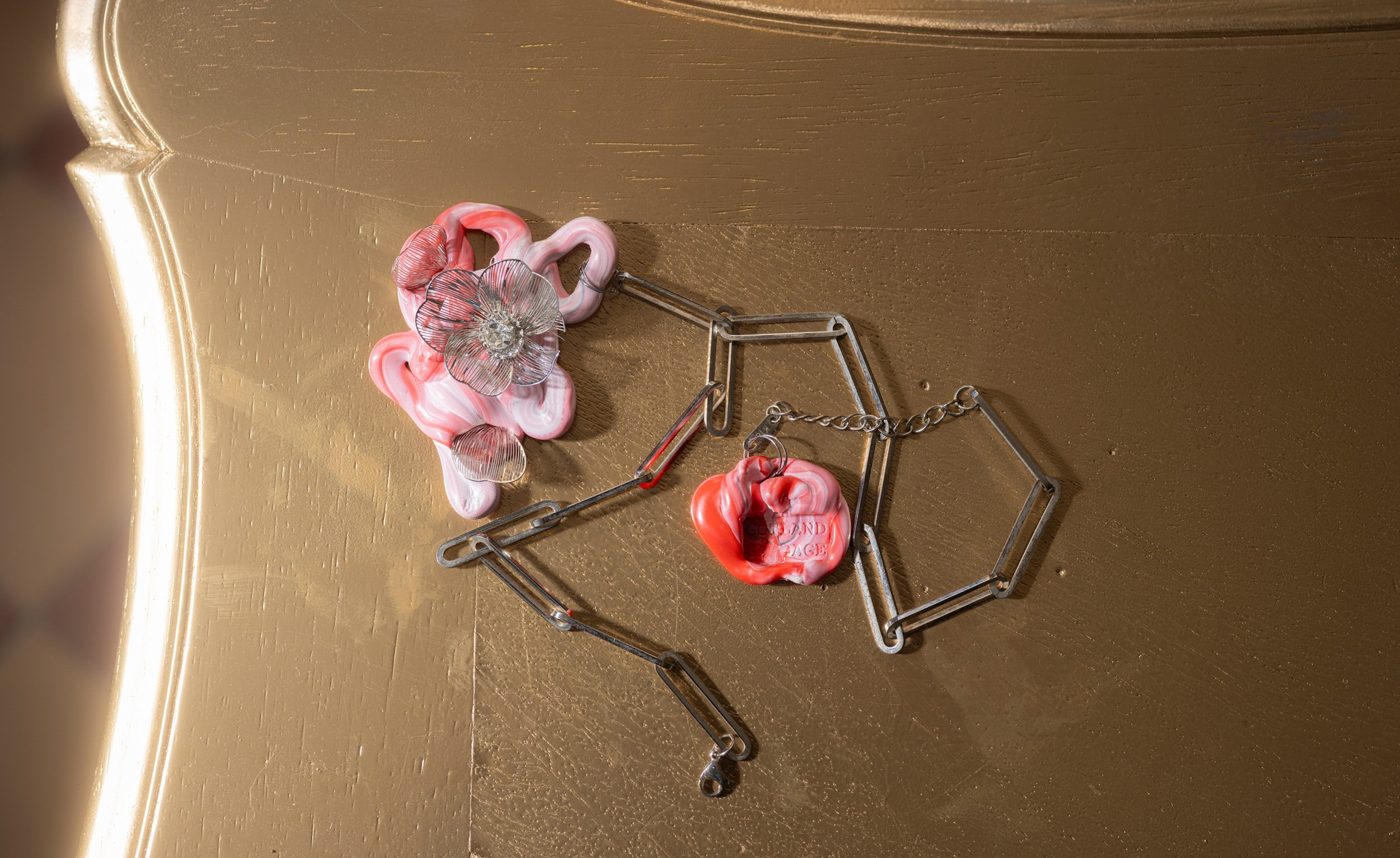
She developed her own unique technique called "free flow". Unlike traditional injection molding, which uses fixed molds to create identical pieces, Linda moves the injection machine freely. The plastic flows and is shaped in mid-air. The result is organic, asymmetrical, and one-of-a-kind. No two pieces are ever the same. The colours come from the original plastic, no dyes are added. Imperfections are embraced, following the Japanese aesthetic of wabi-sabi.
Sometimes, Linda incorporates metal parts from broken or discarded jewellery, pressing them into the warm plastic before it hardens. This creates hybrid pieces that blend materials and histories.
The studio operates on 100% renewable electricity, and most of its machinery is made from recycled materials. The entire production is small-scale, transparent, and accessible: anyone can see how a broken toy becomes a piece of jewellery.
Participation is open to all. People contribute by donating plastic waste, or simply wearing a piece that sparks curiosity. The project does not require technical skills or special knowledge: just a willingness to see waste differently.
Lesson learnt
Low tech, small scale, community driven, transparent production
Involving the community in collecting waste proved essential. People brought broken sleds, toys, and packaging to the studio not just as donors, but as participants. They saw their old items transformed into something beautiful, which created a sense of ownership and pride. The process became a conversation starter, not just a transaction.
The "free flow" technique also worked beyond expectations. By moving the injection machine by hand instead of using fixed molds, Linda created pieces that are genuinely one-of-a-kind. The imperfections became a feature, not a flaw, following the wabi-sabi aesthetic. Customers appreciate that no two pieces are alike.
Working with metal from broken or discarded jewellery added another layer. Pressing metal into warm plastic creates hybrid pieces that carry multiple histories. This technique was developed through trial and error, but it proved reliable and distinctive.
The small-scale, transparent model worked well. The studio runs on renewable electricity, its machinery is largely made from recycled materials, and anyone can see how a broken toy becomes a piece of jewelry. This simplicity builds trust.
For other cities or stakeholders, a few lessons stand out. You do not need a large factory or expensive equipment. A small studio, basic tools, and locally collected plastic waste can be enough to create something valuable. Involving people in the collection turns waste into a shared story, not just a material. The approach shows that recycled plastic does not need to imitate new materials, its own colours and imperfections can become the signature. Transparency matters: when people see how a broken toy becomes a piece of jewellery, they trust the process.
Impact
On a local level, the project has helped reduce plastic waste in and around Gotland by turning discarded items into jewellery instead of letting them pile up in nature or recycling bins. Those who donate plastic waste see their old broken toys and packaging transformed into something beautiful. This turns recycling into a personal experience, not an abstract duty. Young participants, in particular, feel proud that their discarded items become objects worn by others.
On the production side, Linda developed a unique technical skill: the "free flow" injection technique that did not exist before. She also learned how to integrate metal parts from broken jewellery into warm plastic, creating hybrid pieces that carry multiple histories. These skills are now part of her studio’s identity.
Institutionally, the project has gained recognition far beyond Gotland. The jewellery has been worn at Paris Fashion Week and at a fashion show in China. Collaborations include Rave Review (Swedish Designer of the Year 2022), Pow Studio, Wos, and others. Linda also works with Luleå University of Technology on material testing and with Ö‑Gjort on live manufacturing shows.
The Gotland Garbage Glows project was among the NEB Prizes 2025: Champions finalists under the category “Regaining a sense of belonging”.