Creative Solutions for Europe's Largest River Basin
A hackathon where changemakers develop citizen-led solutions for the Danube
Credit: All credits @PULSAQUA
Credit: All credits @PULSAQUA
Credit: All credits @PULSAQUA
Case Study
Context
The Danube River Basin, spanning 19 countries and facing increasing environmental pressure
The Danube is Europe's second-longest river: it flows through 19 countries and over 80 million people depend on it. But nowadays, the river is in trouble.
Engineering projects, pollution and habitat loss have damaged more than 80% of its ecosystems. Invasive species are spreading and sediment build-up is affecting water quality and increasing flood risks. Climate change is making things even worse, with more extreme weather events.
Technical fixes have been the default response for decades. Whether it is dams, dikes, concrete channels: they have not really solved the problem. Engineering alone cannot restore a river. People need to feel connected to it, they need to understand what is at stake and what they can do.
Citizen science has grown across Europe. Community engagement is more common than it used to be. But these efforts rarely convert into real decisions. They often remain separate from the planning and funding processes that shape river management.
Story
From online training to a two-day hackathon, where creative ideas became real solutions
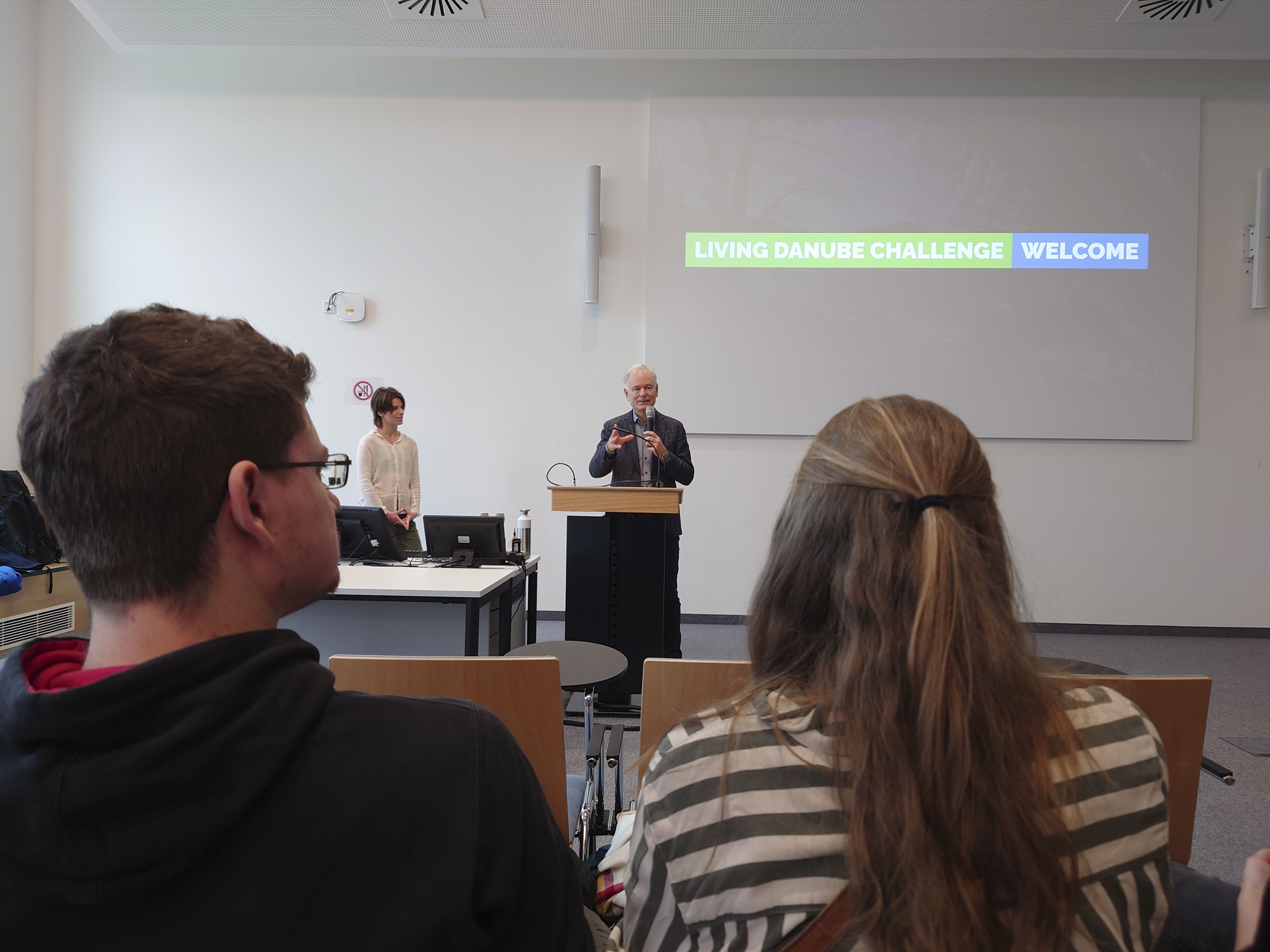
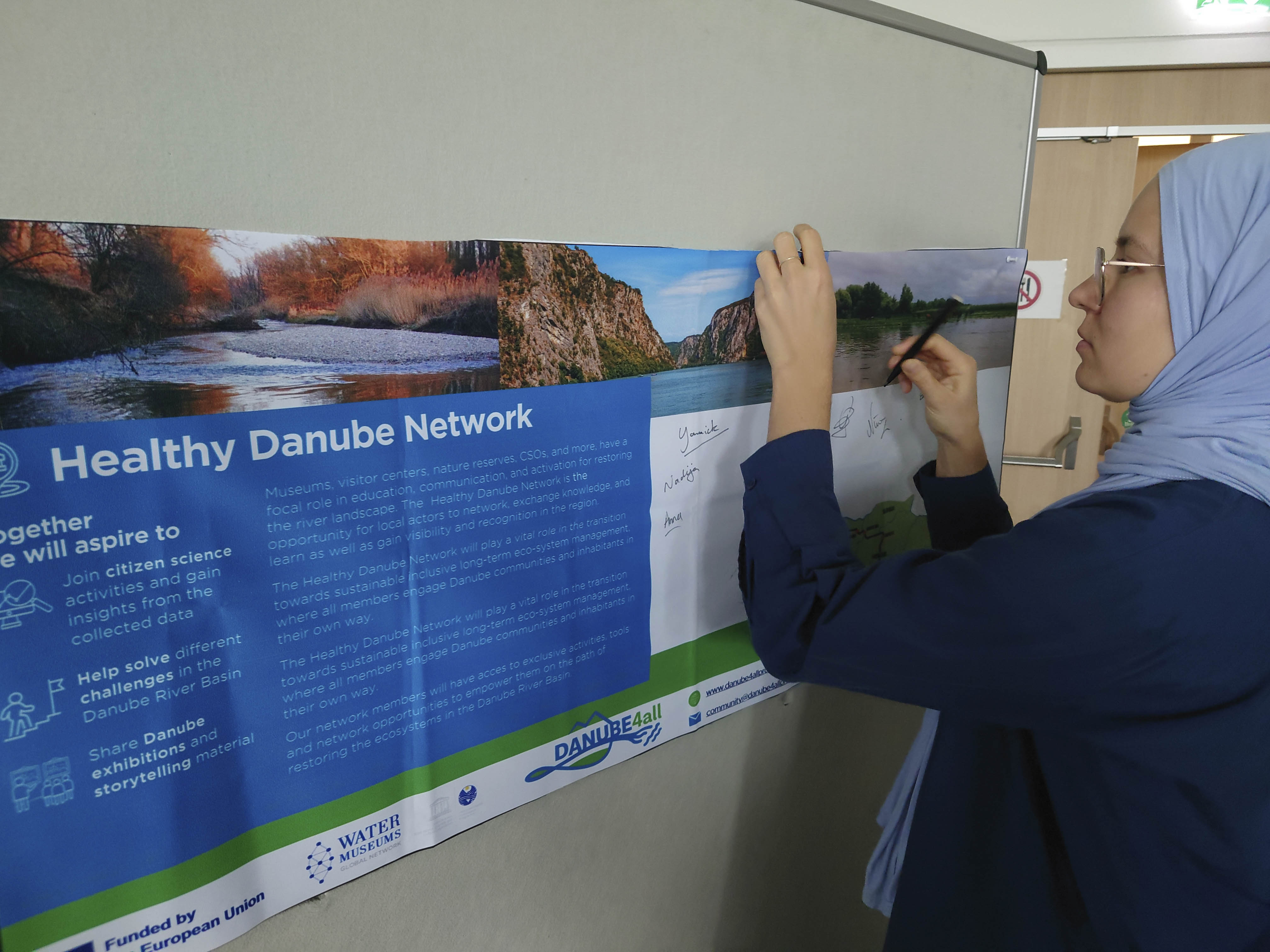
The Living Danube Challenge gave emerging changemakers the tools and space to turn their ideas into action. It was co-produced by DANUBE4all, a Horizon Europe project on river restoration, the EIT Community's Ignite NEB programme, PULSAQUA, a Dutch water innovation agency, and ZSI, an Austrian research institute on social innovation.
The programme targeted early-career changemakers and aspiring social innovators: young professionals, artists, designers, environmental scientists and urban planners, who were motivated to develop solutions for the Danube. Participants were reached through the DANUBE4all partner network and a targeted outreach campaign. Three online training sessions in September 2025 introduced them to nature-based solutions, citizen science methods, and social business strategy. They heard case studies from across the Danube Basin, including a keynote from Patagonia and a presentation from the Gabrovo Collective in Bulgaria.
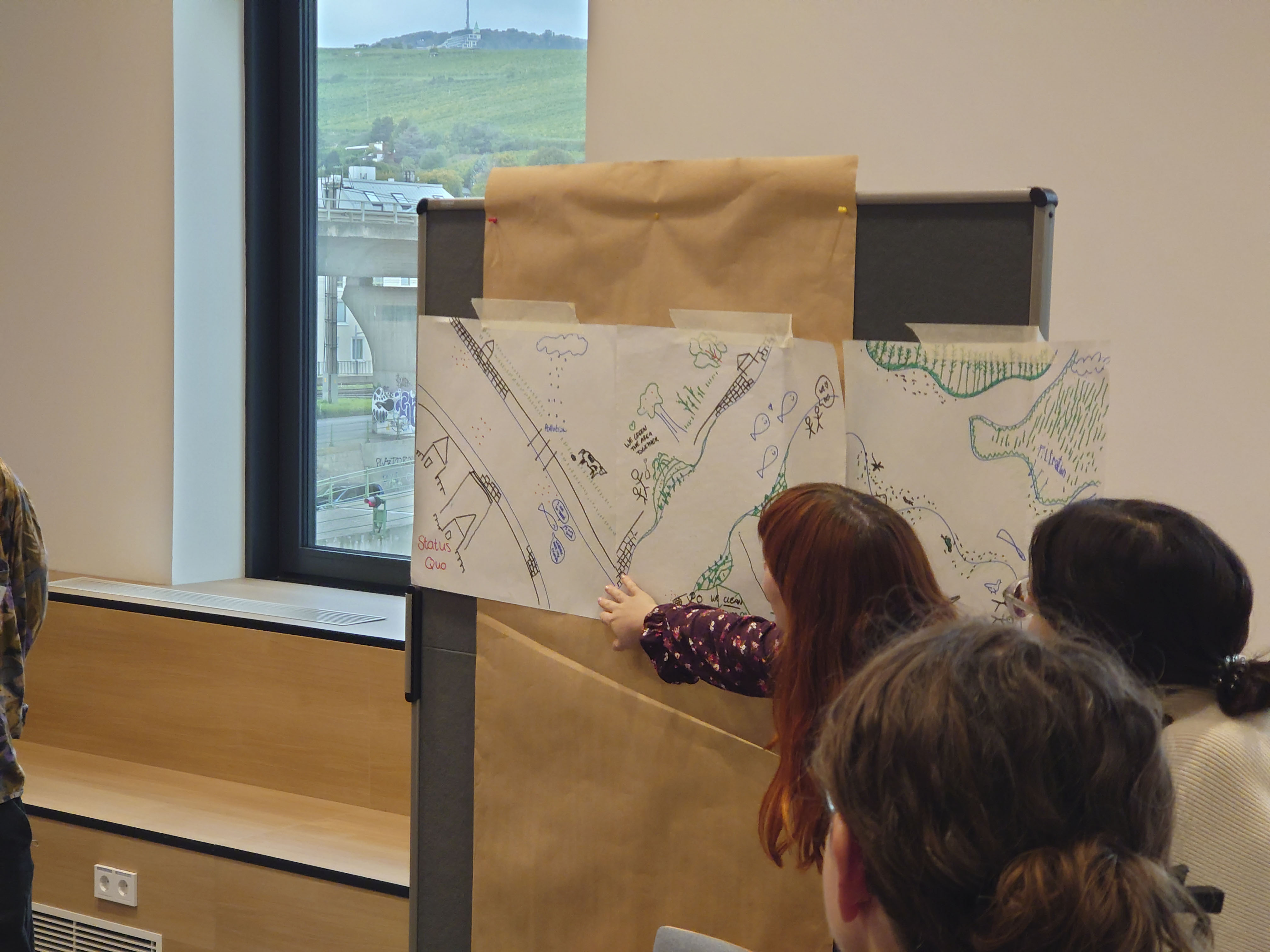
The in-person event took place on October 10‑11, 2025, at the BOKU River Lab in Vienna. Participants could register as a complete team of up to five people, or as individuals looking to join a team. Matchmaking sessions were organised beforehand to help people find teammates with complementary skills. During this two-day hackathon, teams chose one of five environmental challenges concerning: biodiversity, sediment balance, water pollution, invasive species, or gamified nature exploration. Guided by expert mentors, they moved through multiple rounds of ideation and iteration before pitching their solutions to a jury.
The organisers also made sure the event was inspiring. Participants watched short films, saw a mermaid-themed comedy performance, and a dance piece about human-water interaction. These artistic interventions helped people think differently about the relationship between rivers and communities.
At the end of the two days, teams pitched their solutions to a jury. Three winners were selected: post_flood_community "Precipitate!" (flood sediment as art material), RiverQuest (a gamified app for citizen science), and AquaMind (an interactive learning experience on water issues). They went on to join the Grow NEB development programme.
Lesson learnt
Local outreach, clear expectations, creative inspiration, structured matchmaking
The organisers learned a few things about running this kind of programme.
Outreach works best when you have local connections. PULSAQUA, the project lead, was based in the Netherlands, while the event took place in Vienna. The choice of Vienna was driven by the presence of key partners and the BOKU River Lab, but it meant the team had to rely on local partners and challenge owners to bridge the gap. The team realised that being physically present in Vienna earlier would have helped them build relationships with local networks and reach more participants directly.
Paying for travel helped, as it brought in participants from further away and made a more inclusive participation possible.
Clarity of expectations turned out to be a recurring issue. People came from different backgrounds, so they understood the challenges differently. The teams had to adjust after the first webinar, starting with a broader introduction instead of jumping straight into the details. One-on-one meetings helped, so did guidance notes and FAQs.
The artistic programme was not just a nice addition. It actually helped people connect with the topic and with each other. The films, the dance, the comedy act: they opened up new ways of thinking about water. The organisers observed that teams became more cohesive and ideas flowed more freely.
Matchmaking also proved essential. Most participants did not know each other before the event. The team set up sessions to help people find teammates with complementary skills. Without this, the two-day hackathon would not have worked as well.
Impact
The Living Danube Challenge brought together a diverse group of changemakers from across the Danube region and beyond. The webinar series reached approximately 35 individuals per session, with 57 individuals attending the in-person event in Vienna.
Beyond the three winning projects that received funding and coaching, the event also created a lasting network among participants. Participants had the opportunity to meet peers with different expertise, and the matchmaking sessions helped them build professional networks that could be useful for their future projects.
The project broadened the participants' knowledge. The training sessions and the BOKU River Lab tour allowed them to learn more about citizen science, nature-based solutions, hydromorphological research, and the financial realities of ecological restoration.
The project demonstrated that a cross-disciplinary and creative approach can effectively engage changemakers in environmental restoration. By combining training, artistic inspiration, structured mentoring, and a clear pathway to funding, the Living Danube Challenge created a replicable model for connecting citizen-led innovation to real-world ecological challenges.
The project was supported by the EIT Community New European Bauhaus – Ignite NEB programme.