Welcome to our Elderly Futures
Immersive artistic interaction to design desirable futures of elderly care
Credit: Patrik Eriksson
Case Study
Context
Combining research, art and citizens participation to reimagine elderly care
Across Europe, ageing populations are raising new questions about care, dignity, inclusion and intergenerational solidarity. Technological innovation is increasing to transform care services, but it also raises concerns about isolation, loss of human connection and unequal access to support.
Within this context, the design researchers Hayley Ho and Elsa Vaara at RISE Sweden, explored how citizens could be more actively involved in imagining future models of ageing and care. Instead of approaching the issue only through technology, the project investigated how emotional engagement could open new perspectives on the future.
Hosted at the Universeum Science Museum in Gothenburg, the initiative sought to make conversations around ageing accessible to a wide audience, including younger generations who are rarely invited into these discussions. The project thus created a public space where personal experiences, fears, and aspirations could become part of a broader collective reflection on how we want to live and age together in the future.
Story
Encouraging citizens to participate in the design of their elderly futures
“Elderly Futures” was developed as a two-day immersive public interaction combining participatory performance, scenography and design research. Taking place inside the Universeum Science Museum in Gothenburg, the experience invited visitors to imagine themselves growing old and to reflect collectively on what a desirable future could look like.
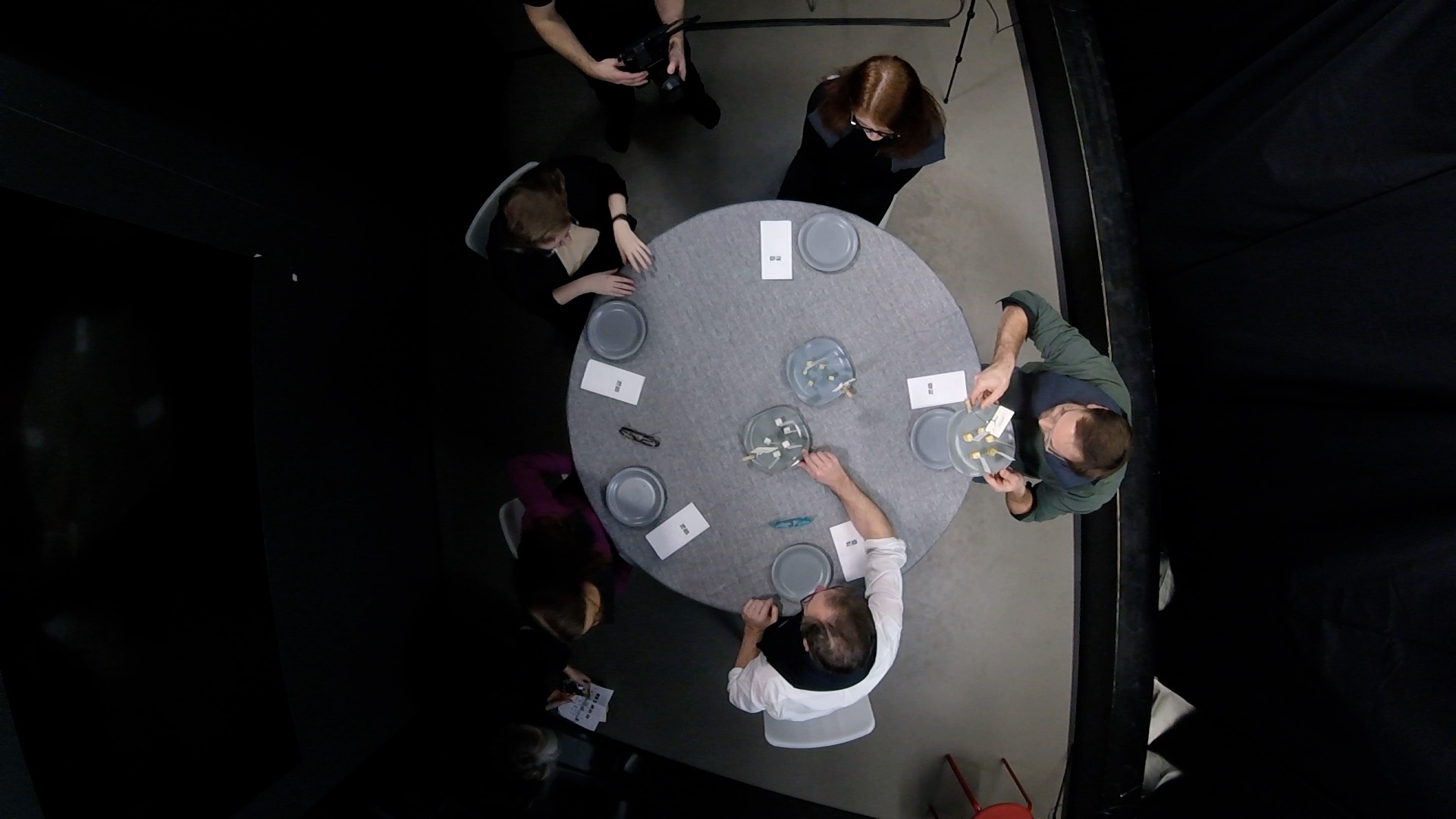
The first day invited participants into a carefully staged collective dining experience designed to spark reflection and dialogue. Visitors gathered around a carefully designed table installation where a multilingual performance artist guided conversations about ageing, dependence, autonomy and emotional wellbeing. The experience unfolded progressively, allowing participants to slowly project themselves into a future version of their lives.
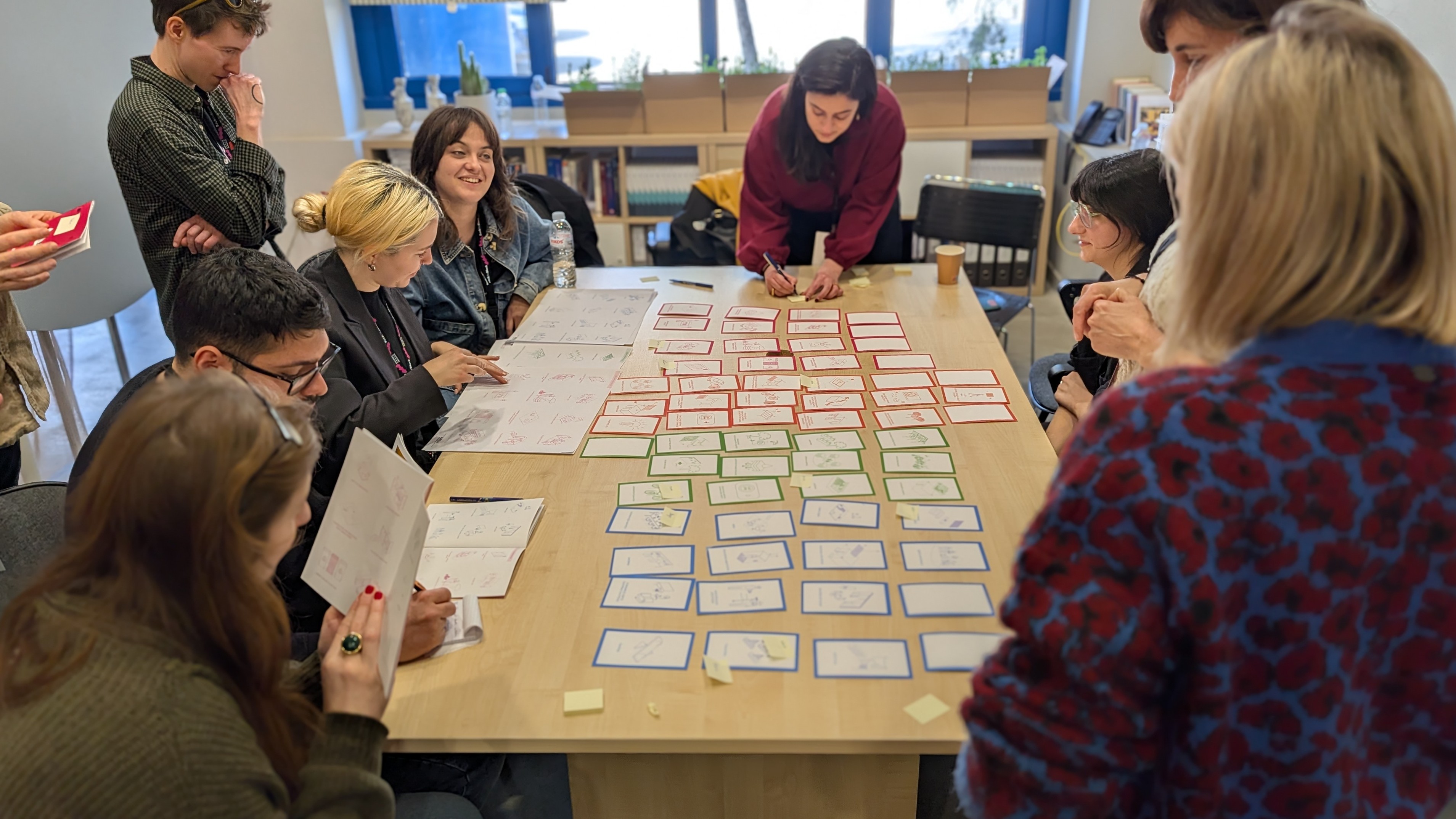
Design researchers supported the interaction through creative prompts, sensory materials and storytelling tools encouraging participants to express personal hopes, fears and expectations for later life. At the end of the experience, participants created handwritten “wish cards” describing the future they would like for themselves as older adults.
On the second day, the project evolved into an open exhibition encountered by museum visitors and school groups. Photographs captured during the previous day were printed overnight and integrated into the installation, creating a living narrative connecting participants across both days. The performance artist continued to engage visitors in spontaneous conversations, using a mix of Swedish, English and Spanish to evoke the atmosphere of a future multi-generational and multi-cultural society.
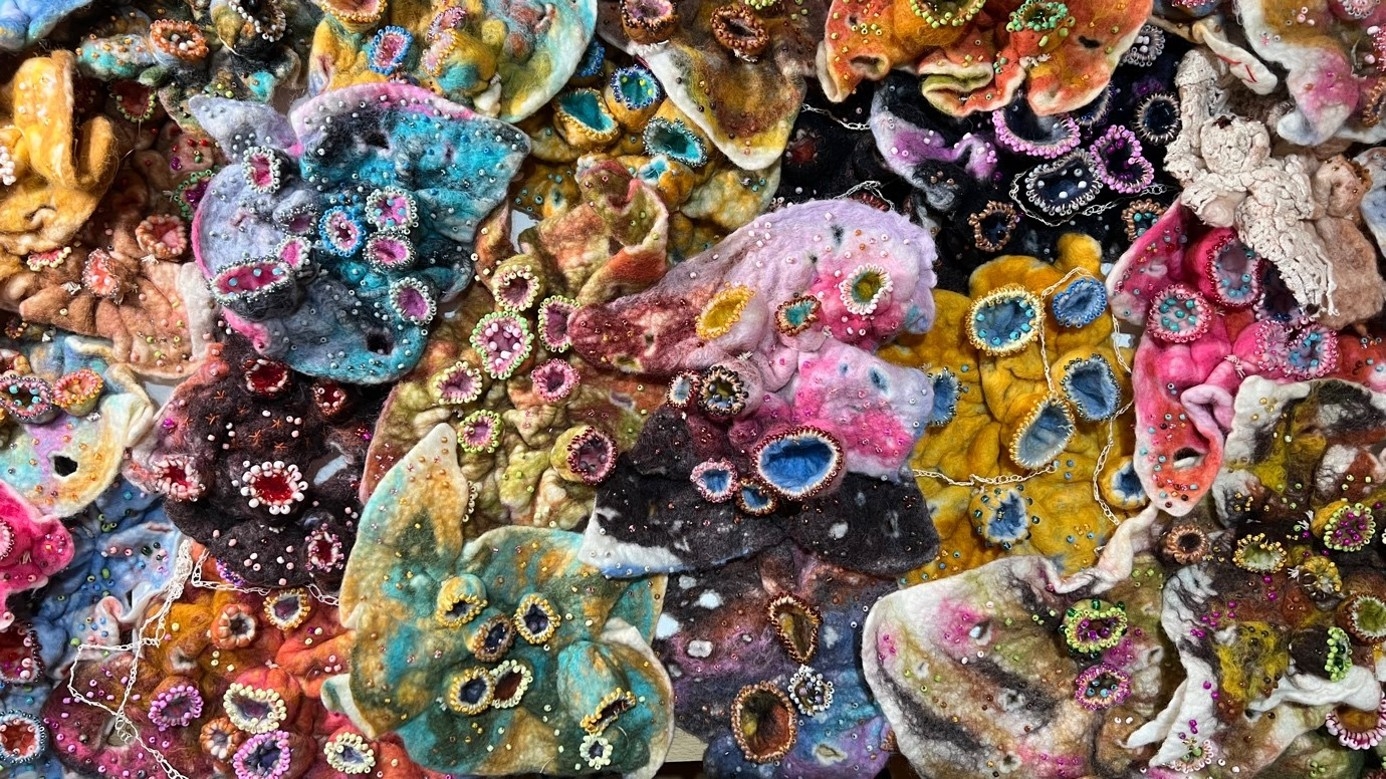
Music, lighting, textiles and graphic elements were carefully curated to create a sensory environment that felt both unfamiliar and welcoming.
Lesson learnt
Art and sensory participation can unlock deeper generational dialogue on societal transitions
The project demonstrated how artistic experiences can create meaningful public engagement around complex societal issues. By inviting participants to imagine their own future ageing, the interaction generated emotional reflection and conversations that traditional consultation methods rarely achieve.
One of the main lessons was the importance of integrating artists directly into the design and research process. The performance artist and photographer were essential co-creators of the experience, shaping not only the atmosphere but also the quality of interaction with participants. Their capacity to improvise and adapt in real time helped create a strong sense of trust and openness.
The project also highlighted the value of sensory participation. Music, scenography, multilingual dialogue and performative rituals helped participants engage with the difficult topic that is ageing.
The experience showed that cultural institutions such as museums can also become powerful spaces for democratic dialogue and collective imagination. Creating an immersive environment encouraged visitors to stay longer, reflect more deeply and engage in conversations with strangers around shared societal concerns.
Impact
“Elderly Futures” transformed conversations about ageing from an abstract policy issue into a shared personal experience. Participants were encouraged to reflect not only on elderly care systems, but also on the kind of society they wish to grow old in.
The interaction successfully increased awareness around ageing and care while fostering empathy, curiosity and dialogue across generations. Younger participants, in particular, were invited to recognise that ageing is not a distant issue affecting others, but a future that concerns everyone.
The immersive artistic format created strong emotional engagement and opened new ways for researchers, citizens and cultural actors to exchange perspectives. Visitors described the experience as moving, thought-provoking and unexpectedly personal.
The project also contributed to new participatory methods for public engagement by demonstrating how performance, scenography and sensory design can support reflection on societal transitions.
The InteractionSeeds project was funded by the Horizon Europe programme.