Laguna nel Bicchiere: Reviving Venice’s forgotten vineyards
Restoring Venice's lost agricultural heritage to fight isolation, depopulation, and climate change
Credit: New European Bauhaus Prizes – Laguna nel Bicchiere
Credit: New European Bauhaus Prizes – Laguna nel Bicchiere
Credit: New European Bauhaus Prizes – Laguna nel Bicchiere
Case Study
Context
Forgotten vineyards to overcome overtourism, depopulation, and grow hope in Venice
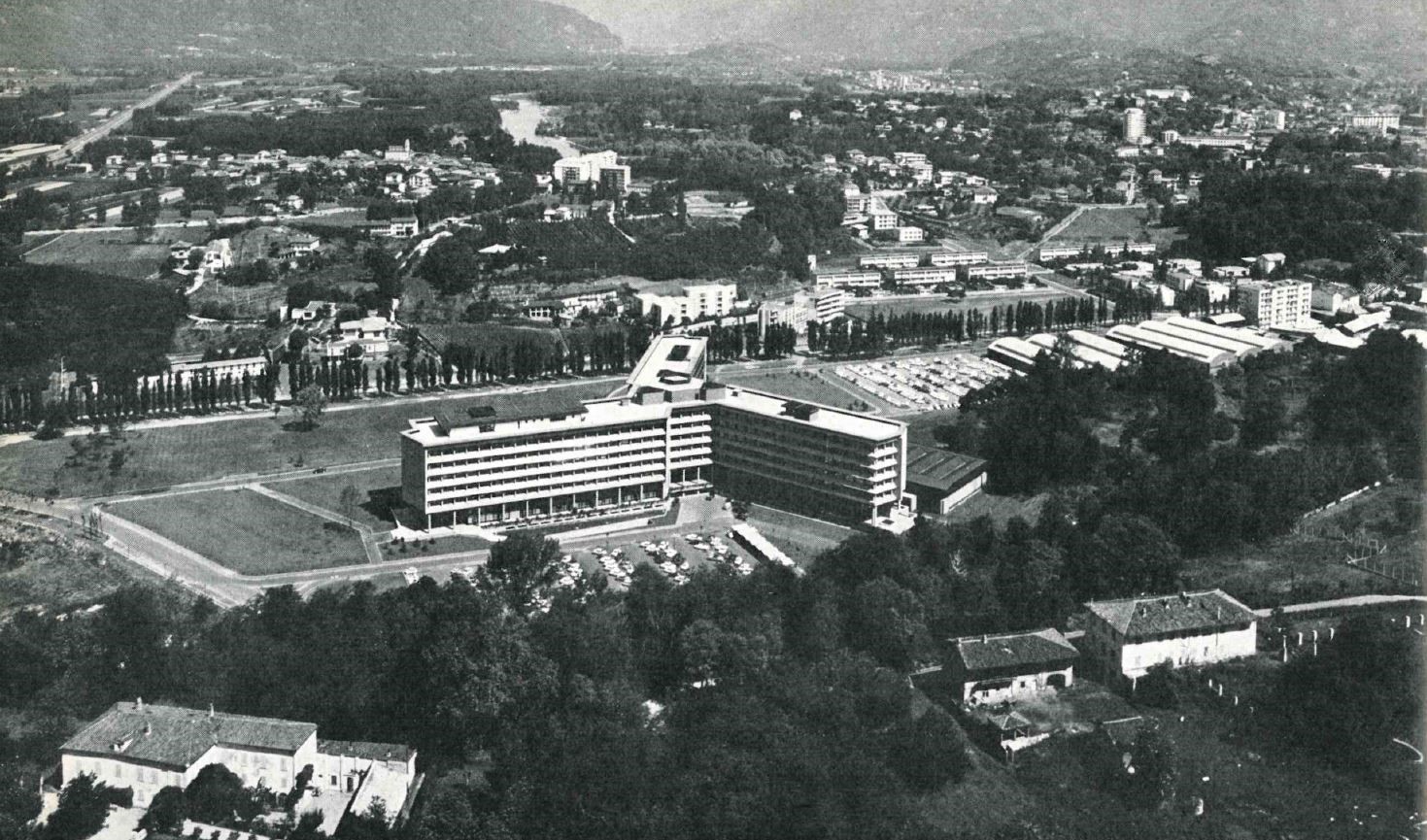
Everyone knows Venice for its canals, but few realise that the lagoon once had a quiet, rural side. For centuries, monks grew vines, olives and herbs on many of its islands. It’s almost a thing of the past as most of those crops are now left behind, being overgrown and forgotten.
The city today is faced with a problem. Tourists are everywhere in the streets, but Venetians are leaving. The ones who stay are old, and young families are increasingly moving away due to housing inaccessibility, creating a vicious circle in which some islands no longer have schools, pushing more families to leave. The people remaining often feel lonely, disconnected from each other and from the land their grandparents knew.
On top of that, climate change adds another layer of pressure. The lagoon is more fragile as saltwater creeps in and rising tides threaten what is left of the soil. The landscape is in danger, and so are the people who live here.
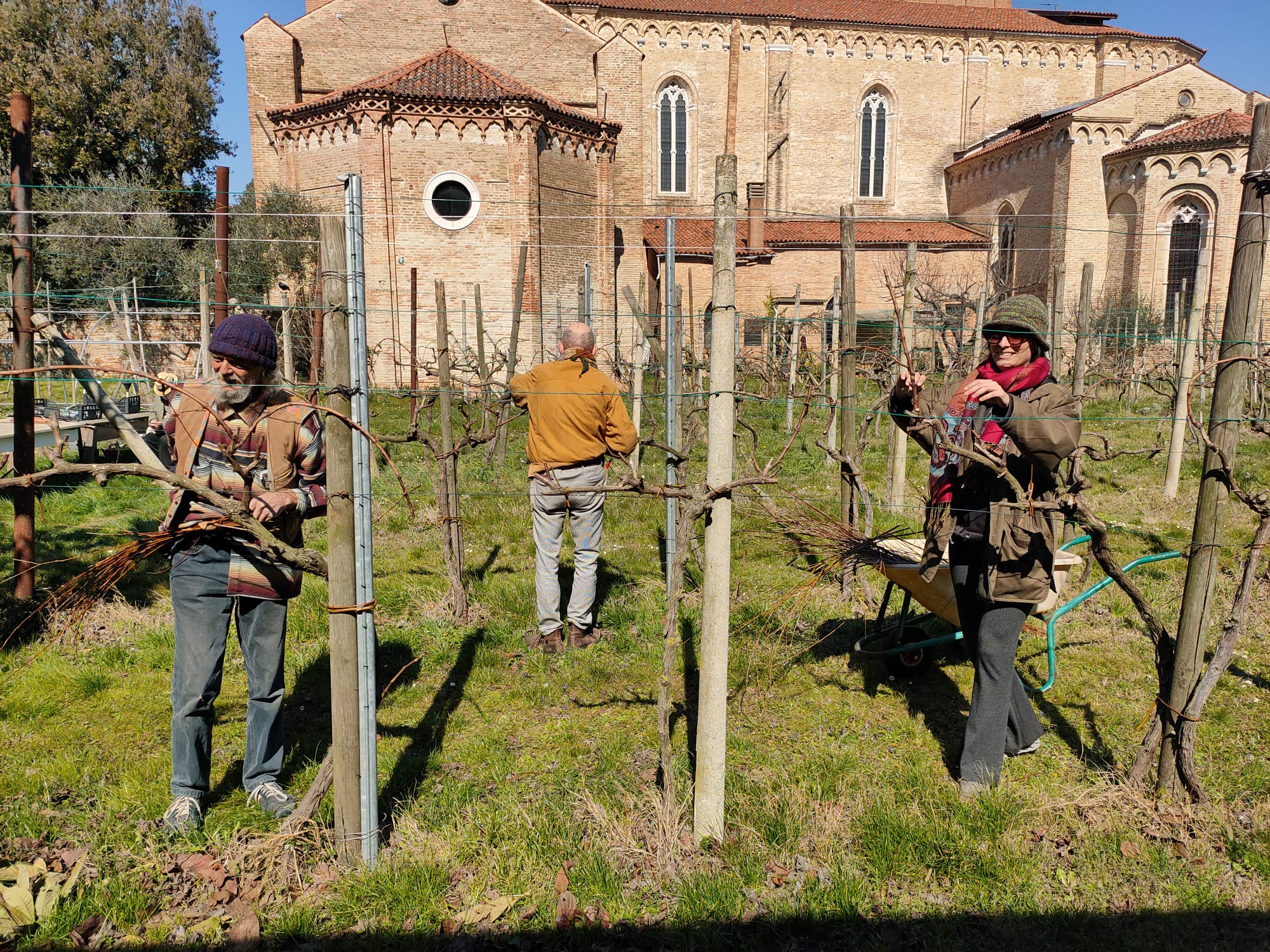
But not everything is lost. Hidden behind monastery walls or tucked away in public parks, old vineyards, olive groves, and gardens still exist. San Michele, Sant'Elena, Giudecca, Malamocco, Le Vignole: these places have been forgotten for years, but they can still be revived.
Story
From a middle school project to a community movement across the lagoon
In 1993, Flavio Franceschet, a teacher at Calvi Middle School in Venice, took his students to discover an old vineyard near San Francesco della Vigna. They harvested grapes, pressed them by foot, and made a small batch of wine. They called it "Calvino": a mix of "Calvi" and "vino," honouring one of the most important Italian writers of the 20th century. What began as a one-time experiment became a yearly ritual. Every autumn, Franceschet, his colleagues, and their students returned to the vineyards.
In 2008, Franceschet and a group of friends founded the cultural association "Laguna nel Bicchiere – Le vigne ritrovate" (Lagoon in a Glass – The Rediscovered Vineyards). The goal was simple: find abandoned vineyards across the lagoon, restore them, and rebuild community.
Laguna nel Bicchiere began as a local initiative. Unlike conventional top-down projects, it has no fixed leadership, anyone can join, and decisions are made together. About 300 volunteers participate yearly, working alongside schoolchildren, students, researchers, and winemakers.
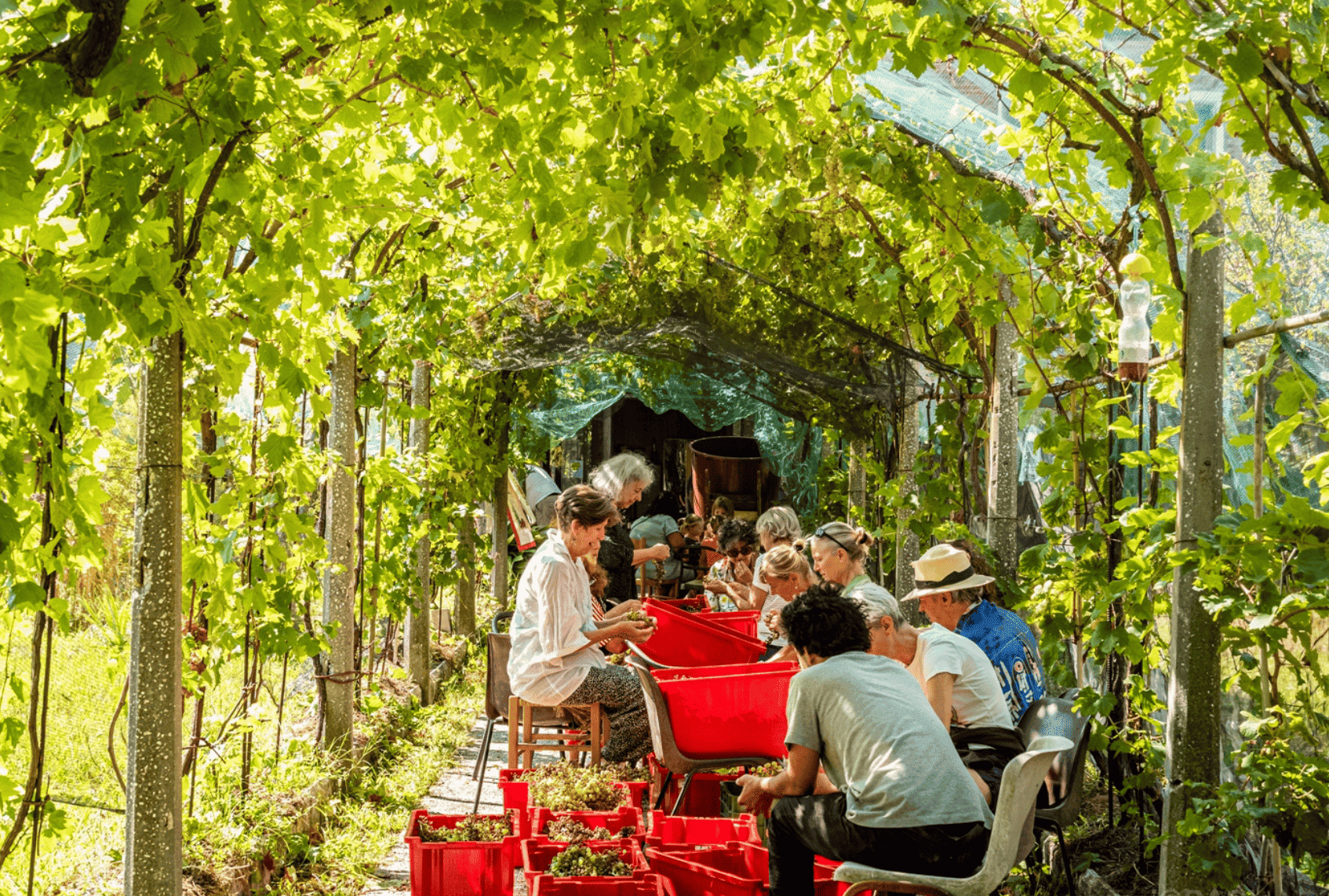
Everything is done by hand. Volunteers and children harvest grapes at San Michele, Sant'Elena, and Vignole. The grapes are taken by boat to the former Franciscan monastery on San Michele Island. There, they are destemmed, crushed by foot, and left to ferment naturally, without additives or chemicals.
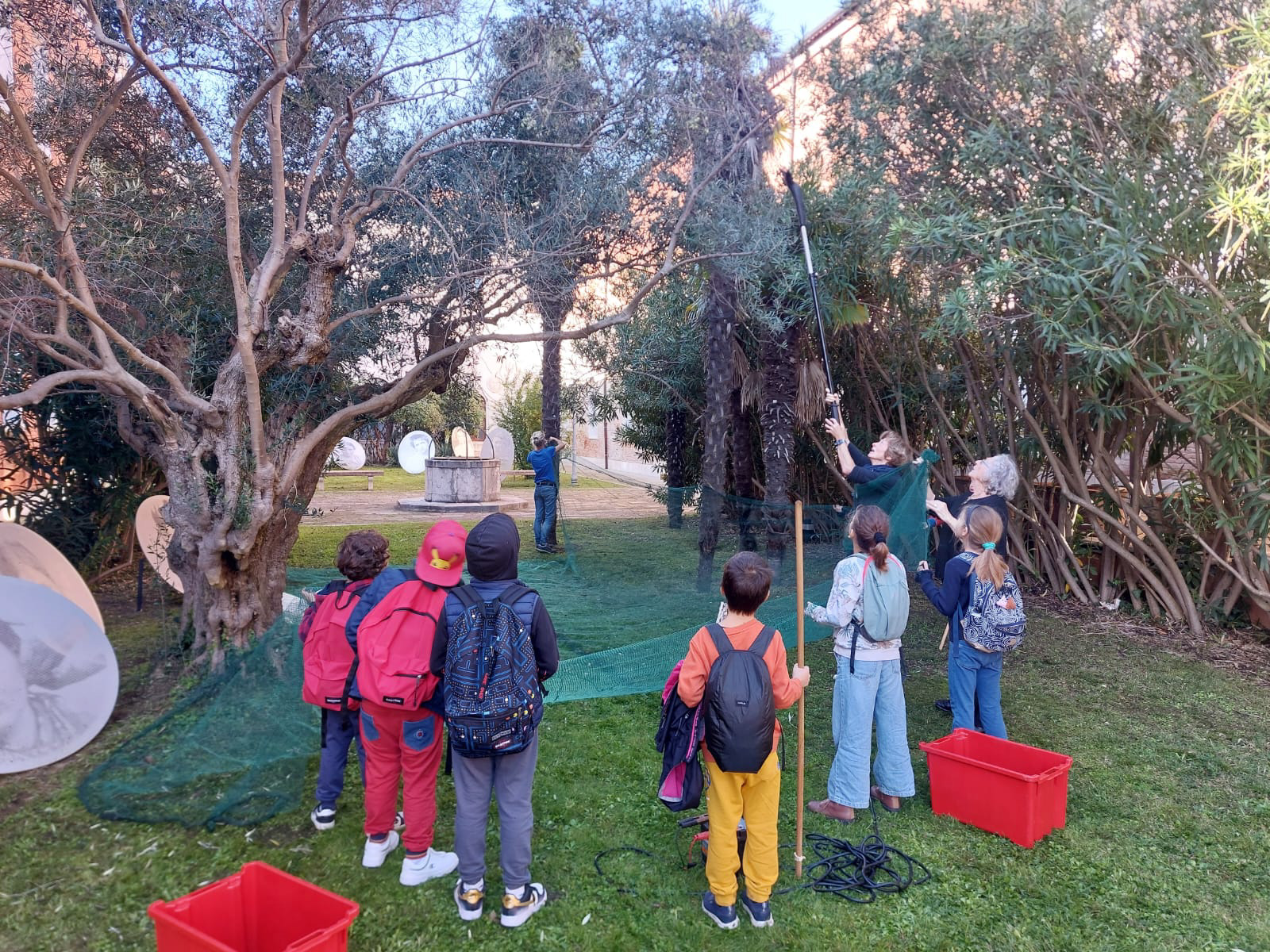
Beyond wine, the association runs educational programs. "Guardo Crescere e Cresco" (I Watch Them Grow and I Grow) involves hundreds of children each year in vineyard care, olive harvesting, and composting.
The results are measurable. Between 2021 and 2025, over 1,200 children from kindergartens and primary schools took part, and it brought activity to some left behind places.
Lesson learnt
Intergenerational work, manual methods, flat hierarchy, collective decisions
Starting small worked. The project spontaneously began as a simple school activity. There was no funding, no formal structure, and no approval to wait for. Just a teacher, some students, and an abandoned vineyard. It is precisely that freedom which allowed the project to grow naturally, without the pressure of deliverables or deadlines.
The flat hierarchy proved essential. Because decisions are made democratically by the whole group, no single person holds power. This means the project does not depend on anyone in particular. People may come and go, but the work continues.
Intergenerational participation is another key to success. Children bring energy and curiosity. Elders bring knowledge and patience. The educational programs, such as "Guardo Crescere e Cresco", showed that schools are powerful entry points. Once children are involved, parents and grandparents may often follow.
On the technical side, manual methods and natural fermentation worked without complication. No additives, no chemicals, no machinery were involved nor needed. Low-tech solutions often are the most durable.
For other cities or stakeholders, a few lessons stand out. Start with what you already have at your disposal: abandoned land, neglected gardens, forgotten vineyards: there are a lot of possibilities. You do not always need large budgets, but people willing to show up. Keeping the hierarchy as flat as possible is a good way to avoid coordination problems. Then, try to focus on how you work. Do things by hand when you can. Manual work builds a different kind of connection with people, and it also helps preserve nature. When it is a small-scale project, do not wait for funding to start either. Money helps, but it is not the only starting point. Finally, once the work is underway, document and share it. Visibility really does matter.
Impact
Six sites have come back to life: San Michele, Sant'Elena, Giudecca, Malamocco, Le Vignole, and the Biennale gardens. A few years ago, there was only wild vegetation, hidden behind monasteries or public gardens. Nowadays, they are producing grapes, olives, and vegetables.
There were also changes on the social aspect. More than 300 volunteers are here every year. Between 2021 and 2025, more than 1200 children have taken part in the association’s activities. Older people may have felt isolated, but they now spend time with a community: children, students, newcomers, or other Venetians. Everyone comes from diverse backgrounds: some volunteers are from Venice, and some are not, but it does not matter. In the vines, everyone is working together.
Children involved have the opportunity to see food with another perspective. They get to know where grapes come from, and they press the grapes barefoot. It allows them to understand that manual work makes sense. Meanwhile, the older generation is passing on their knowledge of the vines, the soil and natural winemaking. Skills that were slowly being lost are now being put to use once again.
This project also got traction outside of the lagoon. It received the Masi International Award in 2013. TV channels such as RAI, France TV or ARD have told the project’s story to the world, and magazines such as Forbes or Vanity Fair did the same. The city of Venice has also worked with the association, even though they did not give them any money.
But money is not the project’s purpose. The work relies on volunteers and donations. Wine and olive oil are not for sale. They are shared, offered and used to get people together. This model has inspired other initiatives through the Urban Vineyards Association, which is a network for similar projects in Europe.
The Laguna nel Bicchiere, le vigne ritrovate project was among the NEB Prizes 2025: Champions finalists under the category “Regaining a sense of belonging”.