HERIcraft: Bring heritage to life in Minecraft
A replicable Minecraft workshop for communities to reimagine historic places through collaborative gameplay
Credit: HeritACT toolpage: https://heritact-toolkit.eu/hericraft.html
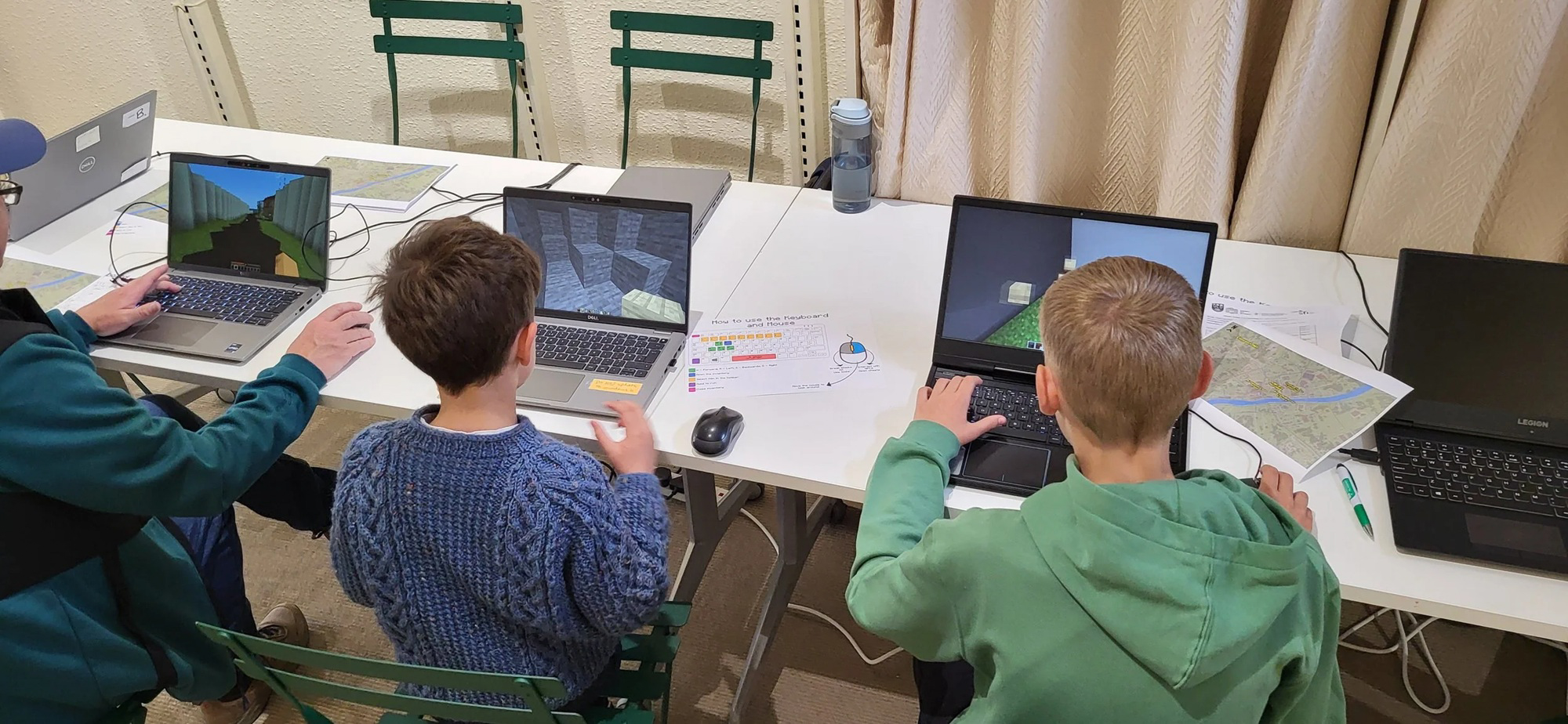
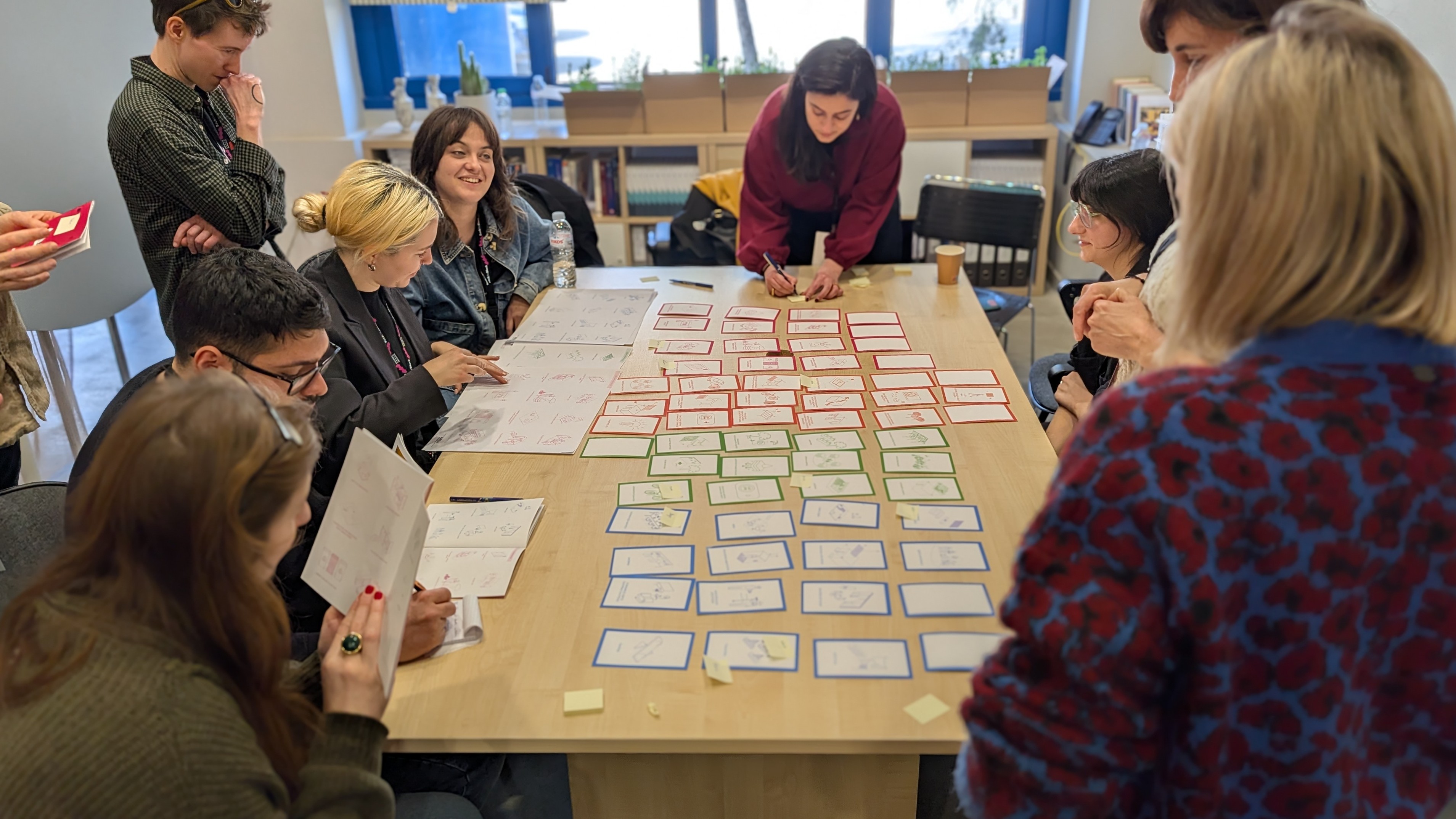
Credit: HeritACT at Ballina Heritage Day 2024: https://www.heritact.eu/news/ballina-heritage-day
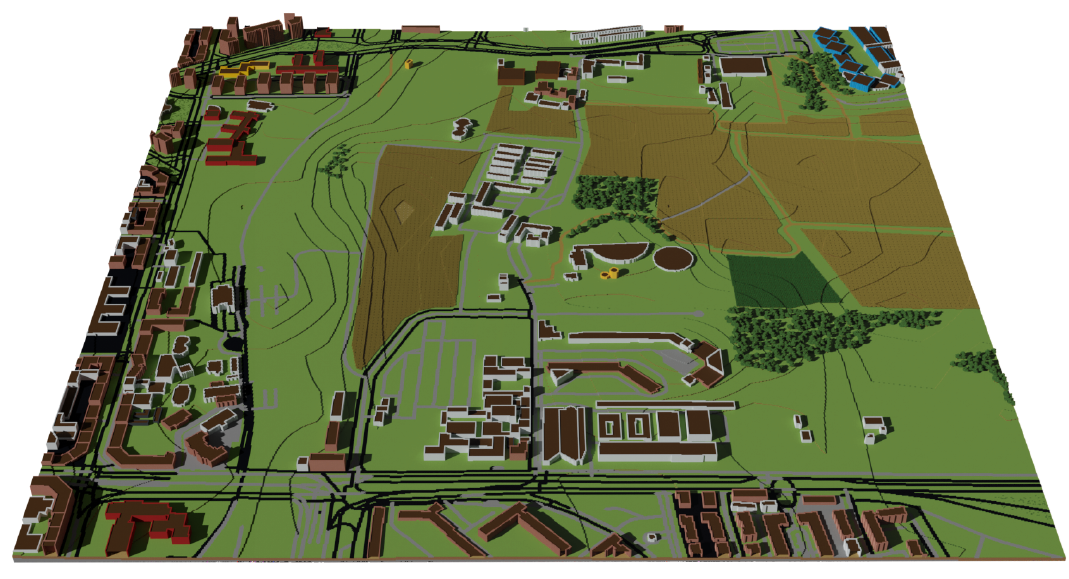
Credit: HERIcraft tool English Manual: https://heritact-toolkit.eu/hericraft.html
Resource
Context
A European project activating local heritage with participatory methods and technology
HERIcraft is a tool developed within HeritACT, a European research project funded under Horizon Europe. The project explores how cultural heritage can become a driver for sustainable development, community well-being, and climate action.
HeritACT brings together local residents, cultural organisations, and researchers to rethink how heritage sites are used and valued. In each pilot, the project tests different ways to involve people in the future of their local heritage: from farmsteads in Milan (Italy) to former industrial sites in Elefsina (Greece), and historic buildings in Ballina (Ireland).
The project develops both digital tools and physical interventions. Some help citizens share ideas online. Others create spaces for face-to-face workshops and events. These different approachesserve the same purpose: to make heritage reactivation a collective, inclusive, and creative process.
HERIcraft is one of these tools.
The resource in a nutshell
Guided Minecraft sessions to reimagine historic places with communities
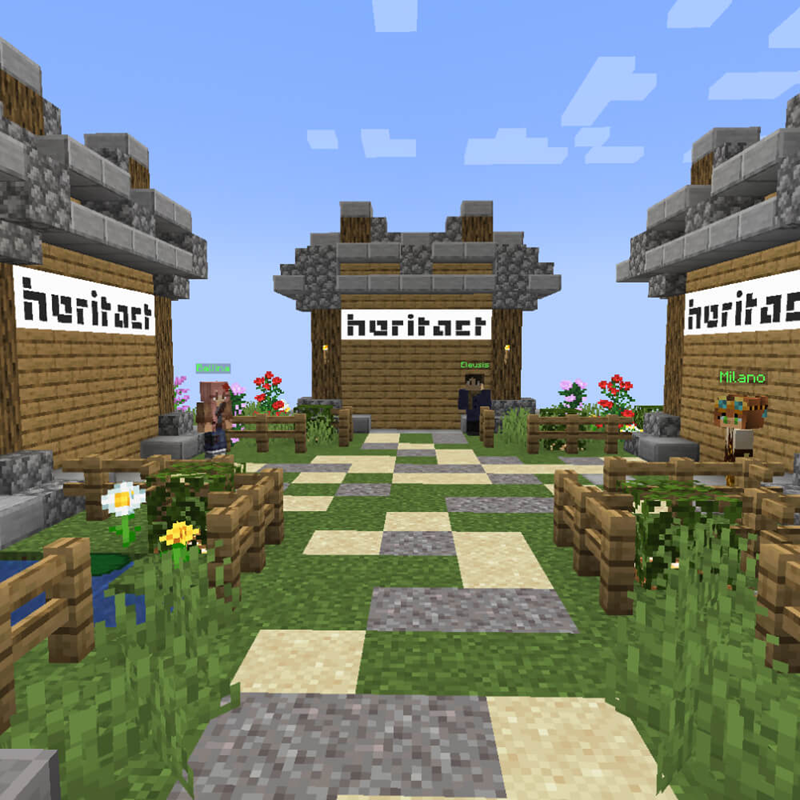
HERIcraft is a complete workshop method built around Minecraft. Minecraft is an exploration video game that can be played alone or with others, on computers and consoles, in the which the player’s character wanders and survives in a cubic world populated by animals and creatures. The players can do whatever they like, including building things, as the world is made up of blocks that can be broken and placed wherever you like, and even reused to craft items. The game is appealing because of the simplicity of its concept, but above all because of the endless possibility it offers.
Hericraft is a workshop method using Minecraft as a support and aiming at engaging youth in heritage reactivation. It includes a facilitator’s manual, a dedicated multiplayer game server, custom plugins, and supporting templates (observation sheets, consent forms, data collection tools). The manual guides users through installation, server access, briefing, gameplay, observation, and debriefing.
The resource is designed for schools, youth groups, or community organisations wanting to engage young people (ages 7–20) on heritage issues. Participants work in small groups (2–3 per computer) on a digital twin of a real heritage site, created from freely available geographical data. Through guided quests and collaborative building, they propose ideas for the site’s future, focusing on beauty, sustainability, and inclusion.
To run a session, facilitators need at least 15 laptops connected to the internet, basic computer skills, and Minecraft licences (up to 15 provided by HeritACT; a template to request or purchase more is included). Each session lasts about 2 hours: briefing (10 min), gameplay (40 min), debriefing (10 min), plus setup time. Online support from the HeritACT team is available during sessions.
The game generates data: chat logs, material use, movement heatmaps, and 3D exports of player creations. These outputs help communities visualise preferences and feed into real-world planning.
The manual is open and replicable. Any city, school, or heritage organisation can adapt the method to their own site. A Python script is available to generate new Minecraft worlds from local OpenStreetMap data, making the tool scalable across Europe.
The Heritact project was funded by the Horizon Europe programme in 2022 (pillar 2).