UP/DOWN: Reconnecting communities along the Osam River
From abandoned buildings to shared spaces: the Osam River as a thread between communities
Credit: UP/DOWN team
Credit: UP/DOWN team
Credit: UP/DOWN team
Case Study
Context
Depopulation, isolation, neglected spaces along Bulgaria's Osam River.
Bulgaria's mountain regions have been losing population for years, as young families move to bigger cities or simply leave the country. Those who stay are mostly elderly, and villages gradually empty out. Step by step, schools close, shops shut down, and abandoned houses become part of the landscape.
Belish is one of those villages, tucked in the Balkan Mountains. Most of its residents have left, and the few who remain are old. Life there is quiet, almost cut off from the outside world.
Downstream along the same river lies Troyan, a small town (30.000 inhabitants) with more infrastructure but still struggling. The Osam River runs through both places, but its banks have long been neglected. A riverside park near Troyan's centre, built during the socialist era, has been abandoned for over twenty years. Invasive plants have taken over, hiding staircases and terraces under thick vegetation. Instead of connecting the two communities, the river became a divider.
Between Belish and Troyan, there is no real link. No shared projects bring them together, and young people from the town have little to no reason to visit the village. That is the situation UP/DOWN decided to change.
Story
Up in the village, down in the town: a river becomes the thread between two communities
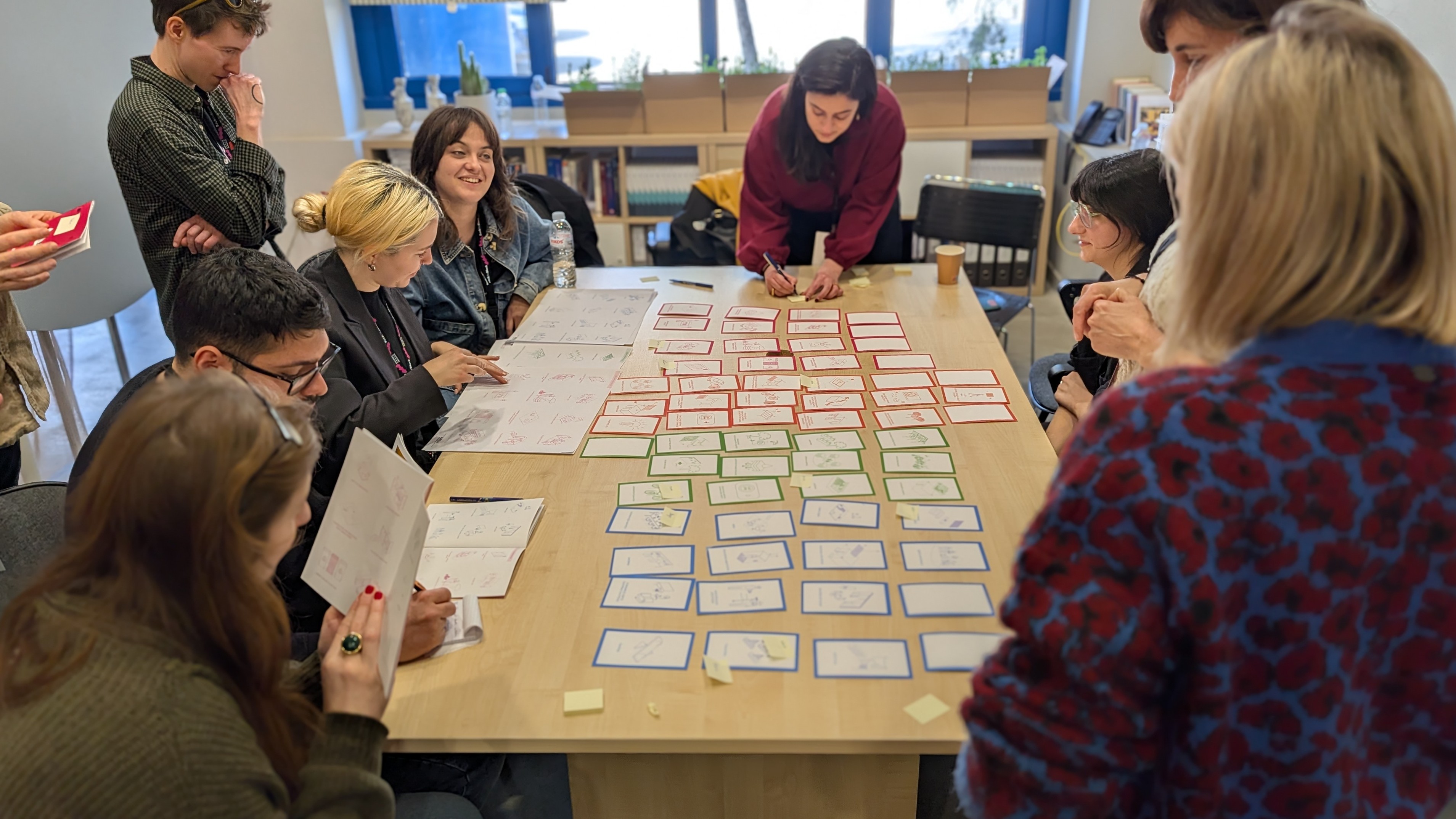
UP/DOWN began with a focus group of young people from Troyan and other Bulgarian cities, supported by architecture students and mentored by professionals from Belish Residence (a local creative residency) and The Collective Foundation (a Bulgarian placemaking NGO). Their aim was to tackle rural depopulation and the lack of connection between Belish (a village) and Troyan (a town) along the Osam River.
The project unfolded in three stages.
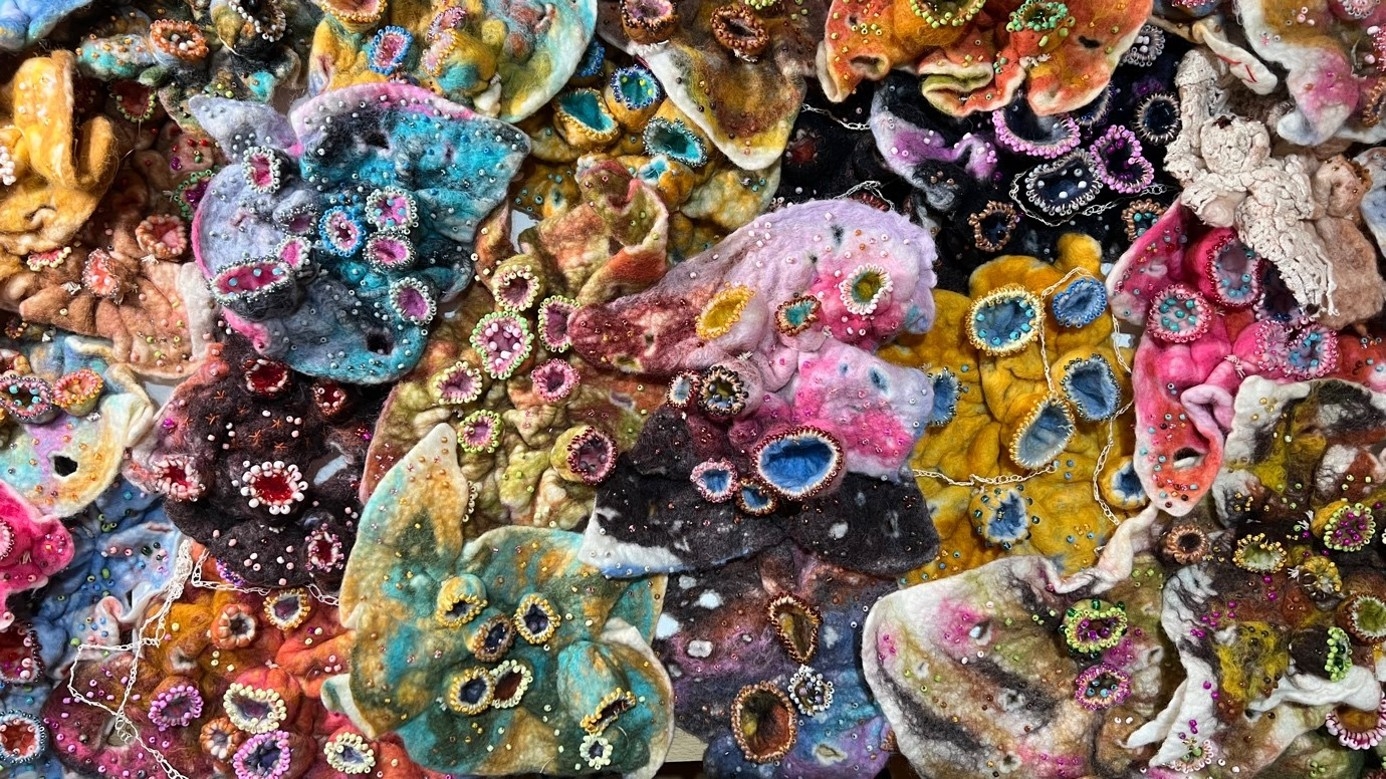
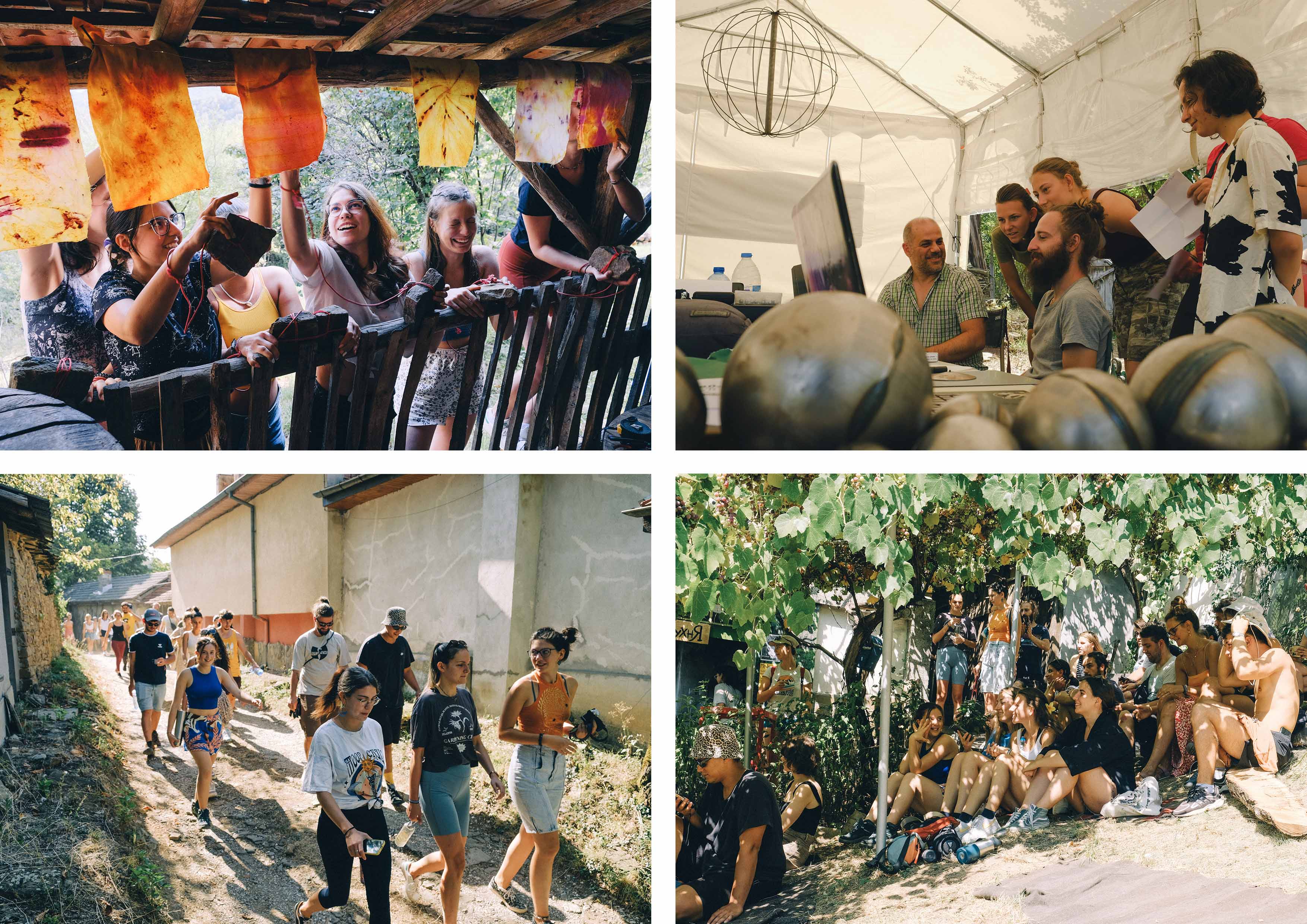
First, a week-long residency in Belish village (UP). Around 80 participants lived together in abandoned houses, following guidelines to save water, recycle waste, and cook in community. Five workshops led by artists and architects blended traditional crafts with contemporary design. Participants learned ceramics, quilting, woodworking, and natural dyeing from elderly locals, using reclaimed timber, stone roofing sheets, and old fabrics dyed with herbs. Each group created site-specific art installations.
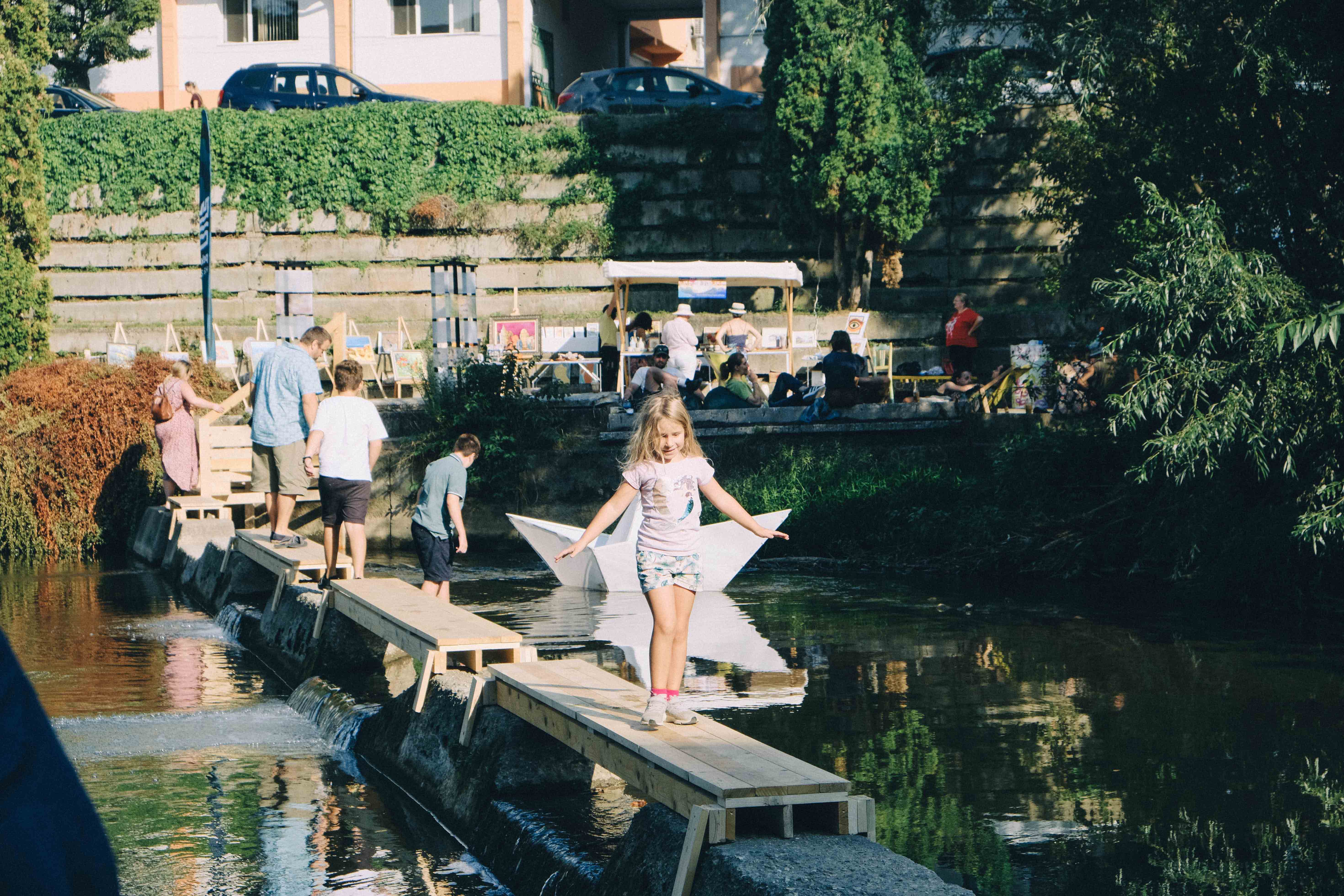
Second, the artworks moved downstream to Troyan (DOWN). Over 30 volunteers joined four cleanup actions to restore a riverside park abandoned for over twenty years. Invasive species were removed, revealing hidden staircases, ramps and terraces. The cleaned area became the setting for the art installations.
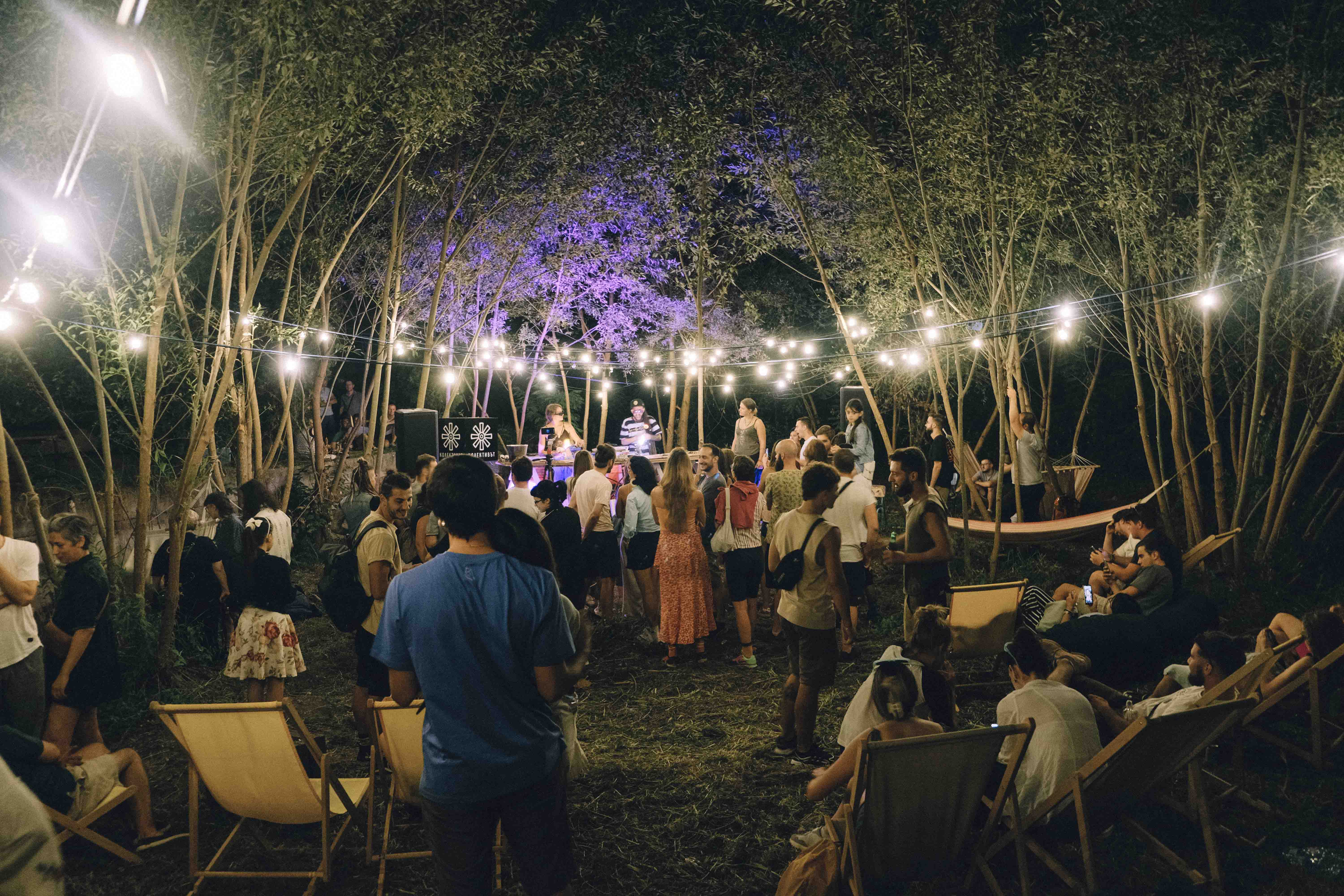
Third, a three-day festival, "Rivers of the City Troyan", brought everything together. The revitalised riverside hosted local musicians, performers, and craft workshops (clay sculpting, calligraphy, woodworking). The festival was free for all visitors, as were the voluntary clean-ups. For the residency in Belish (UP), participants paid a small weekly fee (100€) covering food, accommodation, utilities, and workshop materials.
In the end, 80 people took part in the residency, over 30 volunteers joined the cleanups, and a neglected park was fully restored. A new community hub emerged in Belish, with a communal kitchen, gathering spaces, and outdoor showers. The municipality of Troyan provided logistical support.
Lesson learnt
Youth, craft, and collective action can revive neglected spaces.
Putting young people in charge worked well. The focus group of students and young activists led the workshops, recruited participants, organised cleanups, and ran the festival. With mentorship, they gained confidence and skills. It became their project, not someone else’s.
The two-site model also worked. Artworks made in Belish (UP) travelled downstream to Troyan (DOWN). This physical movement gave the project its name. People in the town could see what happened in the village. The river became a thread, not a divider.
Using reclaimed materials was practical and symbolic. Old timber, stone roofing sheets, and fabrics dyed with herbs cost almost nothing and carried stories. Participants understood that waste could become art.
The open-doors event at the end of the festival made a difference. City visitors took transport to Belish and saw the transformed village. That single day built more connection than months of online communication.
Large budgets were never part of the plan. The project worked with local skills, reclaimed materials, and volunteer time, and that was enough.
For other cities or stakeholders, start with a small group of committed young people and let them take real responsibility. Use what is already there: abandoned buildings, neglected riverbanks, old materials. Find a place that may already connect two communities, like a river, a path or a road, and use it as a starting point. Reach out to local authorities early: they may offer tools or logistics even without money. And do not overlook the celebration. The festival was not just for visibility. It was a reward, and a way to show what had been achieved. People saw the transformation, felt the joy, and wanted to be part of it.
Impact
The most visible change is spatial. A neglected riverside park in Troyan, abandoned for over twenty years, has been cleared of invasive plants. Staircases, ramps and terraces that had disappeared under thick vegetation are now usable again. In Belish village, abandoned houses and yards have been transformed into a community hub with a camping area, communal kitchen, gathering spaces, and outdoor showers. Six sites in total have been regenerated.
Socially, the impact is just as clear. Around 80 people from different generations and regions lived and worked together during the residency. Elderly villagers shared their knowledge of traditional crafts with young participants. Over 30 local volunteers joined the cleanup actions. The three-day festival brought even more people to the river, including city visitors who had never set foot in Belish before.
Behavioural change is already visible. Young people who led the workshops and festival gained confidence and organisational skills. Some had never taken responsibility on this scale before. The intergenerational exchange also helped preserve local knowledge about woodworking, ceramics, quilting, and natural dyeing: skills that were at risk of disappearing.
Institutionally, the project gained support from Troyan Municipality, which provided tools, materials, and logistical help. Local businesses also contributed. The collaboration established a lasting coalition between volunteers, craftspeople, artists, and local authorities.
The model is replicable. It uses what is already there: abandoned buildings, neglected riverbanks, reclaimed materials, and local skills. No large budget is required. Other depopulating regions could try and do the same.
The UP/DOWN project was among the 2025 NEB Prizes finalists, under the category “Regaining a sense of belonging”.