Co-designing Urban Development Projects in Stavanger, Norway
Participative Approaches Tested in the District of Pedersgata, Testbed of the NEB-STAR Project
Credit: NEB-STAR project
Case Study
Context
Pedersgata: a multi-faceted district facing poverty, but rich in history and creativity
The Pedersgata area is a mature urban neighbourhood in the city centre of Stavanger, featuring a mix of traditional wooden houses, high-rise buildings, restaurants and shops. The district has the highest poverty rate in the city, but also strong local involvement and an artistic and creative scene. Within this neighbourhood:
- Jammerdalen area has an industrial history and a large public building with undetermined future use
- Nytorget is an important public square with an art centre encouraging cultural activities
- Svankevigå is a bay area with a mix of historical industrial and residential buildings, commercial developments, and green landmarks
Story
Testing participatory approaches to inform the city’s Territorial Transformation Plan
Pedersgata was a testbed within the NEB-STAR project (2022-2025, coordinated by NTNU), funded by Horizon Europe as one of six New European Bauhaus lighthouse projects. NEB-STAR’s main goal was to accelerate the transition to climate-neutral cities and communities by applying New European Bauhaus values.
Pedersgata testbed was led by the municipality of Stavanger with the aim to inform the implementation of the city’s Territorial Transformation Plan (TTP) and suggest improvements in alignment it with New European Bauhaus values and principles.
The testbed was designed to experiment innovative, sustainable, and human-centric urban regeneration. It explored how to increase grassroots engagement, involve creative and social entrepreneurs and vulnerable inhabitants, and develop scalable financing plans and partnership models for the entire testing area.
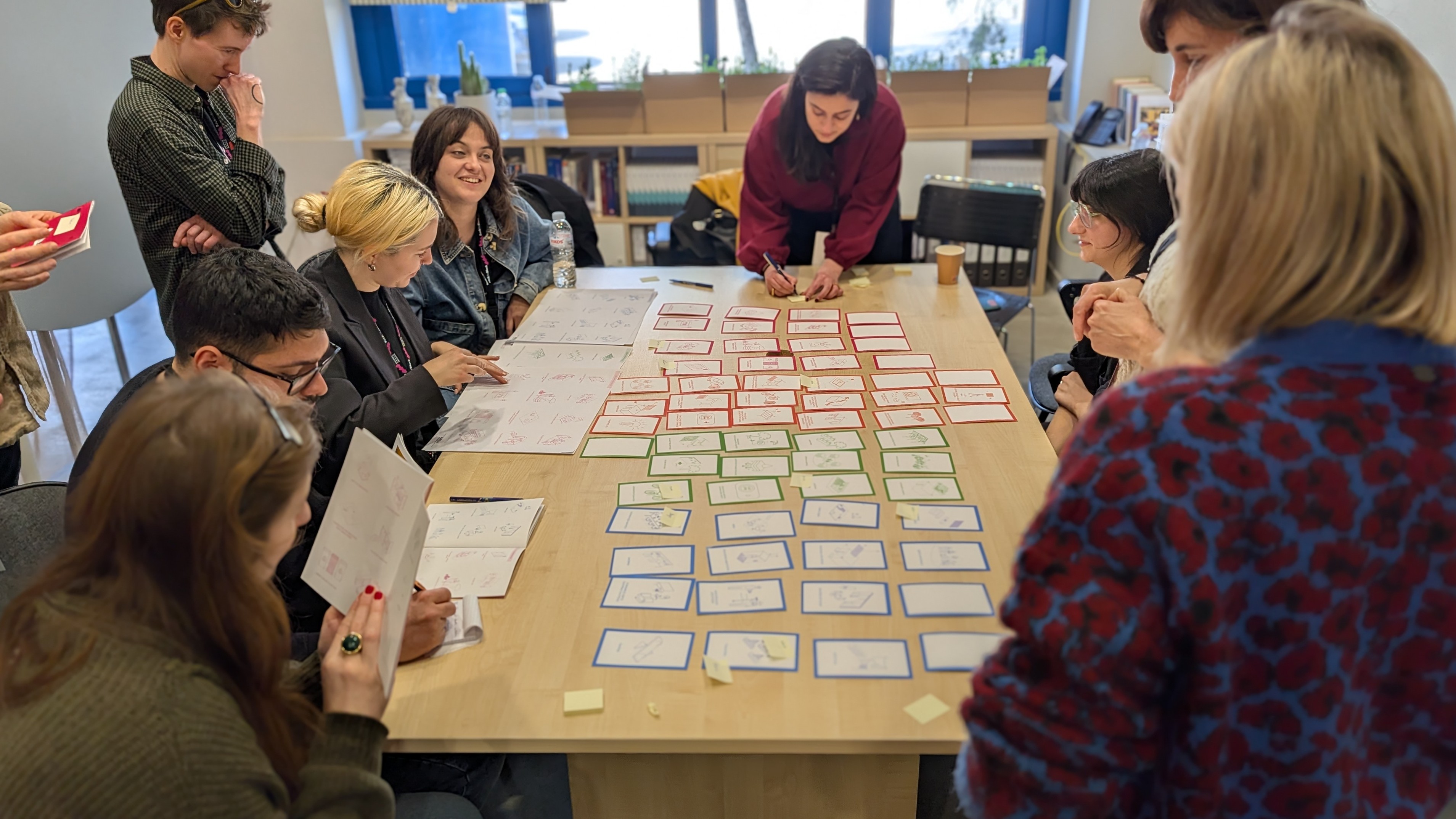
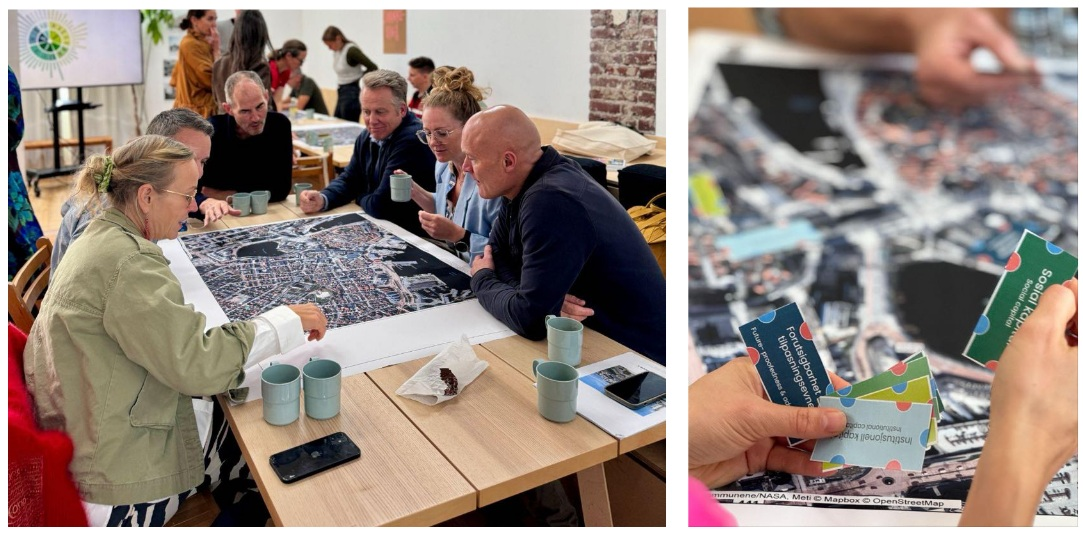
To that end, a strong focus was placed on co-creation with local actors (residents, property owners, businesses, schools, and community organisations) through a variety of participatory approaches. In total 16 different co-creation tools were developed and/or tested, including:
- Various physical events such as workshops and forums to improve citizen participation; guided tours with storytelling from local actors to engage various stakeholders; and Innovation Camps to involve youth and teachers
- Collaborative methodologies to design shared spaces (e.g. an urban park); measure the societal impact of businesses using tools such as Vis det!; build public-private-people partnerships; and support local entrepreneurship and citizen-led initiatives
- Digital tools such as digital twins for visualisation and decision-making; professional design tools for prototyping; and the urban Belonging app for collection of citizen feedback
These approaches added value by cultivating collaboration, empowering residents, and addressing complex social and environmental challenges through inclusive processes. They also highlighted the importance of securing funding, integrating such initiatives into long-term urban strategies, and using technology to complement human-centred methods. Lessons learned emphasise that community involvement, social integration, and adaptable processes are key to sustainable and inclusive urban development.
Lesson learnt
Trust building, artistic mediation, and public-private-people partnerships as key success factors
The experiments came up with key findings and recommendations for sustainable, beautiful and human-centred urban planning:
- Build trust in relationships between stakeholders (municipality, private sector, citizens, artists, social entrepreneurs, etc.) to generate a broader understanding of different perspectives and to facilitate the identification of shared goals in urban development
- Secure adequate and consistent funding for community-focused initiatives
- Integrate community engagement and arts-based initiatives into long-term urban development strategies
- Simplify regulatory processes to facilitate citizen-led projects
- Employ art and visualisation as both a tool and driving force to foster inclusive processes and concretize shared goals
- Create inclusive processes that move beyond traditional planning methods, with early and continuous stakeholder engagement at neighbourhood level
- Initiate a new role of mediator in urban development, to build trust and act as a neutral facilitator and bridge-builder between different stakeholders
- Recognize the potential of technology and digitalization to drive change, visualizing information, quantifying impact, improve communication, and facilitate participation in urban development
- Empower locally-driven innovation thanks to collaboration with local suppliers, startups, schools and students to develop and test innovative solutions
Impact
- Increase quality and attractiveness of public spaces
- Increase adoption of data-driven planning tools
- Strengthened community participation, sense of ownership, belonging, trust
- Improved institutional collaboration and governance innovation
- Increase regeneration readiness and confidence through public-private-people partnerships
The NEB-STAR project was funded by the European Union under the Horizon Europe programme.