Zoöp: giving a voice to nature in decision-making
An organizational model that supports collaboration between human and other species
Credit: Pedroso-Roussado et al. (2025)
Credit: Zoönomic Institute
Resource
Context
How to account for the interests of other species in decision-making?
The question of recognising nonhumans with rights of their own has become a societal challenge. It is investigated by several research disciplines, such as future studies and design, that claim for a paradigm shift, from an anthropocentric to a more-than-human perspective. It seeks to redefine the relationship between human and nature, emphasizing collaboration between them, and regenerative actions, in view of preserving our future.
But there is a gap between these theories, and practical models that can help change the way we perform decision-making every day in our organisations.
It is to bridge this gap that Nieuwe Instituut developed the organisational model called Zoöp: it ensures that the interests of the ecosystems in which an organisation participates are actively represented in its decision making. Within the Bauhaus of Seas project, and together with Malmö University, Instituto Superior Técnico and Interactive Technologies Institute they further developed this model, building upon the experiments conducted by the consortium partners in various pilot sites.
The resource in a nutshell
Zoöp, a model enabling the formal representation of non-human life in the organisation
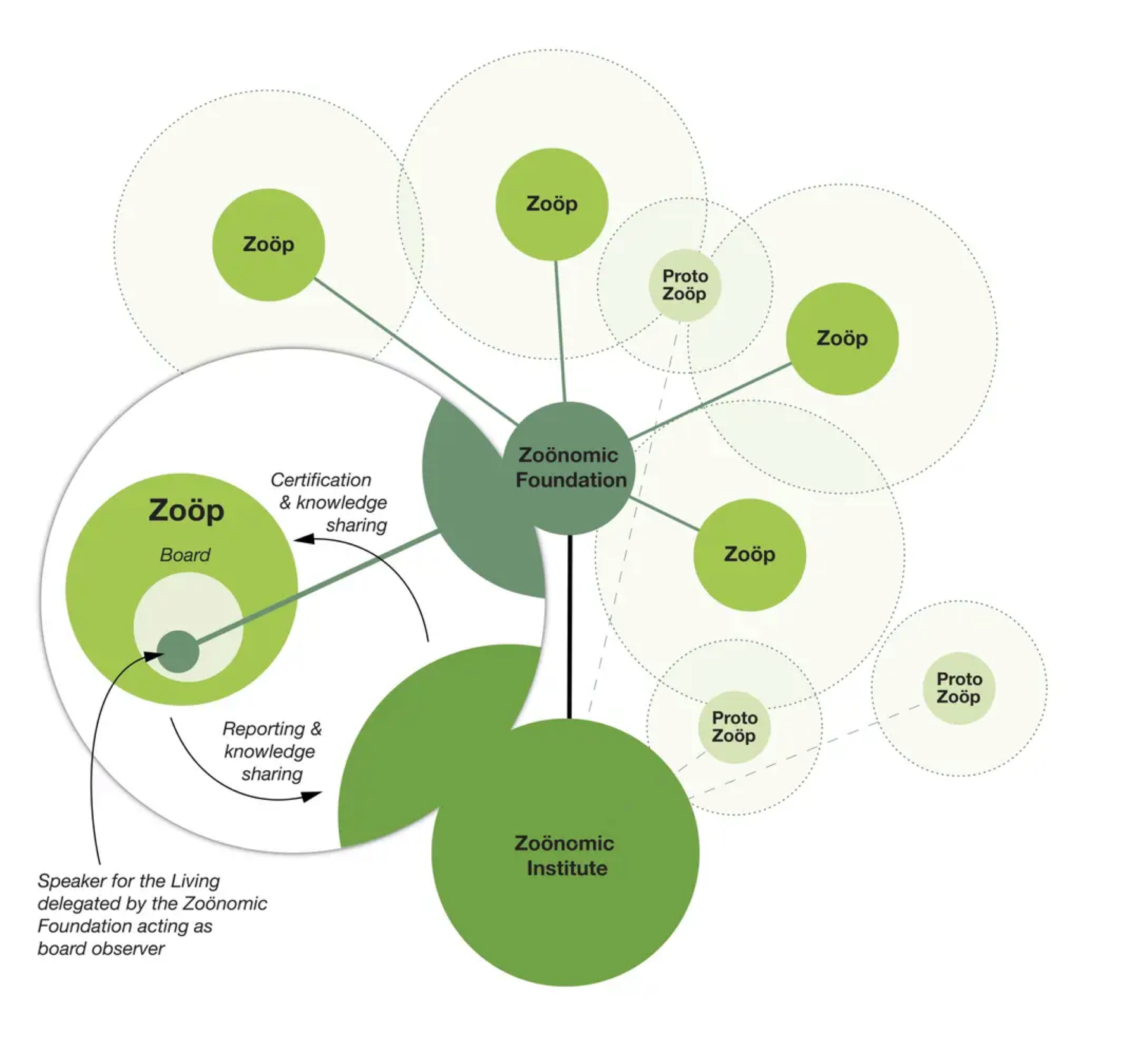
Zoöp is short for zoöperation, a term combining ‘cooperation’ and ‘zoë’, meaning ‘life’ in Greek. It refers to an organisation that fosters collaboration between human and other-than-human in its operational practices. Zoöp is a governance structure combined with a learning process that seeks to transform the organisation.
Zoöp is implemented by the participation of a Speaker for the Living, who has ecological knowledge and can empathize with the experiences of other-than-human life. The Speaker’s role is to represent the interests of other species in decision-making, and support the organization in its learning process towards ecological cooperation and regenerative actions.
The Speaker is an independent advisor, assigned by the Zoönomic Foundation, a legal entity whose only purpose is to represent other-than-human life in Zoöp organisations.
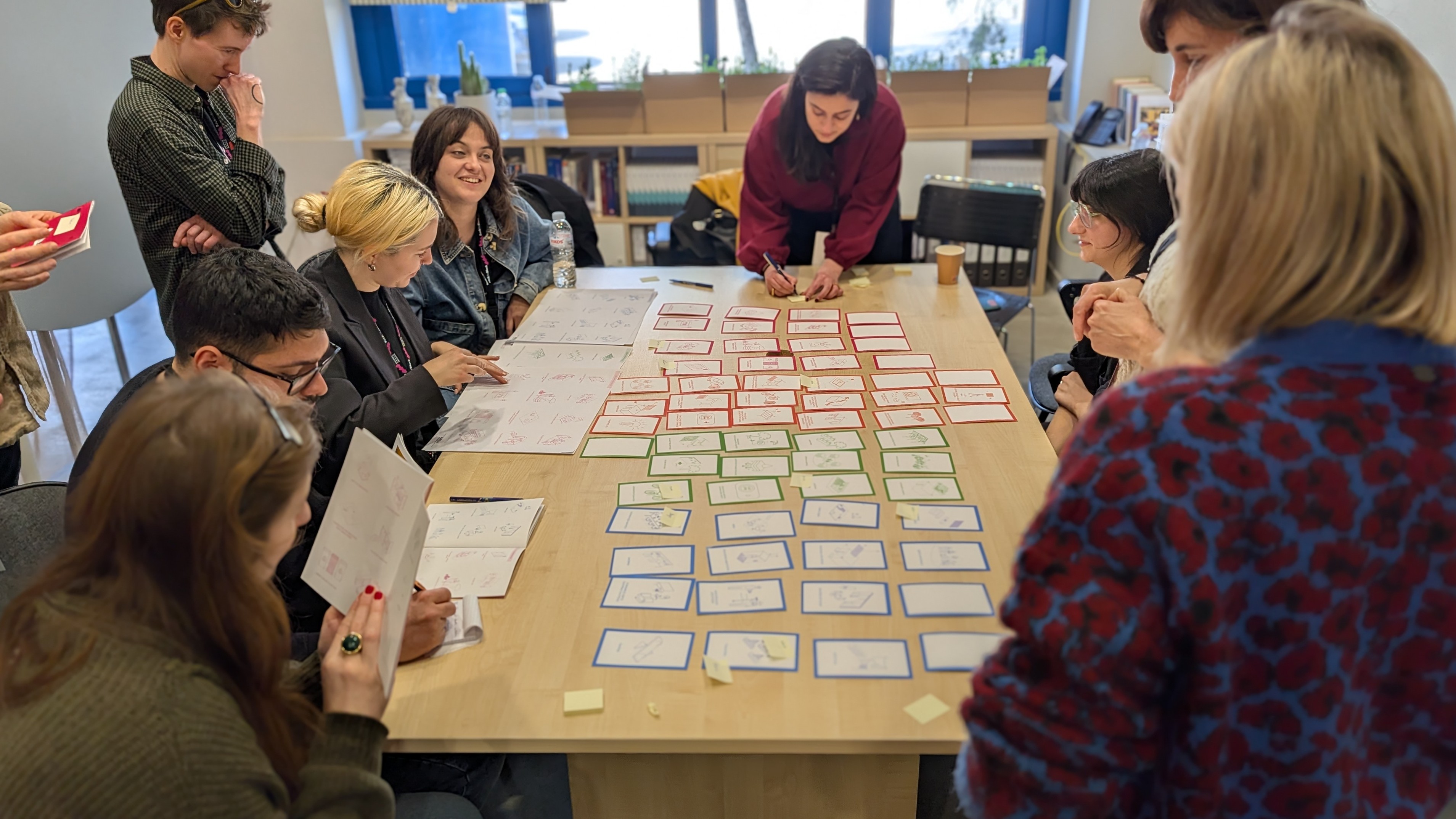
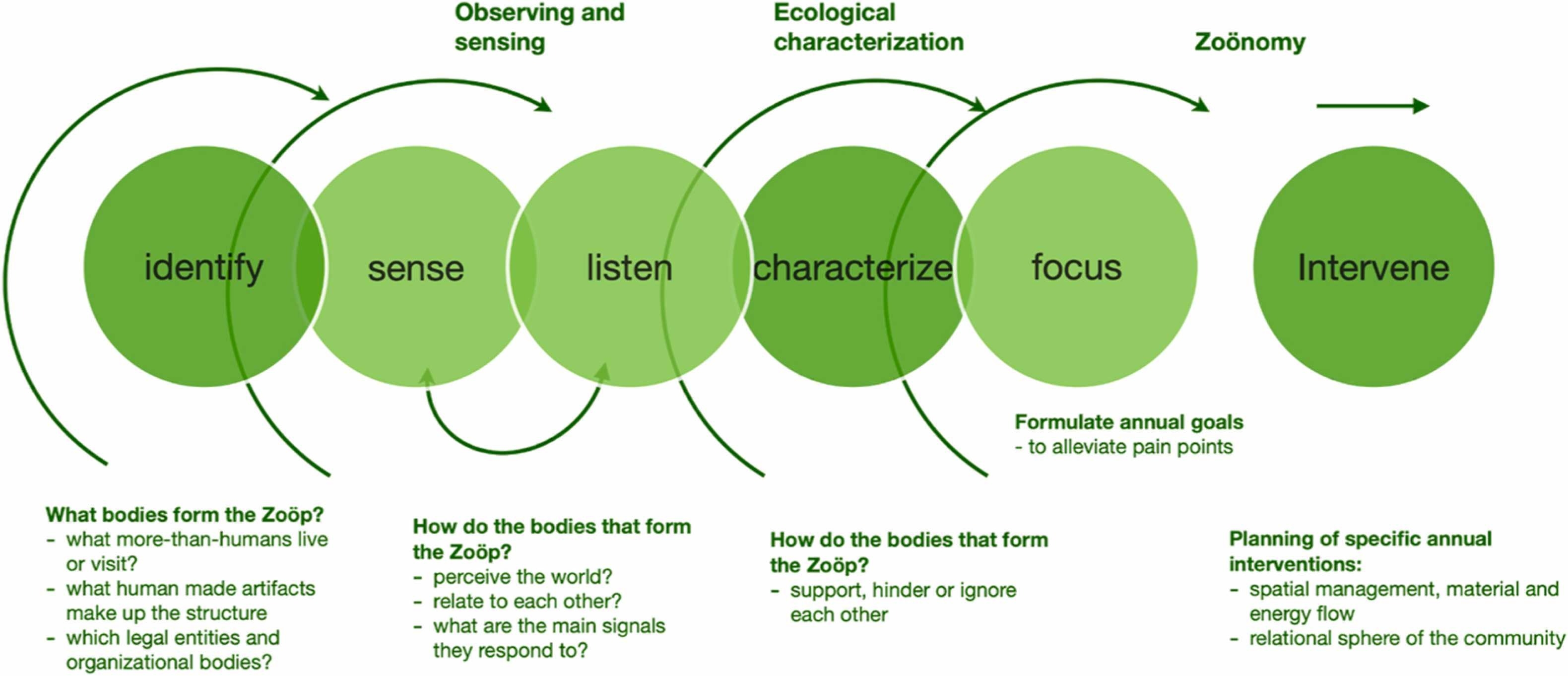
The learning process starts with a baseline assessment of the organisation as ecosystem participating in larger ecosystems. By Identifying the different bodies that form the Zoöp, then Sensing & Listening to the different positions and perspectives of these bodies, and consecutively Characterising the relationships between these bodies as life-supporting (regenerative) or life-constraining (degenerative), a map of the current state of the Zoöp as human-inclusive ecosystem is made. Based on this, regenerative learning goals are set and associated concrete interventions for the coming year.
At the end of the year, the goals and effects of interventions are evaluated, new goals are formulated, and new interventions planned.
In the Bauhaus of the Seas project, working with the Zoöp model contributed to:
- change the ways the pilot teams perceived their roles toward other forms of life and how they communicated about this.
- diffuse the nature-culture divide and open space for a multispecies culture.
- help the pilot teams minimise negative impacts and maximise positive impacts in both qualitative and quantitative ways.
The Bauhaus of the Seas project was funded by the Horizon Europe programme.