NEST Façade: Biodiversity-Integrating Building Skin
A modular ceramic façade system that supports urban ecosystems while enhancing environmental performance
Credit: entropic
Credit: entropic
Resource
Context
Leveraging building façades to restore biodiversity in dense urban environments
Cities are increasingly affected by biodiversity loss, rising temperatures, and environmental degradation linked to urbanisation and climate change. While nature-based solutions are gaining traction, they often remain limited to horizontal spaces such as parks or green roofs, leaving vast vertical surfaces underused.
The NEST Façade was developed to address this gap by transforming building envelopes into active ecological interfaces. Designed by Atelier Entropic and supported by the EIT community NEB programme, the project explores how architecture can integrate living systems into construction elements.
By combining design, material innovation, and ecological thinking, the solution contributes to climate adaptation, urban resilience, and the regeneration of local ecosystems, aligning with NEB values of sustainability, aesthetics, and inclusion.
The resource in a nutshell
Modular ceramic façade system enabling biodiversity integration and passive environmental regulation
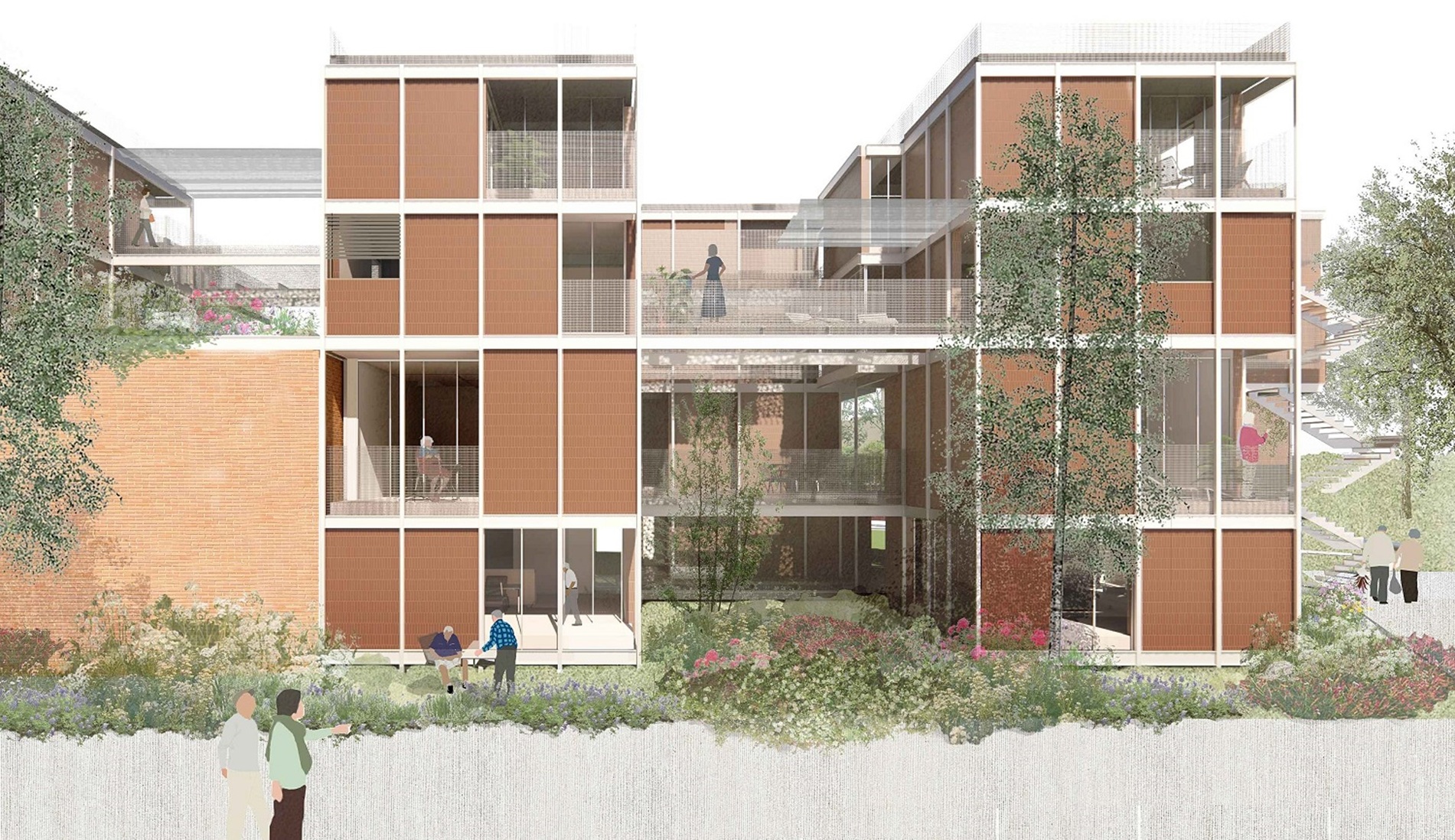
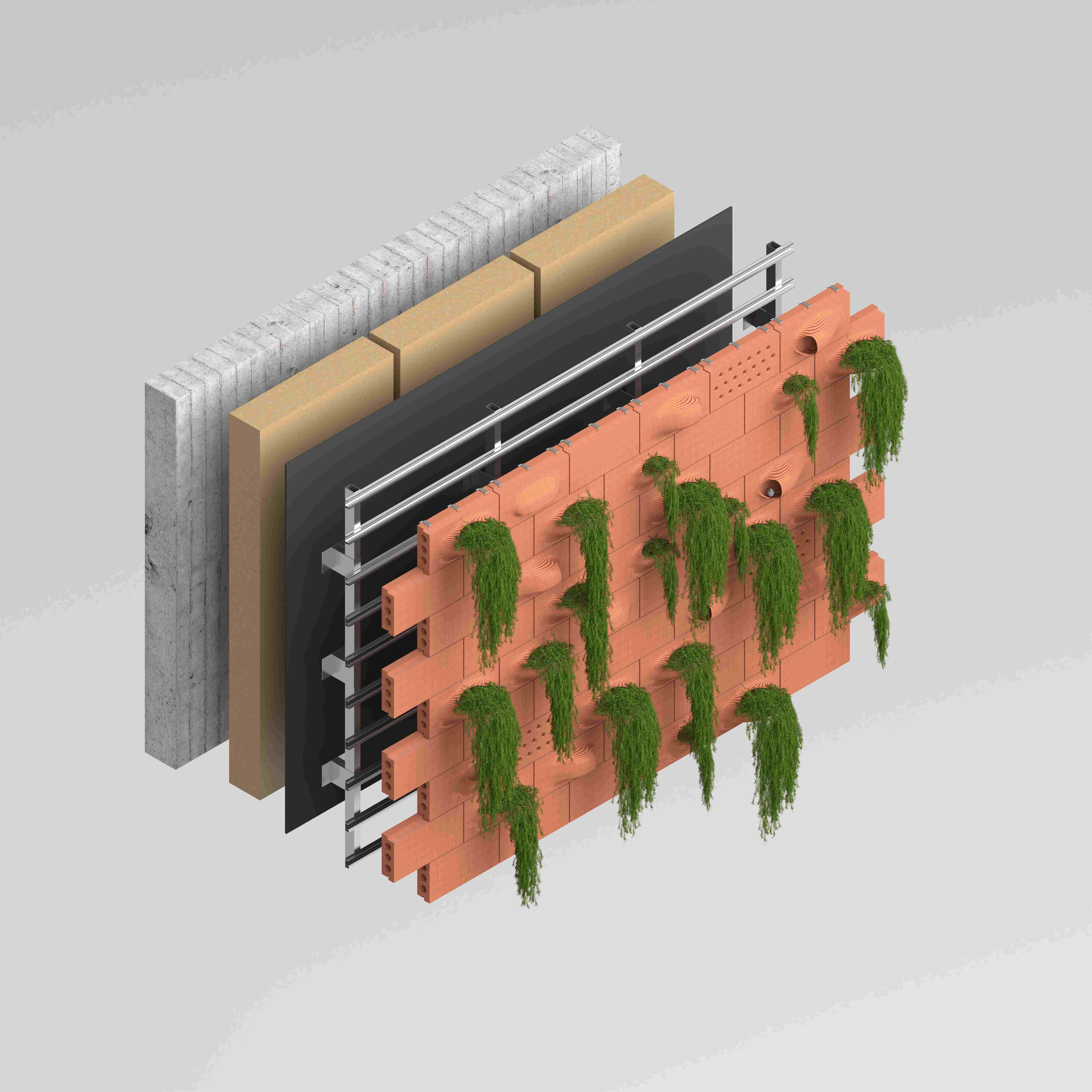
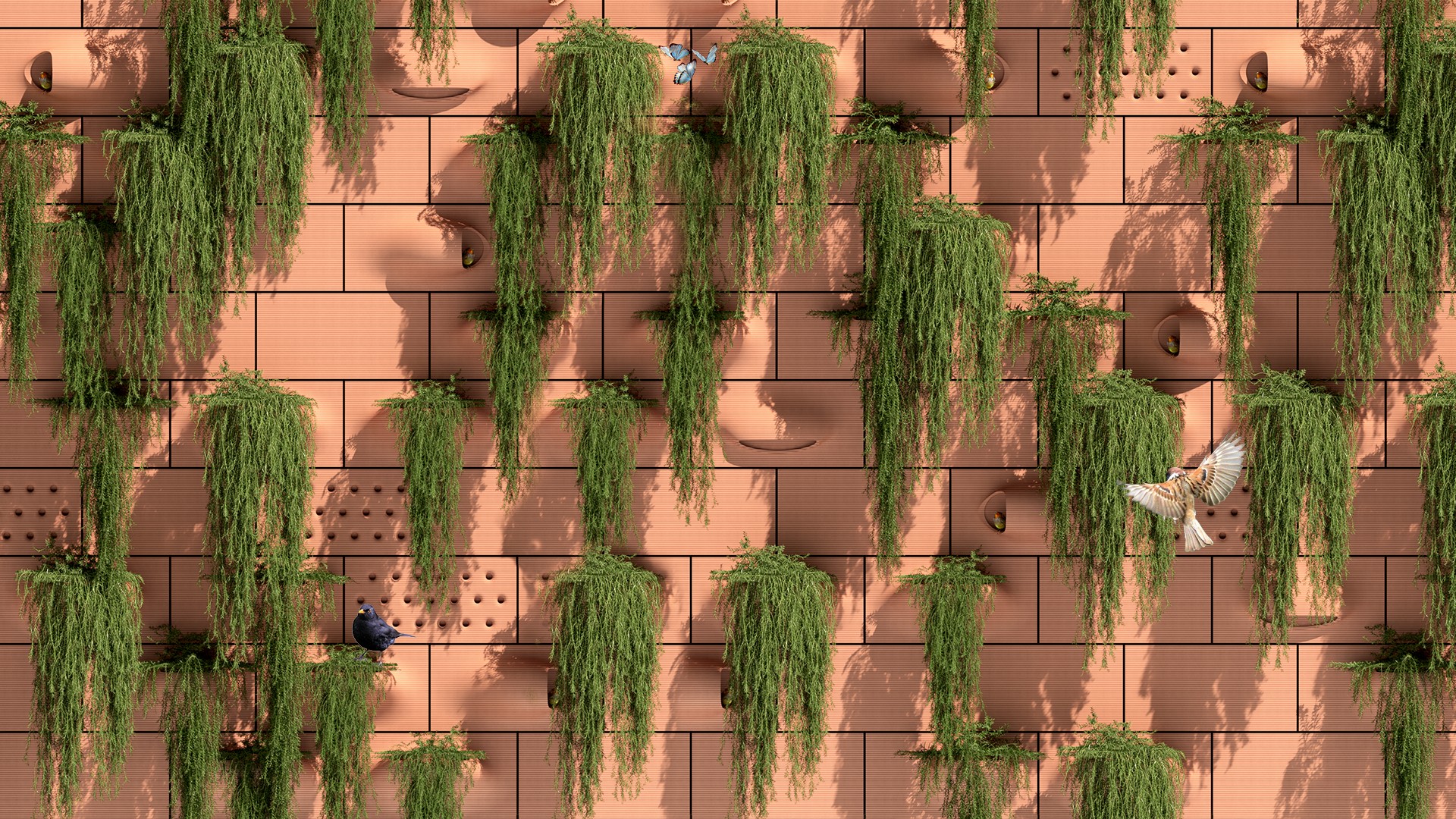
The NEST Façade is a modular building envelope system composed of specially designed ceramic panels that create micro-habitats for plants, insects, and small fauna. The geometry and material properties of the modules allow water retention, natural ventilation, and shading, fostering ecological colonisation while improving the building’s environmental performance.
The system can be installed as a façade layer on new constructions or retrofitted onto existing buildings. Its modularity enables flexible configurations depending on climate conditions, building typology, and desired ecological outcomes. The use of durable, low-impact ceramic materials ensures long-term performance with minimal maintenance.
Beyond biodiversity support, the façade contributes to thermal regulation, reduction of urban heat island effects, and improved indoor comfort. It also enhances the aesthetic quality of buildings by introducing evolving, living surfaces that change over time.
The solution can be used by architects, developers, and public authorities seeking to integrate nature-based solutions into urban projects. It is particularly relevant for dense urban areas where horizontal green space is limited.
The NEST project was supported by the EIT Community NEB under the Catalyse programme in 2023