Animal-Aided Design Toolbox
Integrating wildlife into urban planning from the start
Credit: Studio Animal-Aided Design GmbH
Credit: Studio Animal-Aided Design GmbH
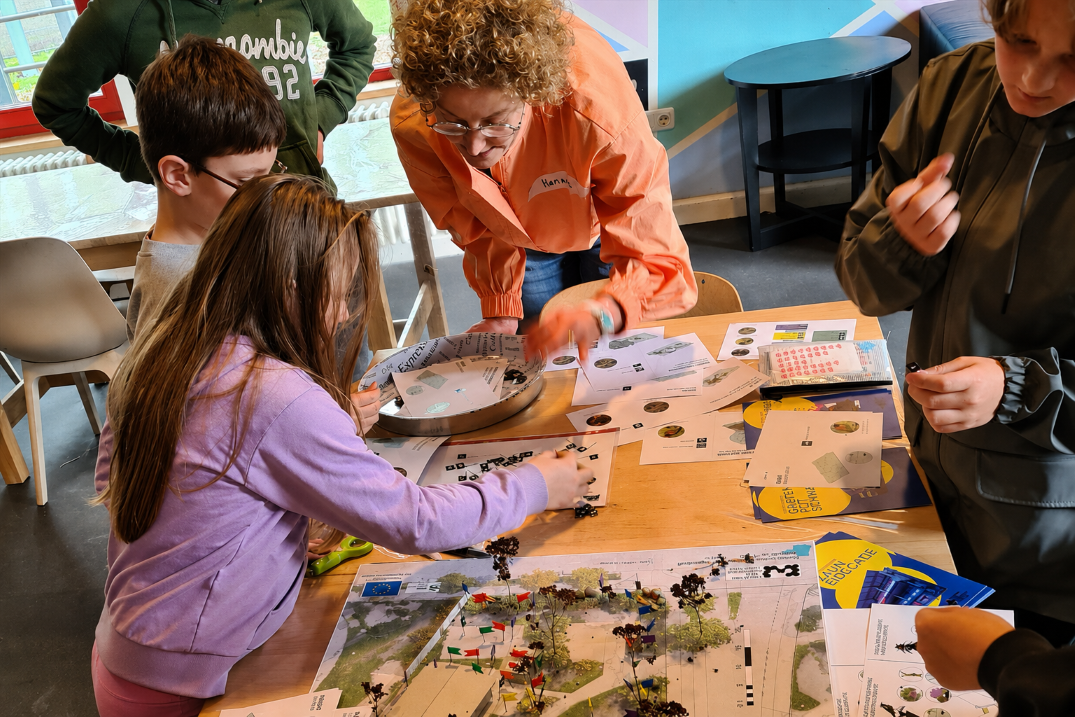
Credit: Studio Animal-Aided Design GmbH
Resource
Context
An innovative methodology further developed and validated within the EU-funded NEBourhoods project
Animal-Aided Design (AAD) is an innovative urban planning methodology created by Studio Animal-Aided Design, that integrates wildlife considerations into the architectural and urban development process from the very beginning. The participatory aspect of the methodology was further elaborated, tested, and validated within the EU-funded NEBourhoods project, which explored how New European Bauhaus values can be translated into concrete neighbourhood transformations. The project focused on making biodiversity a visible, integral, and positive component of urban regeneration, rather than an afterthought or a constraint.
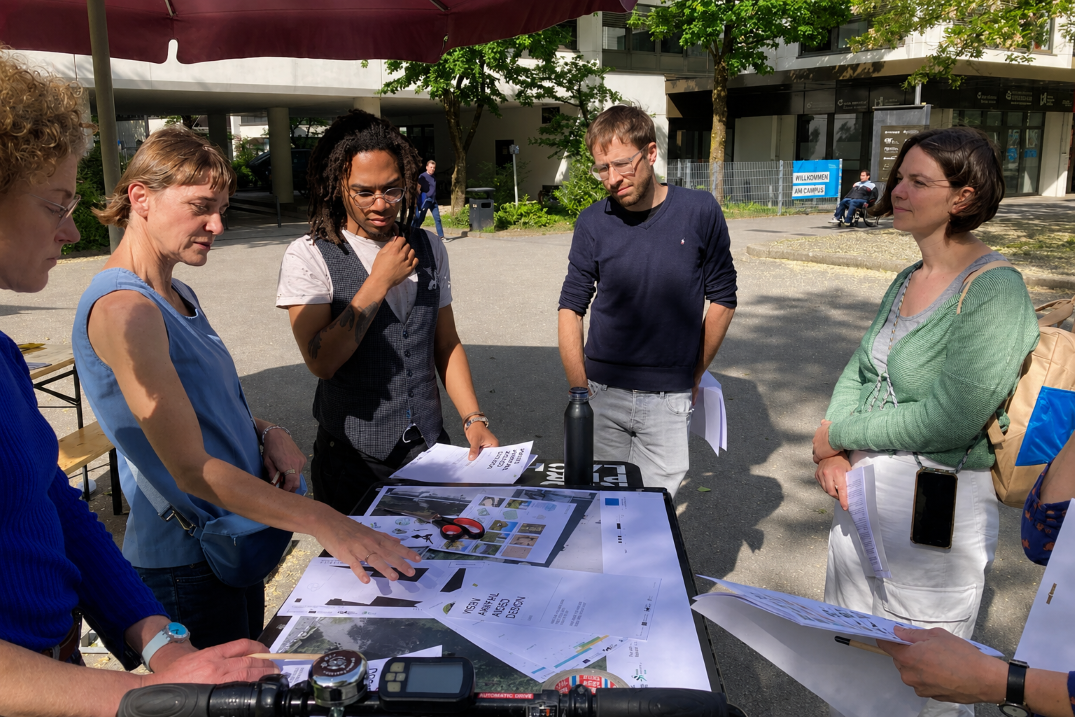
Within this context, a Toolbox for AAD was developed, applied and refined in real-life pilot neighbourhoods, such as Neuperlach (Munich, Germany), involving planners, landscape architects, ecologists, municipalities, and citizens. The methodology was used to bridge the gap between ecological knowledge and everyday planning practice, ensuring that the needs of animal species in urban environments are explicitly considered throughout the design process — from early concept stages to implementation.
The resource in a nutshell
A handbook with tools to design public spaces that actively support biodiversity.
The Animal Aided Design Toolbox is a methodological handbook and planning resource, presented as a structured guide supported by practical tools, species profiles, and design examples. It is not a software or an app, but a hands-on design methodology that can be integrated into existing urban planning and landscape design workflows.
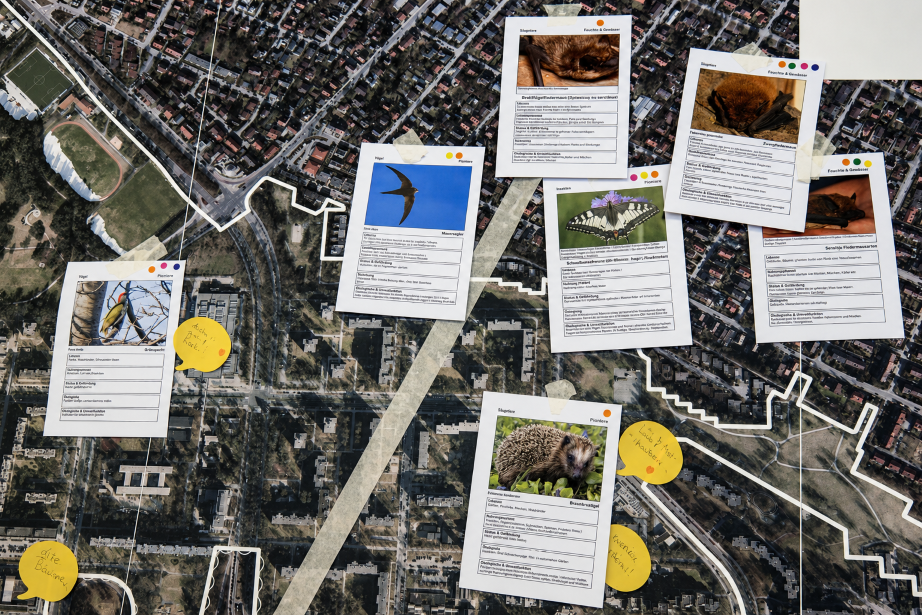
The core idea of AAD is simple but powerful: instead of adding “green elements” and hoping biodiversity will follow, planners select target animal species from the outset and design urban spaces that meet their specific life-cycle needs (feeding, breeding, shelter). The approach therefore begins with a comprehensive species assessment, where planners identify regional wildlife that could potentially thrive in specific urban environments. In Neuperlach’s case, this involved evaluating approximately 400 animal species and determining which ones could successfully live in the adapted local sites (14 species were finally targeted: 6 species of birds, 2 species of bats, 5 species of insects, 1 reptile species).
The AAD-Toolbox provides:
- Step-by-step guidance on how to integrate animal needs into urban design processes
- Species fact sheets translating ecological requirements into concrete spatial design elements
- Checklists and design principles usable at neighbourhood, street, or building scale, for instance with solutions such as plant building blocks and multispecies façades.
No advanced ecological expertise is required: the AAD-Toolbox translates scientific knowledge into planner-friendly language and visuals. Users can apply it directly to their own projects by selecting locally relevant species and adapting the design principles to their regulatory, climatic, and cultural context. AAD is particularly suited for municipalities, designers, and developers seeking replicable, NEB-aligned solutions that combine nature, people, and beauty in everyday urban spaces. It is also suitable for use in educational settings (transformation of school grounds, community gardens or similar).
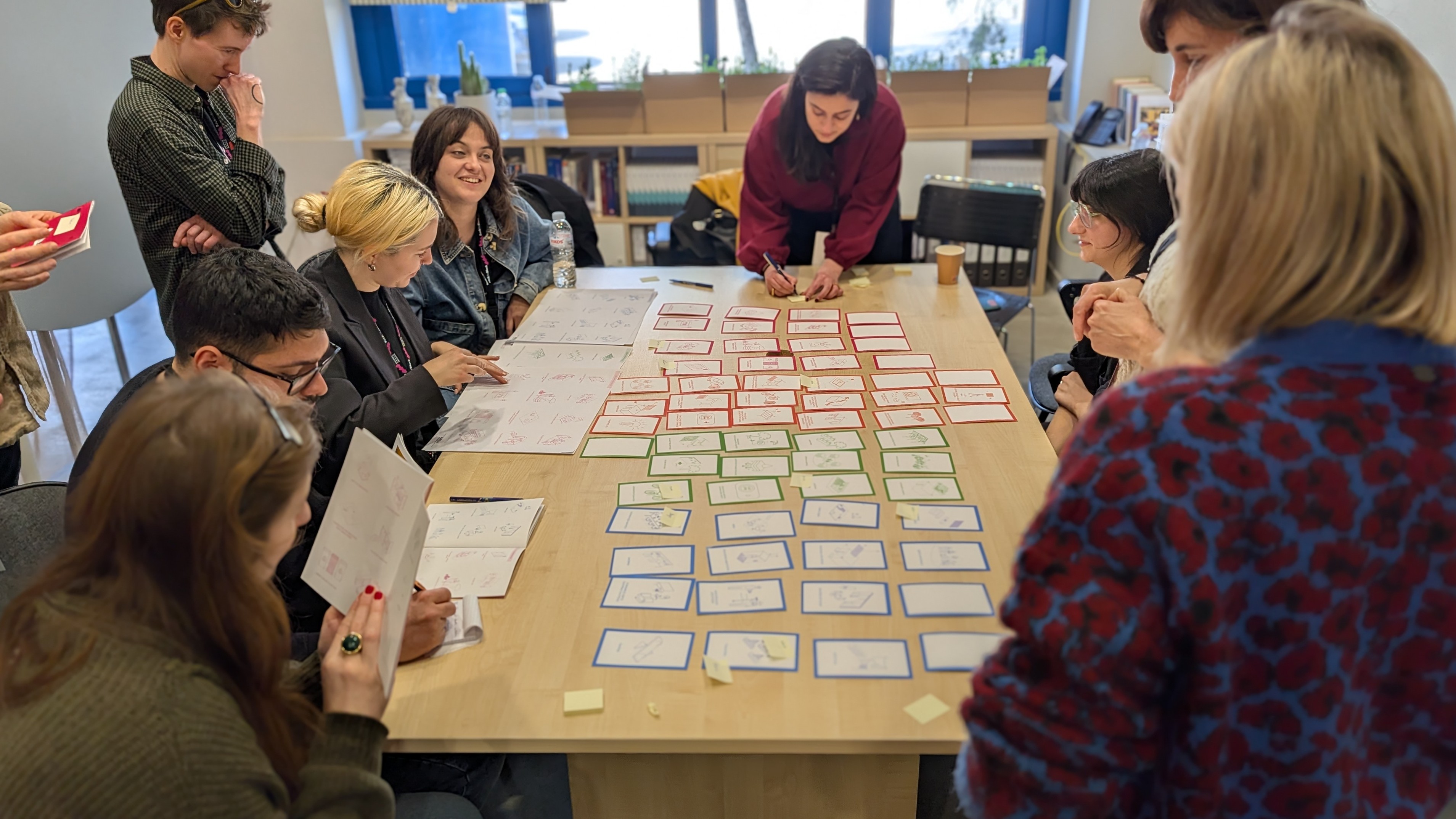
The methodology can be used to design public spaces that actively support biodiversity (e.g. birds, pollinators, small mammals) and improve ecological performance. The AAD-Toolbox is in German: the methodology, instructions and supporting materials (target species flyer, habitat stickers, measure sheets) can be translated and adapted under the supervision of Studio Animal-Aided Design.
The NEBourhoods project was funded by the Horizon Europe programme.