Solar power shading structure
Combining shading and photovoltaics in public spaces
Credit: NEBourhoods
Credit: NEBourhoods
Credit: NEBourhoods
Resource
Context
NEBourhoods developed a shading element to reduce temperature in urban areas and prevent urban overheating
The growing heat stress caused by climate change is turning large parts of urban areas into a threat to our health. Urban overheating affects pedestrians in cities worldwide, urgently requiring strategies to adapt to changing climatic conditions. However, the planting of trees to provide natural shade is often not an option. Vulnerable groups, in particular, are at risk from thermal stress, making public spaces difficult for them to access. Shading measures contribute to reducing temperatures in urban areas, thereby preventing social exclusion and restoring the quality of public spaces.
Many shading projects already exist, especially in hotter climate zones, but they are expensive to scale up significantly, and cities often lack the necessary funding to support them. Integrating photovoltaic (PV) systems to generate renewable energy can help offset costs, making large-scale shading projects more financially viable while simultaneously contributing to sustainable energy transition at a municipal level.
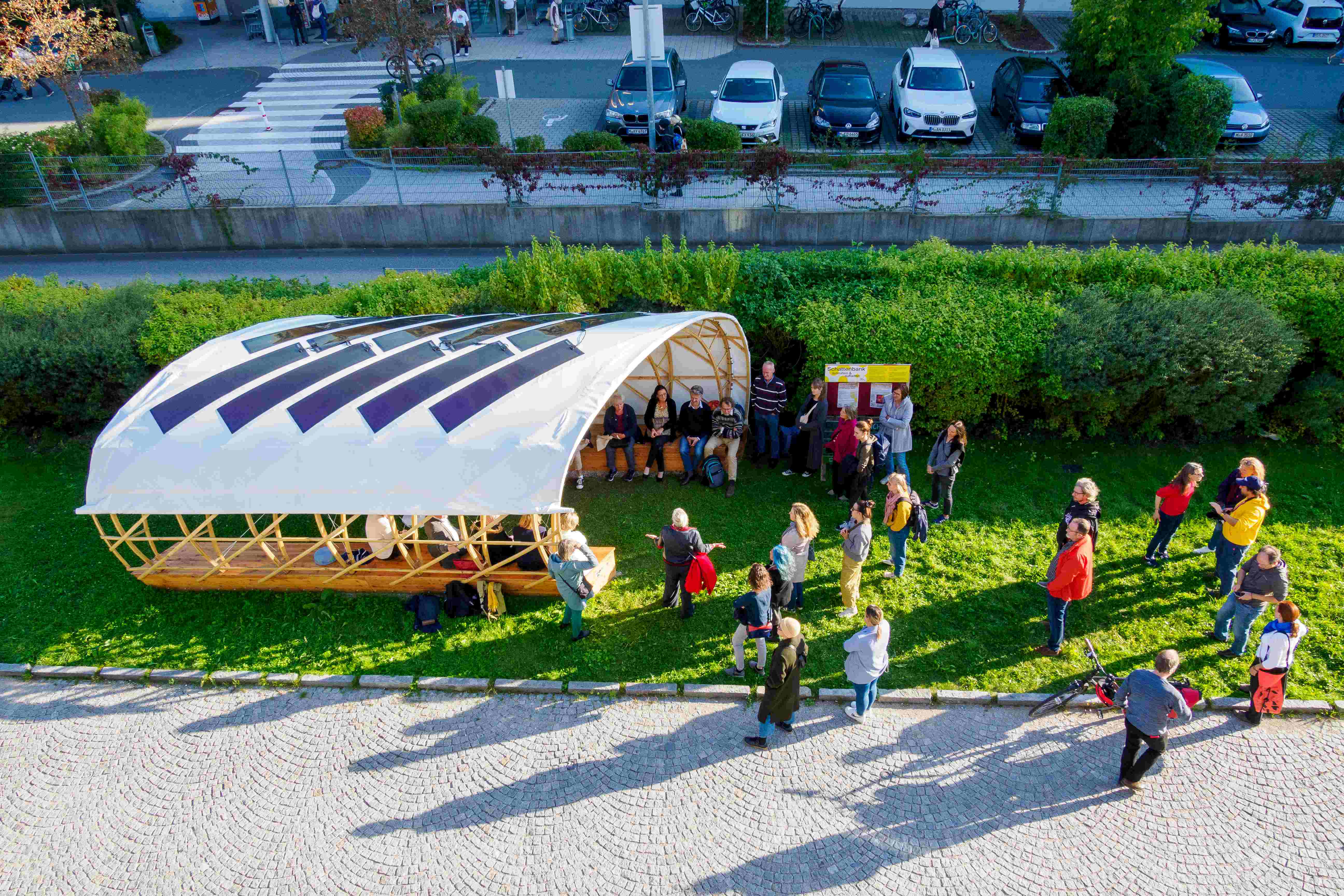
A shading structure, integrating solar panels for energy generation, was designed, built and tested in Munich within the EU-funded NEBourhoods project, which explored how New European Bauhaus values can be translated into tangible neighbourhood transformations.
The resource in a nutshell
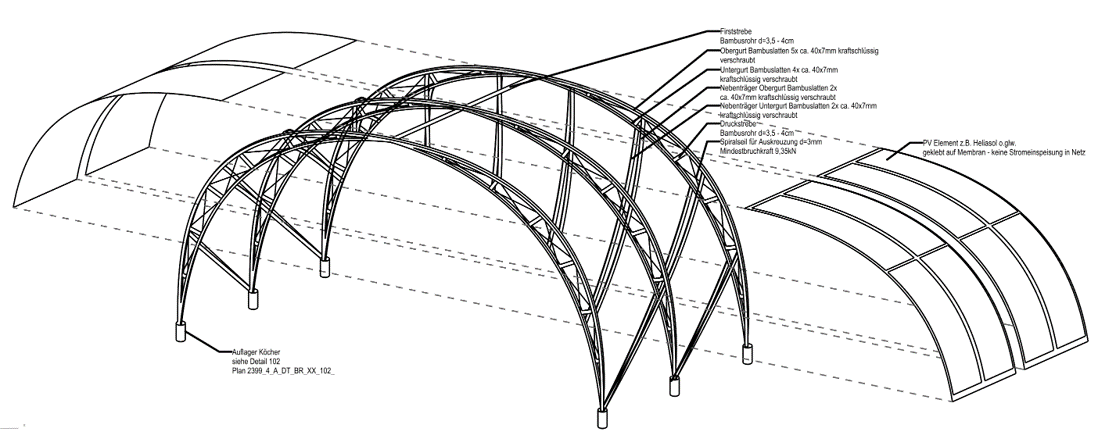
A simple, replicable shading structure made of wood, bamboo, and PV panels
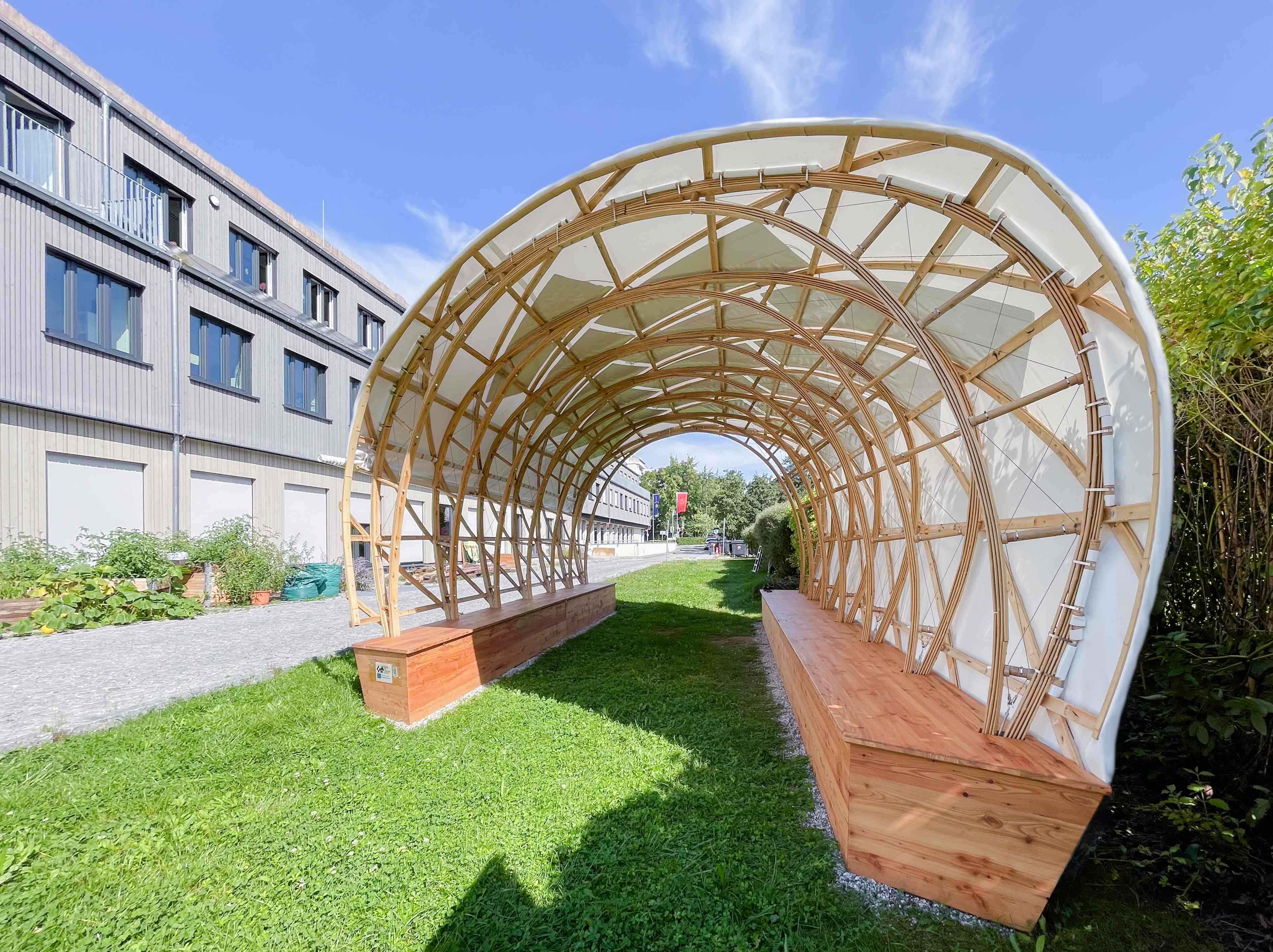
A simple structure was designed to make it possible to produce and assemble without expensive, complicated or heavy tools. The “base” of the structure (benches) is made of wood, while the construction itself is made of bamboo (this fast-growing natural product is very sustainable and stores CO2). Bamboo is both robust and flexible, hence compatible with the curved shape of the shading structure. Different textile materials can be used for the roof, depending on functionality.
The prototype for the “NEBourhoods Shading Architecture” was developed in collaboration with the students and teachers of the Campus di Monaco Montessori school. The shading architecture, installed in the greenspaces of the Campus, created a comfortable shaded outdoor area for recreation – even during the hottest days, and was also used as an “outdoor classroom”. Lessons held here have access to the electricity generated by the integrated photovoltaic modules.
The structure can be set up on any type of ground, and it can also be readily deconstructed and rebuilt elsewhere. Key steps for replication include:
- Thermal and spatial site analysis, including environmental measurements and pedestrian interviews
- Participatory selection of shading measures and locations, involving city administration in public spaces and landowners on private property
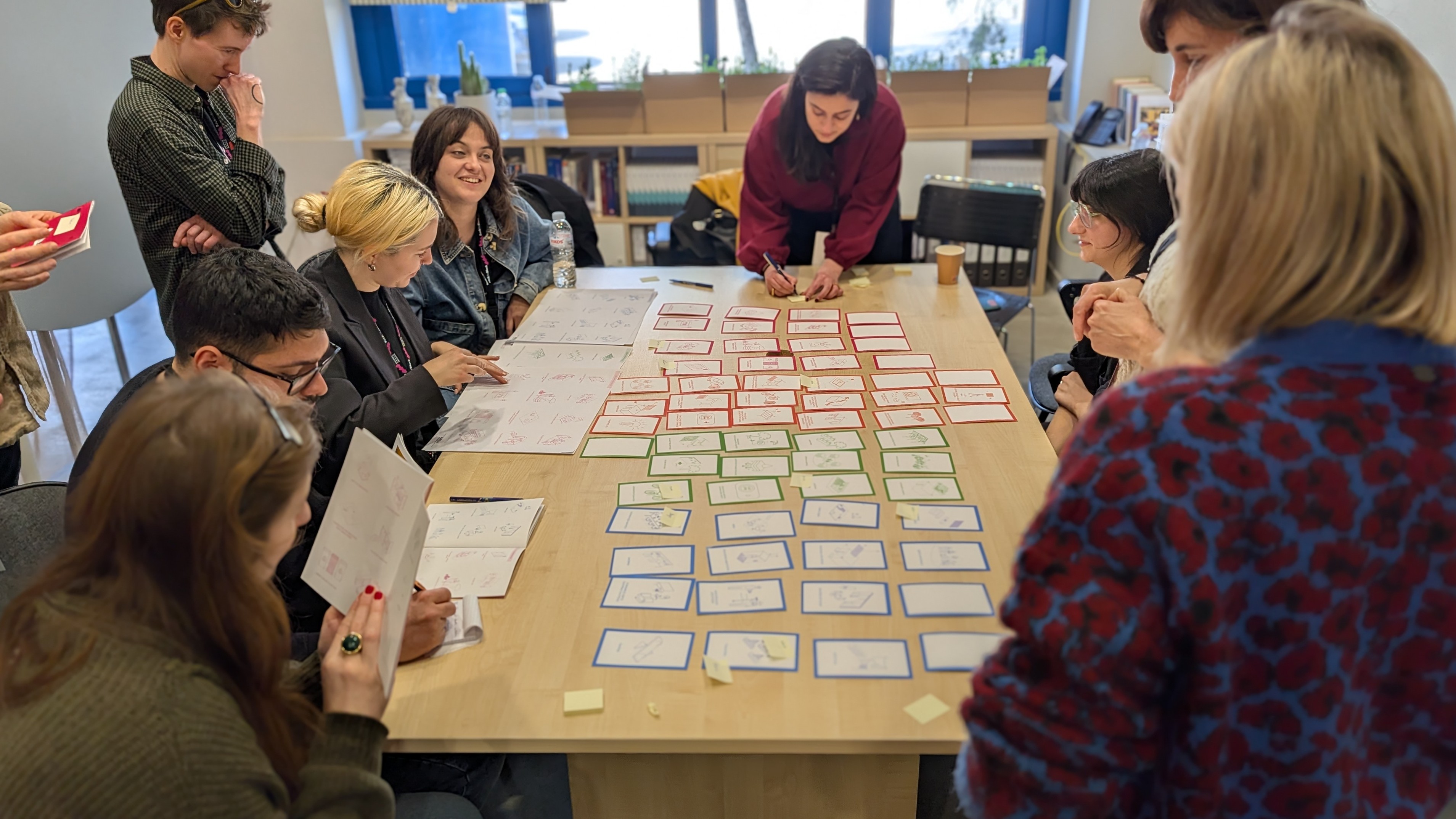
- Co-creative planning of shading structures, to design in an iterative process and test prototypes with residents (a manufacturing company should be involved to inform early about costs, revenue and design constraints)
- Approval processes: Identify the appropriate contacts and obtain the necessary authorisations.
- Implementation of shading structures, co-building with the local community (end users) or preparing a tender for a construction company.
- Integration of solar power usage: Identify the appropriate contacts and obtain the necessary authorisations to feed electricity into the grid or into battery storage
- Maintenance and adaptation: Regular inspections and repairs, especially battery storage and solar module maintenance, collection of feedback, and test measurements to fine-tune performance
The NEBourhoods project was funded by the Horizon Europe programme.